
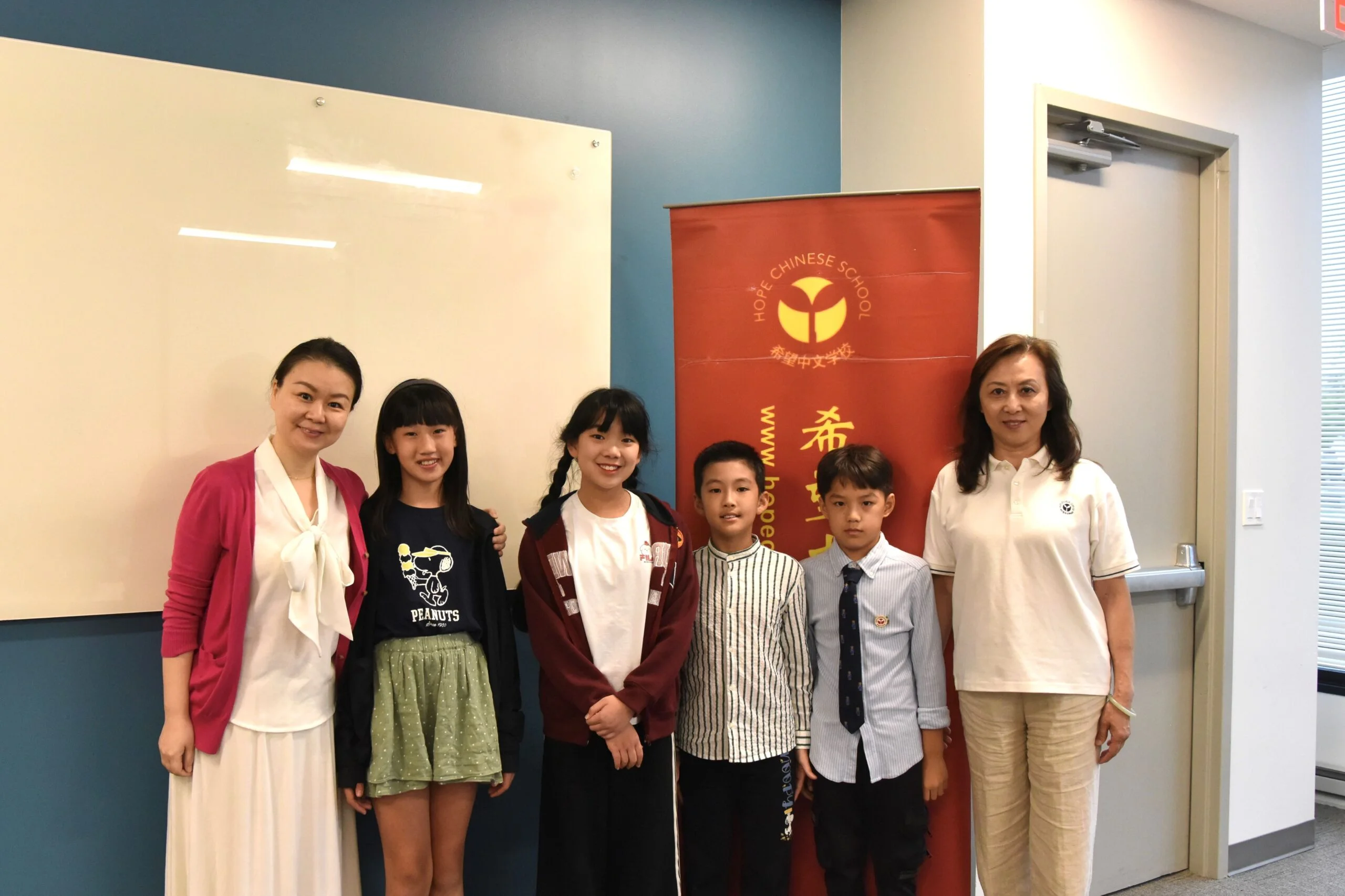

Young students from Hope Chinese School perform “Jasmine Flower” youth choir in Washington, sharing how music, language and cultural activities shape their Chinese learning.
The familiar melody of “Jasmine Flower” filled Washington’s National Museum of Asian Art on Sep.24, sung by a group of young students from Hope Chinese School.
The students performed the Chinese folk song, along with “Songs & Smiles”, during a visit to the museum by Peng Liyuan, wife of Chinese President Xi Jinping, and Melania Trump, wife of US President Donald Trump.
For the young performers, however, the occasion was more than a performance.
Ten-year-old Li Boqing and 13-year-old Ni Zian were among the students who sang at the museum. Both said they felt “nervous and excited” about the performance, describing it as a rare opportunity in their lives.
Li already speaks fluent Chinese. He enjoys reading Chinese books and watching Chinese TV series and films. His favourite stories include Journey to the West and GG Bond, a popular Chinese animated series.
He also enjoys celebrating traditional Chinese festivals at the school, such as making dumplings for the Spring Festival and eating mooncakes during the Mid-Autumn Festival.
Ni has studied Chinese for eight years. She said the school has helped her make friends and feel a sense of belonging. It has also brought her closer to her family.
“Learning Chinese has brought me many touching moments, and I will continue studying it in the future,” she said.
Learning Chinese through Music and Festivals
Hope Chinese School was founded in 1993 by Chinese students and Chinese community members working at the University of Maryland. At the time, it was the only school in the Washington area offering Chinese pinyin instruction.
Today, the school has six campuses and about 3,000 students.
Most of its students are of Chinese descent. However, more than 10 per cent come from other ethnic backgrounds.
“Language and culture are inseparable,” said He Jie, chairwoman of Hope Chinese School. “While teaching Chinese, the school also hopes to share Chinese culture with everyone.”
The school organises cultural activities throughout the year. During the Spring Festival, students write Chinese characters for good fortune and make dumplings. For the Dragon Boat Festival, they make zongzi and learn about the traditions behind dragon boat racing. During the Mid-Autumn Festival, they draw mooncakes and hear stories about Chang’e.
“These activities are very popular with the students. They also make them more interested in learning Chinese,” said Yang Yun, a Chinese teacher and head of the school’s choir.
Music is another way the school helps children learn the language.
“Music and rhythm are a very natural way for children to learn Chinese,” Yang said. “Young children may not understand the lyrics at first, but they gradually become familiar with Chinese through the rhythm and start to enjoy how it sounds.”
The school established its choir this year. The students who performed at the museum are members of the choir.
“Jasmine Flower” is the first Chinese song usually taught in the school’s classes. “Songs & Smiles” is a song about friendship and good wishes.
A Connection that Reaches Beyond the Classroom
The young performers came from different backgrounds, but they shared an interest in the Chinese language and culture.
For He Jie, that connection can extend from the classroom to families and communities.
“Children come to the Chinese school to learn the language, then share what they have learned with their friends and families,” she said. “A family can then bring that experience into the wider community and society.”
She believes that direct communication between people remains important.
“Communication between people is the most important and fundamental thing,” He said. “Chinese schools can serve as a bridge for people-to-people and cultural exchanges between China and the United States.”
Additional reporting by CNS.
If you liked this article, why not read: Chinese Song Contest Brings Young Voices from Around the World to Beijing


