
Tianjin launches routine drone deliveries of blood and medical supplies, cutting delivery time and improving healthcare logistics.
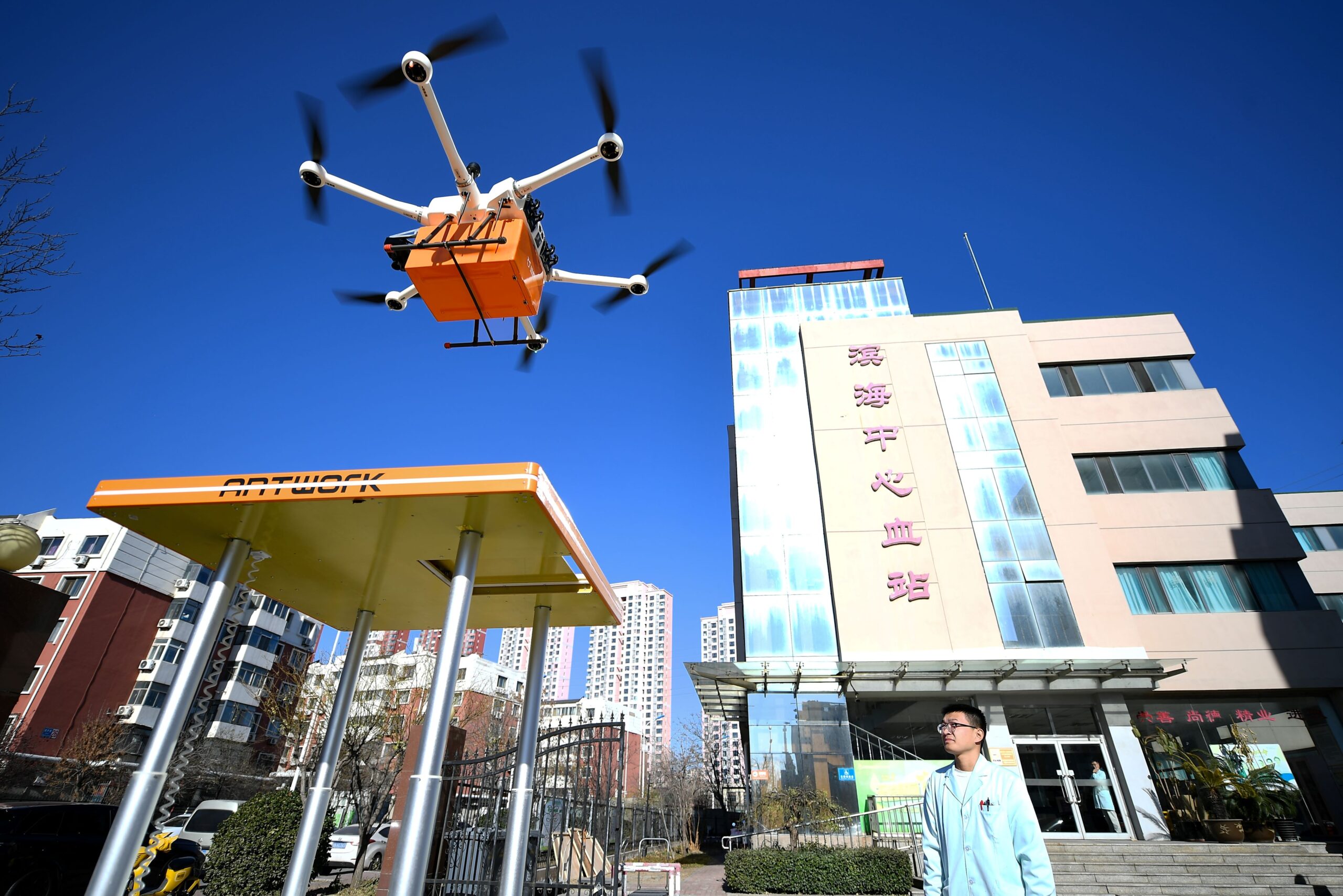
On December 3rd, a drone carrying blood products took off from Tanggu Central Blood Station in Tianjin and reached the Tianjin Central Obstetrics and Gynaecology Hospital in just 17 minutes. This is the city’s first routine drone route for medical deliveries, marking a major step in using technology to save lives, according to CNS.
The TR9S multi-rotor drone uses a “BeiDou + 5G” navigation system to fly autonomously along pre-set routes. It carries up to 9 kilograms in a temperature-controlled, shock-resistant box, keeping blood safe between 2–8°C. Another route links the Tanggu Central Blood Station to the Tianjin Fifth Central Hospital Ecocity Campus, covering 14.6 kilometres in 18 minutes. Hospital staff say the system ensures patients receive critical blood faster than ever before.
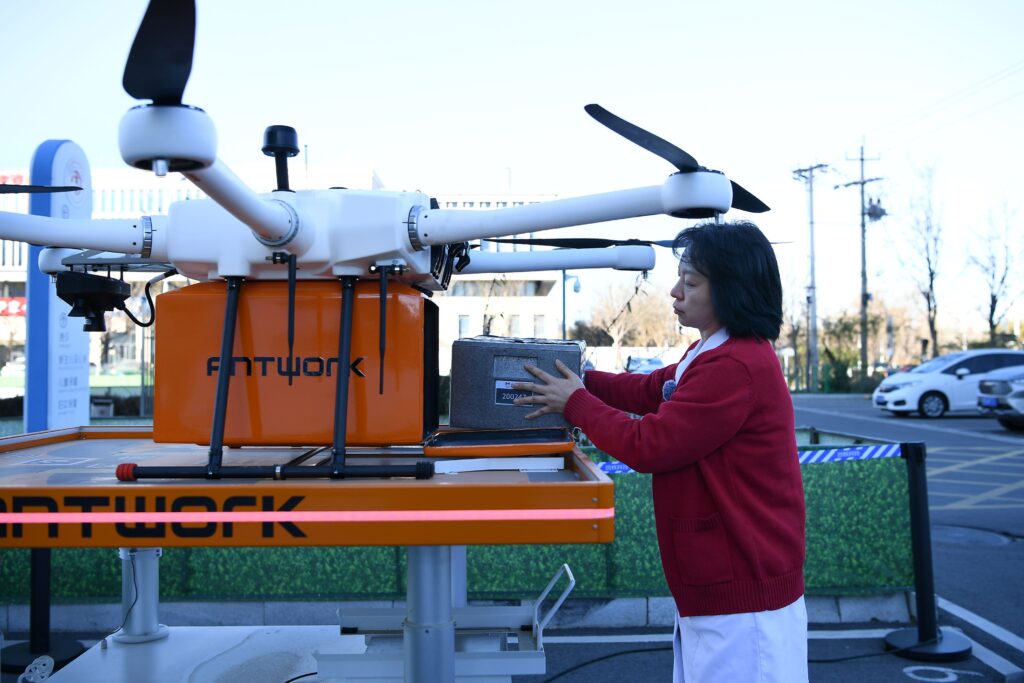
Drones Become Everyday “Airborne Assistants”
Tianjin’s blood delivery is part of a wider trend. Drones are now reaching traffic accident sites within five minutes and delivering food in ten. Advances in flight time, payload capacity, and navigation technology are turning drones from novelty gadgets into practical, everyday tools.
Currently, 969 Chinese companies have registered civil drones, totalling 3,191 types and more than 4.78 million units. Experts predict China’s low-altitude economy will reach 1.5 trillion yuan (£158 billion) by 2025 and 3.5 trillion yuan (£264 billion) by 2035.
Opportunities and Challenges in China’s Drone Industry
Despite rapid growth, the sector faces challenges. General-purpose airports remain limited, airspace management needs improvement, and businesses must innovate. Skilled personnel are also in short supply.
However, the potential is huge. Beyond medical deliveries, drones could transport vaccines, emergency medicines, and even organs in the future. Tianjin’s drone routes show how technology can speed up healthcare and urban logistics. As drones become a common part of city life, they promise faster, safer, and more efficient services for people everywhere.
If you liked this article, why not read: How Drone Delivery is Transforming Tourism