
Xueting C. Ni talks to China Minutes about her latest work, Sinophagia, the complexities of Chinese horror, and her dedication to sharing China with the West.
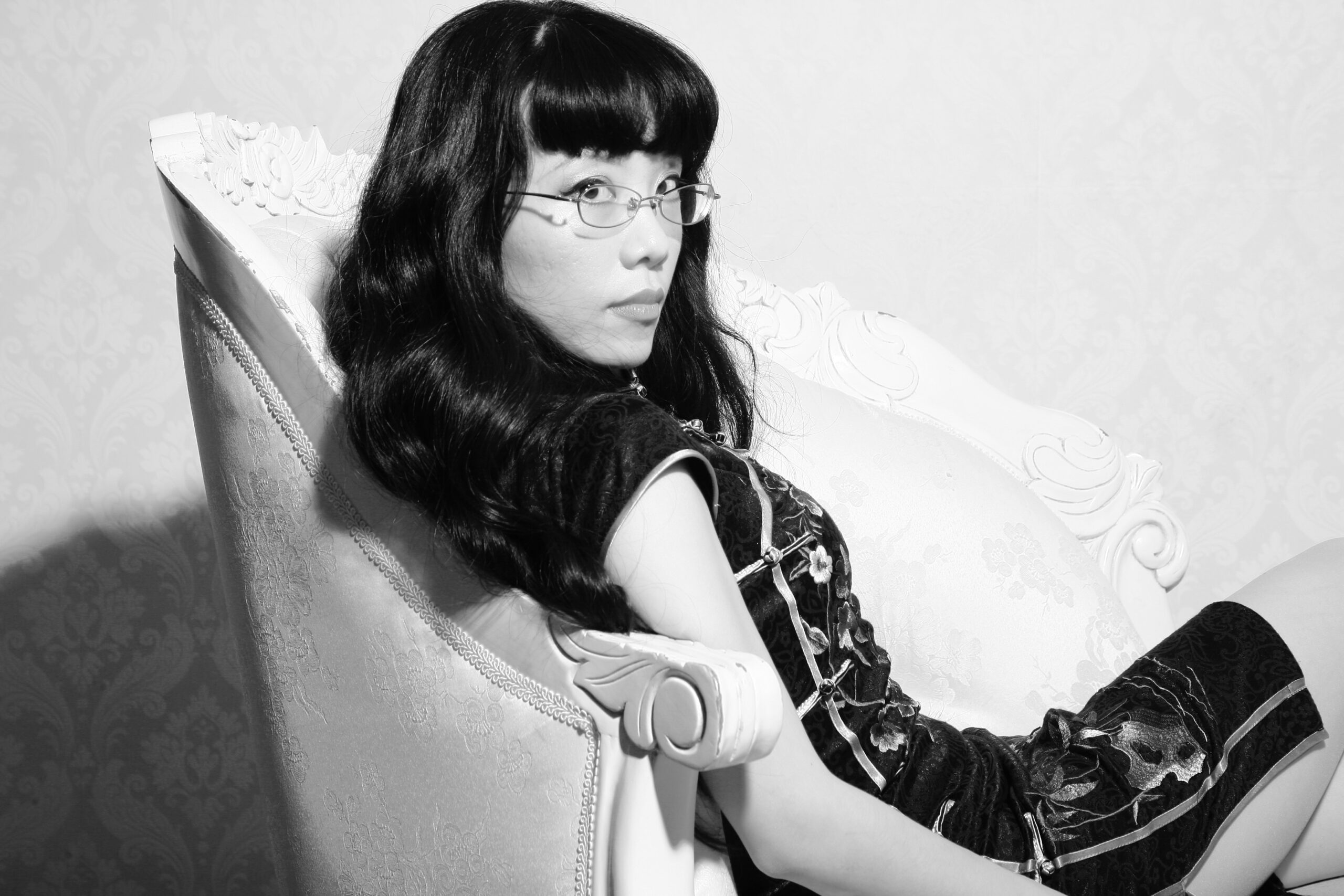
Xueting C. Ni was born in Guangzhou during China’s re-opening to the West. Having spent a childhood living in cities across China, she emigrated with her family to Britain. There, she continued to be immersed in Chinese culture alongside her British education. Realising that this gave her a unique cultural perspective in bridging her Eastern and Western experiences, since 2010 Xueting has written extensively on China’s cultures and its place in the Western consciousness.
She has worked with companies, institutions, and festivals to help improve understanding of China’s heritage and culture. Her non-fiction works include From Kuanyin to Chairman Mao: An Essential Guide to Chinese Deities and Chinese Myths. Her curated fiction in translation includes Sinopticon: A Celebration of Chinese Science Fiction and Sinophagia: A Celebration of Chinese Horror. Her essays have been published by the BBC, Sixth Tone, Radii, Art Review, and elsewhere.
Xueting lives just outside London with her partner and their cats, all of whom are learning Mandarin.
To start with, your most recent work, Sinophagia, is a spiritual sequel to your science fiction compendium Sinopticon. After science fiction, why did you opt for horror?
Well, the publishers and I have made sure there is continuity between Sinopticon and Sinophagia; this is considered a sister anthology, although it’s very much a thing on its own. Whereas sci-fi is about looking at the hopes and dreams of a nation, horror is about looking at the fears and worries of a nation.
These are two of my favourite genres. So, the horror anthology was always going to happen at some point. It took me a long time to find the opportunity to assemble the science fiction anthology. Horror, I would say, is where science fiction was about 10 years ago. I could feel just before I pitched the anthology that horror was going to be quite popular soon, and even more so as I progressed with the project. The way that the tastes and reading habits around the world were changing, it felt like horror was going to be quite popular.
I also wanted to bring these works, which are little known to people outside of China, to the world. I wanted to perhaps help change attitudes a little bit about horror literature in China.
I would like to pick up on that last point you made, change attitudes. In your introduction to Sinophagia, you mentioned how Horror is viewed in different ways in the West and in China. Could you please expand on that?
In the West, whilst horror did take a while to be considered serious literature, it is very much part of genre fiction. People recognise it as proper literature. In China, the attitude is peculiar at the moment, because on the one side, you have classic supernatural tales which are considered part of the classical canon, that have horror elements. Then you have the modern view of horror, which has a lot to do with certain Western films that flooded the Chinese market in the early 2000s, which is a very narrow view of horror. It’s all about gore and slashers.
Then this leads us to the censorship after the mini-boom in the 2000s. Horror became very profitable in terms of films and literature, and certain people in the industry exploited that by producing quite cheap works that relied on cheap thrills, giving the genre a bad name. And this means a lot of writers wanted to disassociate themselves from the genre.
This is a real shame, because it’s not what horror literature is about. Like other types of fiction, it’s very much about exploring the human condition, just maybe the darker side, by exploring our views and feelings towards the world in interactions with society and each other. So, it’s a view that needs some adjusting, and hopefully this anthology will help towards that.
How difficult was putting together Sinophagia?
It was both harder and easier. It was easier in the sense that I had the experience of Sinopticon, so I learned about cat wrangling, working with all these different writers. They all have very different habits. They work in different ways. These creators, some of who are quite big names, have a lot of caveats to their collaborations. Others are very new writers which brings its own difficulties. So, for the project management side, the experience from the first anthology was useful.
The challenges were that horror was a different place, and it took a lot to get hold of writers I wanted or to find the hidden gems. Getting female writers to come forward with their works was also difficult.
Within publishing specifically, the challenge was that there’s nothing quite like it in the past, so it needed to be marketed in a different way and presented in a specific way. It’s not like anything that the publishers have worked with before.
Sinophagia has a very beautiful cover. It reminds me of China with the style of buildings and nature, but it also doesn’t feel overtly Chinese. How was the cover developed?
Oh, great. I’m really glad to hear that. I wasn’t involved with the cover design, but I know what you mean. It is China, but not specifically so at the same time. I think it does reflect Chinese horror in the creepy, eerie sense, which I think China’s storytelling is very good at. You see something, and at first, you’re not that scared, but then you look at it again, and then it feels more and more wrong, and you’re not quite sure why. Then the horror comes out, and it stays with you.
Moving on to Chinese culture more broadly, in the past you’ve said: “My aim is to show the West that there is more to Chinese culture than kung fu monkey and stir fries”. Do you still believe in that statement?
I do. I’m happy that people know slightly more about China now there are C-dramas, for example. The TV series adapted from the great novel output have gone up in quality and is now enjoyed by people around the world. So, we have one more common point of knowledge about China. When people think of China they think of food and films as possibly the most immediate cornerstones. Now there’s also C-drama so the vantage point is better, the awareness of Chinese cultures is better.
Now, we are at the stage of having these individual monuments to various things. In the West, it’s Liu Cixin for Chinese science fiction. For horror, we’re not quite there yet. In a recent article for Reactor, I wrote that I would really like to take people beyond this point, beyond the Three-Body Problem and Condor Heroes, and kind of introduce them to the vast universe of fiction that’s out there.
In the years you’ve been trying to share Chinese culture. Do you think there’s been an improvement in the understanding of China and Chinese culture in the UK?
I think there’s certainly been an improvement, definitely. Before, a lot of Western literature seemed to be about China as a great historical civilisation. Now we have a wider array of awareness of Chinese literature, and more contemporary output that’s being brought over, which is fantastic. There is more media coverage, although sometimes this could be quite polarised.
We’re also in the age of home entertainment, and that has kind of shortened the distance between people in the world. The Wuxia series and novels that I liked as a teenager, I had to lug them back from China in suitcases. Now you no longer have to do that, you can just go online and you can stream shows.
Also, like it or not, instances like the pandemic and the trade wars have put a lot more contention in the world, but also made people realise how connected everybody is. As China’s place is changing in the world, it’s becoming more of a global player on the world stage, and people are more interested. The idea of China as a contemporary nation is definitely there now where it wasn’t before. When I first started to venture into representing China’s cultures to the Anglophone audiences in the early 2000s, people were not interested in China as a contemporary place, they were more interested in its history.
You said representing Chinese cultures with a plural at the end. Did I hear that correctly?
It’s definitely an intentional plural there, you’re absolutely right. To an outsider, a Chinese person would say they are from China, and to another Chinese person, they would say, I’m from Hunan, or I’m from Sichuan.
The world does tend to see it as a monolithic culture that’s lasted for ages, whereas it’s actually been taken over several times and changed. Tribes have brought in their culture, and it’s combined with the Han culture. Then there are different regional cultures and so many ethnic groups, a lot more than the official 56. From the moment I was born, I was experiencing cultural differences because I was born in Guangzhou and felt quite Cantonese, but one of my parents is Cantonese, and the other Northern. I had family members who only spoke Chaozhou, Shenyang or Hubei topolects.
It’s a continental-sized place. Guangdong, for example, is about the size of the UK, and the differences between this region and Heilongjiang are massive. There’s a difference in customs, languages, and in traditions. It’s one of the things that I’m becoming more and more aware of still, when I’m in conversation with my friends and family from China. It’s why when I was in Beijing, I did consider other places for my post-grad studies, but went to Minzu University in the end, because it gave me a perspective on non-Han cultures.
This is why I always say Chinese cultures, because there are so many different cultures in China. Even in Sinophagia, we have authors from all over the country. There are people from Hunan, Sichuan, and Jilin, for example. Horror is certainly another very regional genre, unlike sci fi, which transcends regional borders. Horror is quite region specific because the senses of horror are tied to the place, the people, and the history.
Would you say that your background has helped you with your desire to share Chinese cultures? Having been born in China, moving to the UK quite young, and spending time in different regions of China.
Yes, personal experiences have certainly helped, both living across different regions of China and having heritage in all these places, it’s made me think a lot. I’ve had to piece my own kind of sense of belonging together much later as an adult, it’s somewhat fractured and not really tied to one specific place, but to multiple places, regions, and cultures. I’m British but not totally British, Chinese, not totally Chinese. And figuring out my sense of identity, until I’m feeling at home in many spaces, that certainly helped with my multi-polarity of perspectives.
Final question, I’m sure you get it every interview, but what are you working on next after Sinophagia?
My road map is to alternate between non-fiction and fiction. So, after Sinophagia, the next project I’m finding a home for is a book on wuxia storytelling and culture.
I also have a few projects that are also kind of running in the background. I’m working on a new collection that I can’t talk about yet, and curating a couple more anthologies that I would like to have the opportunity of publishing, and some longer-form literary works that I want to bring into English. Other than that, I’m always writing articles for various platforms, translating short form fiction and doing panels and talks for different events and groups.
Sinophagia is available from Solaris. If you liked this article, why not read: Best Chinese Books of 2024