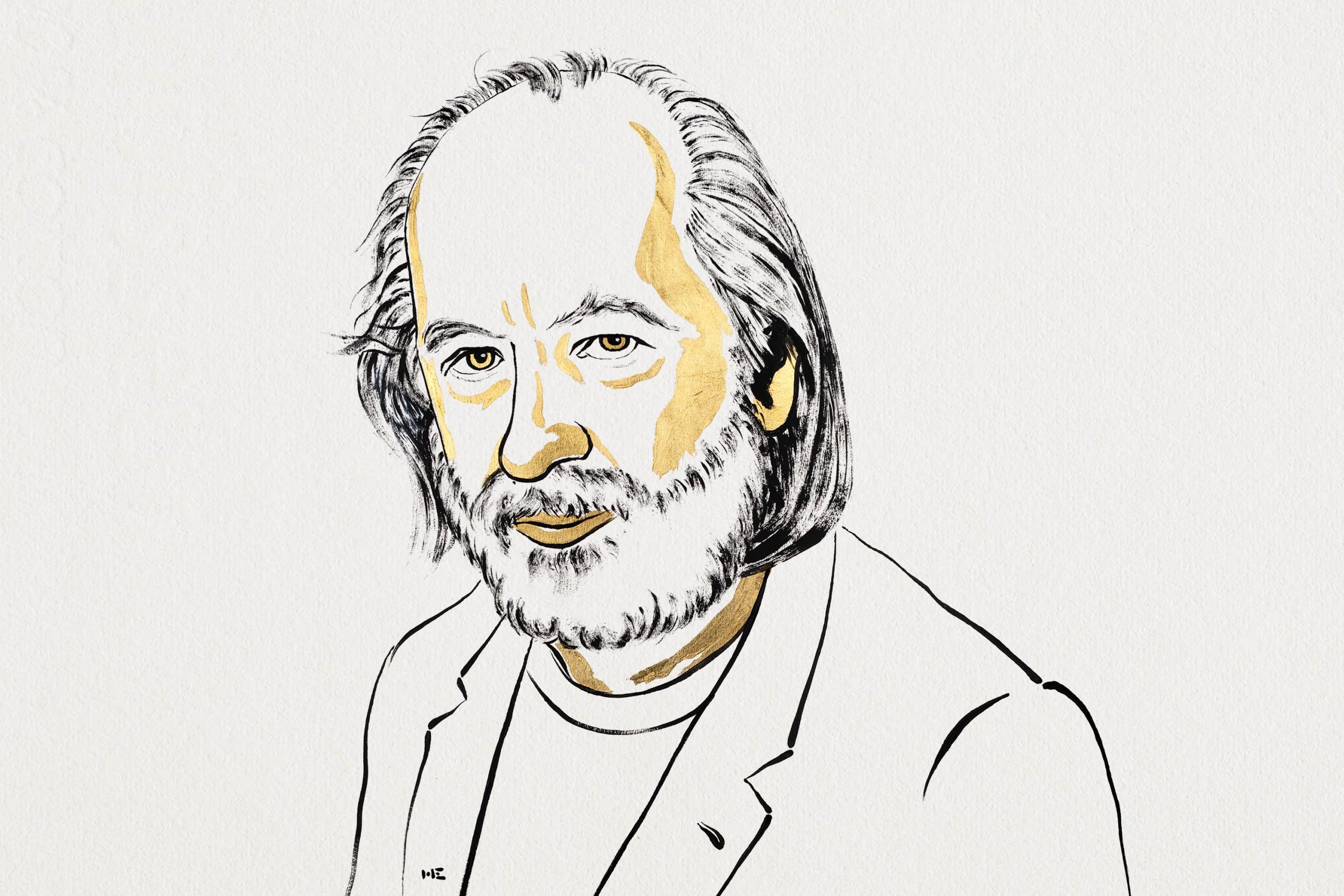

Hungarian writer László Krasznahorkai has been awarded the 2025 Nobel Prize in Literature, whose journeys to China and Japan have inspired several of his works.
The Nobel Prize in Literature for 2025 has been awarded to Hungarian author László Krasznahorkai, honoured “for his compelling and visionary oeuvre that, in the midst of apocalyptic terror, reaffirms the power of art,” the Swedish Academy announced on Oct. 9.
Extends Through Kafka, Continues European Tradition
The Swedish Academy described him as “a great epic writer in the Central European tradition that extends through Kafka to Thomas Bernhard.”
Steve Sem-Sandberg, a member of the Nobel Committee for Literature, said Krasznahorkai has maintained a remarkably consistent and high-quality output throughout his four decades of writing. He noted that few authors manage to sustain such a level of excellence over so long a career.
Sem-Sandberg also highlighted that Krasznahorkai’s work continues a European tradition of dense, epic novels featuring vivid characters and apocalyptic settings.
Born in 1954 in the small town of Gyula in southeastern Hungary, Krasznahorkai achieved his literary breakthrough with his debut novel “Satantango” (1985). The book became a sensation in Hungary and established him as one of Central Europe’s most distinctive literary voices.
Loves Li Bai and Chinese Culture
The Swedish Academy said that the author’s later works adopted “a more contemplative, finely calibrated tone,” reflecting his deep impressions from journeys to China and Japan, which inspired several of his works.
According to an interview with his Chinese translator Yu Zemin in 2020, Krasznahorkai said he visited China as a journalist in 1991 and became fascinated with Chinese culture, and he described China as “the last living museum of humanity.”
After returning to Budapest, the author not only had his whole family start using chopsticks for meals, but wherever he went, he collected books related to China and kept up with news about the country. He ate Chinese food when dining out, listened to Peking Opera at home, and would unconsciously bring up China in conversations with anyone. Per the report, he has read the Tao Te Ching by Lao Tzu and admires the famous Tang Dynasty (618-907) poet Li Bai.
In a 2017 interview with the Beijing News, Krasznahorkai said that he loves Li Bai for his boldness and themes of wine, the moon, and life’s journeys, as well as for his dynamic rhythm and unbridled wandering spirit. He admires Li Bai so much that, once, together with Yu, he took a long journey following the places Li had travelled.
Written by Gu Yetao, additional reporting by Nobelprize.org, Xinhua and Global Times.
If you liked this article, why not read: Liulihe Site: The Origins of Beijing