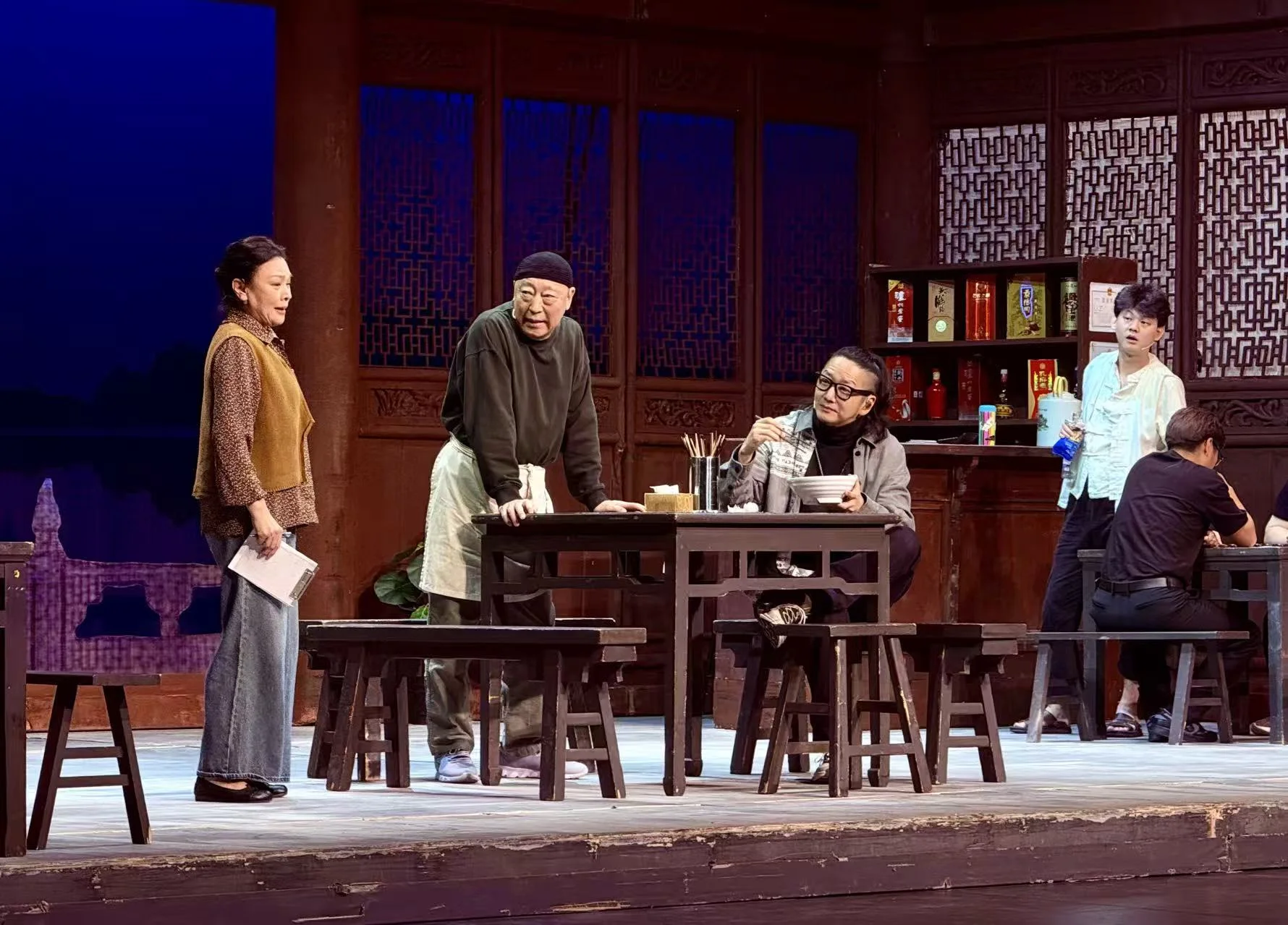

A Beijing stage play, Yinding Bridge, debuts in Hong Kong, telling the story of a family restaurant and reflecting shared urban challenges across cities.
The lights dim inside the Xiqu Centre in Hong Kong’s West Kowloon Cultural District. On stage, a simple metallic structure suggests the Yinding Bridge, a well-known spot in Beijing. Within seconds, the audience is transported into the everyday life of a traditional hutong neighbourhood.
From April 3rd to 5th, the Beijing play Yinding Bridge made its Hong Kong debut. Directed by Lin Zhaohua and starring Ni Dahong and Shi Ke, the production brings a distinctly local Beijing story to a new audience.

A Story Rooted in Everyday Life
The play centers on a small, family-run restaurant near Yinding Bridge in Beijing’s Houhai area. Its owner, Yu Wu, faces pressure from real estate agents and antique dealers who want to acquire his property. As offers and schemes unfold, he struggles to protect both his family legacy and his personal principles.
The story focuses on ordinary people rather than grand events. It shows how individuals respond to rapid urban change, rising property values, and shifting social norms. These themes are familiar in cities around the world.

Bridging Language and Culture
Although the play is performed in Beijing dialect, the production team chose to add Cantonese subtitles for the Hong Kong audience. This is the first time the entire play has been adapted this way.
During rehearsals, the cast adjusted their delivery to improve clarity. Slower pacing helped ensure that local expressions could be understood across linguistic differences.
The creative team kept the script unchanged. They aimed to preserve the original tone and rhythm of Beijing street life while making it accessible to a different audience.

Shared Emotions Across Cities
Despite the regional setting, many Hong Kong viewers found the story relatable. The struggles of protecting a family business and holding on to a sense of identity resonated strongly.
For some, the small restaurant in a Beijing hutong mirrors old shops in Hong Kong’s ageing neighbourhoods. Both face similar pressures from redevelopment and commercialisation.
Younger audiences also responded to the production’s mix of styles. Elements such as live music added energy and contrast to the otherwise restrained storytelling. The play’s quiet ending, in particular, left a lasting impression.
As the performance ended, audiences stepped out into the waterfront area of West Kowloon. The setting had changed, but the themes lingered. Across different cities, the desire to hold on to one’s roots remains strikingly similar.
Additional reporting by Xiaotong.
If you like this article, why not read: From London to Beijing: David Hare’s Skylight Finds a New Voice