
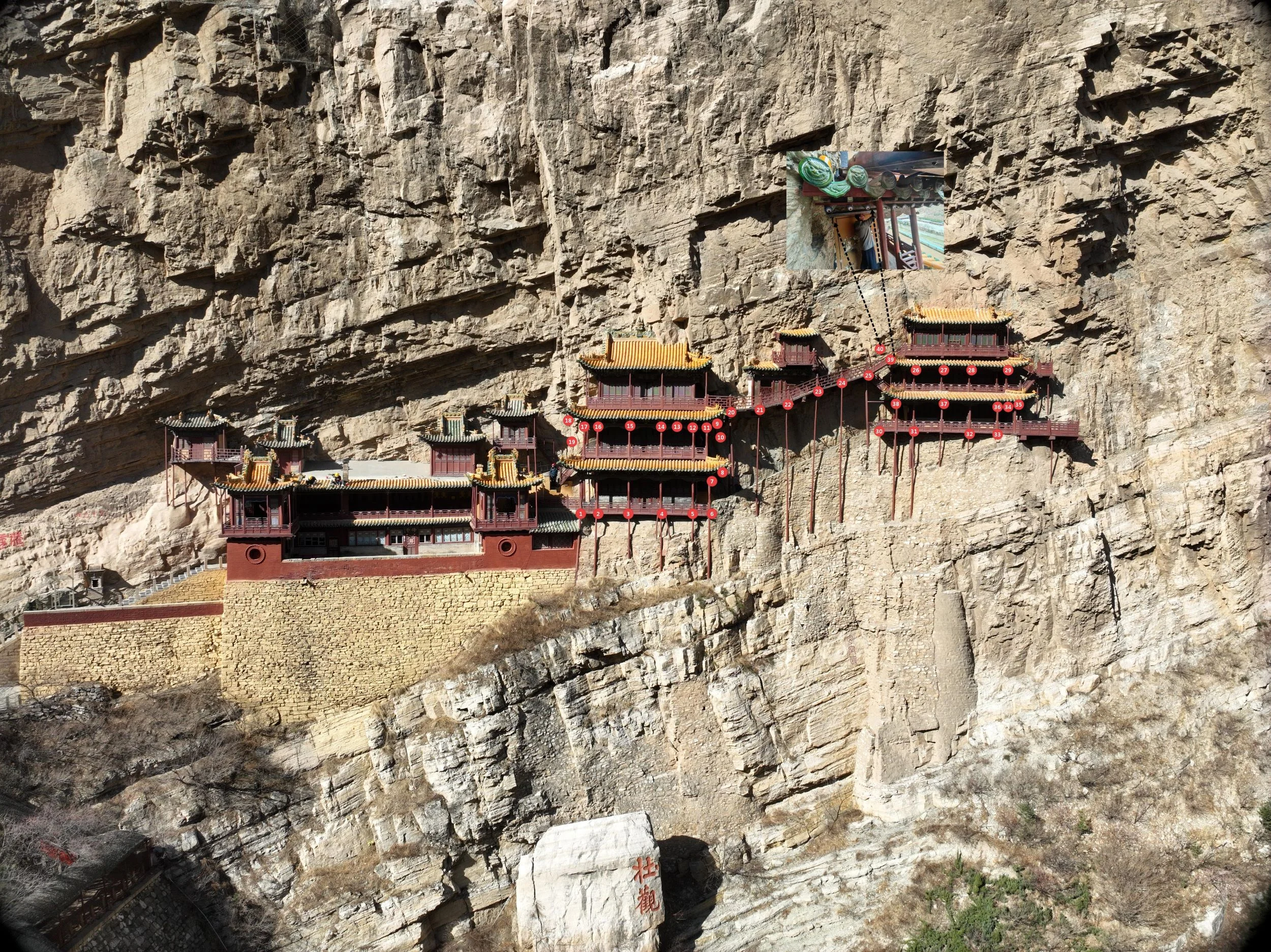

China’s Hanging Temple uses real-time fibre-optic monitoring to track structural risks from tourism, ageing wood, and seismic activity.
The Hanging Temple (悬空寺) in Shanxi, China, is facing increasing pressure from tourism, material ageing, and long-term geological risks. Built into the cliffs of Mount Hengshan, the wooden structure remains one of the most unusual cliffside temples in the world.
Real-Time Monitoring and Visitor Control
Recently, the Shanxi Earthquake Agency installed a distributed fibre-optic sensing system across 40 key structural points, including beams, columns, and walkways. The system runs 24 hours a day and records vibration and structural response in real time, CNS reported.
The data will help engineers assess structural safety and guide decisions on the temple’s maximum daily visitor capacity. It also provides a new technical approach for the preventive conservation of ancient wooden architecture.
The Hanging Temple dates back to the Northern Wei Dynasty in 491 AD. Builders used an “inserted beam” technique, embedding timber deep into rock crevices and relying on hidden cliff support. This design locks wood and rock into a single structural system and allows the temple to stand on a near-vertical cliff face.
In 1982, the site was listed as a National Key Cultural Relic Protection Unit in China. In 2010, Time Magazine included it among the world’s most endangered buildings.
Structural Risks and Heritage Pressure
Today, the site faces three main pressures: rising visitor numbers during peak seasons, long-term timber degradation, and regional seismic activity. These factors combine to increase structural uncertainty over time.
To reduce stress on the building, authorities introduced stricter crowd control from April 1st. Daily access is now capped at 2,475 visitors, with further reductions planned based on monitoring results.
The goal is to balance public access with long-term preservation of one of the world’s most fragile wooden architectural heritage sites.
If you liked this article, why not read: The Enduring Wisdom of China’s Ancient Wooden Buildings


