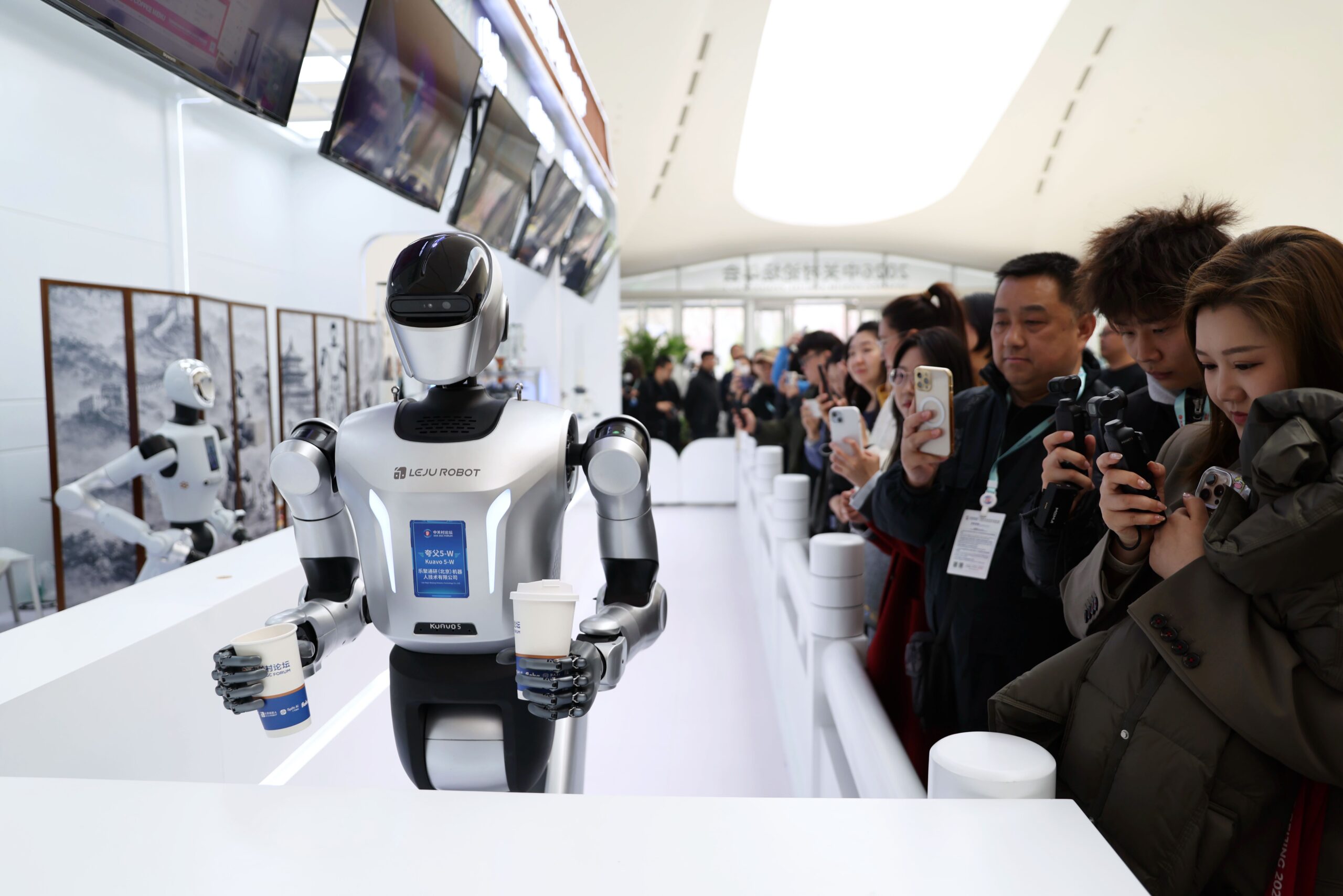

Robotics innovations take the spotlight at the 2026 ZGC Forum Annual Conference in Beijing, where multi-robot collaboration and embodied AI are showcased in real-world service scenarios.
At the opening of the 2026 ZGC Forum Annual Conference, visitors got a close look at how future technologies may shape everyday life.
The conference opened on March 25th in Beijing. This year’s theme is “Deep Integration of Technological and Industrial Innovation.” More than 1,000 participants from over 100 countries and regions are attending, according to CNS.
Across the venue, a range of new technologies is on display. Robotics stands out as a key highlight, with interactive, real-world demonstrations.
On the first day, a robot-powered food and beverage station drew strong attention. Six companies jointly developed the system, showing how multiple robots can work together in a coordinated way.
Unlike earlier single-task machines, the robots operate as a team. They handle ordering, preparation, and delivery, while a central “brain” system manages workflow and assigns tasks in real time.
According to Wang Qiang, technical director of Leju Robotics’ embodied training centre, the system uses advanced embodied intelligence. This improves perception, cognition, and decision-making, allowing robots to handle more complex service scenarios.
At the same time, developers are expanding robot capabilities. Zuo Jiaping, co-founder of Linkerbot Technology Co., Ltd., said his team is training robots to perform fine motor tasks, including threading a needle and making dumplings. Such capabilities could help preserve traditional craftsmanship in digital form.
In real-world use, embodied intelligence is moving into standardised, repetitive service tasks.
The robot food station serves as a practical demonstration, giving the public a preview of how such systems may work in daily settings. Industry participants expect similar solutions to enter commercial spaces within the next two years, especially in catering and retail.
If you liked this article, why not read: Unlocking the Potential of Cross-Border Data: UK-China Insights