
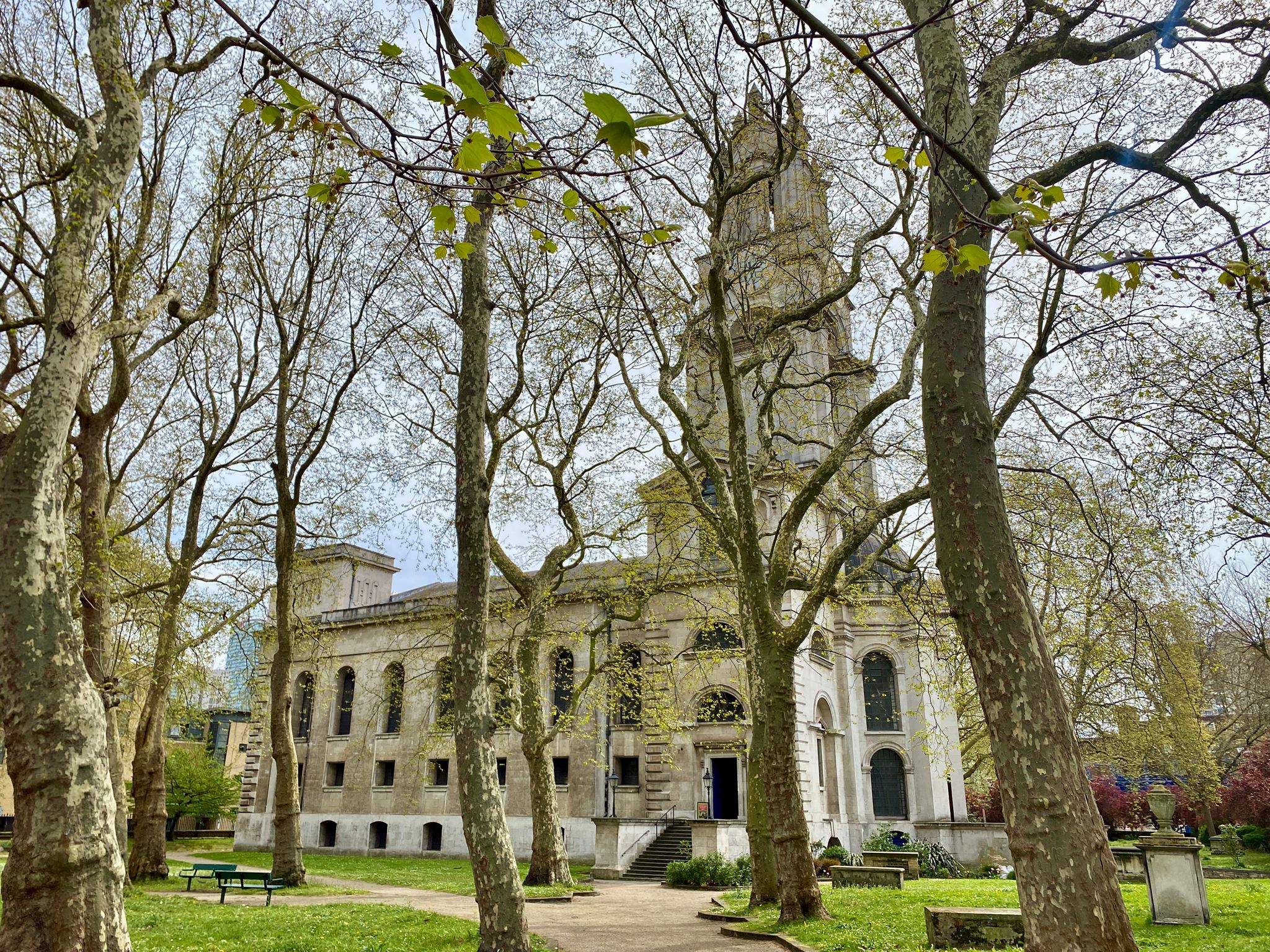

A wonderful new exhibition at St Anne’s Church in Limehouse sets apart myth and reality regarding London’s first Chinatown.
Many Londoners or visitors to the city will have passed through London Chinatown. Enjoying a meal, browsing through a Chinese bookshop, or watching Chinese New Year celebrations.
However, this wasn’t London’s first Chinatown. That grew in the 19th and early 20th century in East London. There, a handful of Chinese sailors settled near the docks in Limehouse Causeway and Pennyfields, starting Limehouse Chinatown.
Visiting the area today, there are few reminders of what once was. A curled dragon statue and names like Ming Street.
But at St Anne’s church in Limehouse, there is an excellent new free exhibition about the history of Limehouse Chinatown and the livelihoods of the people who lived there.

Titled Limehouse Chinatown The Original Chinatown: Myths and Realities, the exhibition is split into two parts.
The first presents the myths of Limehouse Chinatown. A difficult yet important journey through sensationalised and racist newspaper headlines and fiction, which created a myth of Chinese Limehouse that did not meet reality. The Mystery of Dr. Fu-Manchu series, written from 1913 onwards by Sax Rohmer is a particularly egregious example. But it can also be found in still popular works such as Tintin.
Following on from the myths, the second half of the exhibition explores the reality of Limehouse Chinatown. Family histories are traced, presenting the realities of the area’s residents. Photographs also help bring the area to life for visitors to the exhibition.
But with so little remaining, installations such as part of Hop Lee Laundry and clay sculptures recreating landmarks from the Chinatown were created by Tienan Ng to help bring Limehouse back to life.

As well as creating these sculptures, Tienan Ng was co-curator of the Chinatown exhibition alongside Philip and Jude Reddaway.
He told China Minutes that even in Singapore, where he was brought up, “we’d heard so much about London’s Chinatown, but it was never Soho – it was always the image of riverside fogs, Sherlock Holmes and Fu Manchu
“When I moved into Limehouse, I was astonished to find myself living at the very epicentre of Chinatown – because there was nothing left in the area to show that it had ever existed. As a person of Chinese ancestry, this felt like a great tragedy… It became my mission to rediscover and monumentalise the lost Chinatown.”
This is something he has certainly achieved with this exhibition.

For visitors, he hopes that the exhibition lets them “know more about the arc of the history of the Chinese in this country”. From how Chinese goods were revered as the epitome of sophistication and luxury, to Chinese people living in the UK facing extreme prejudice.
He added, “For newer Chinese residents of London, I would like them to know that their ancestors have had a presence in these streets for hundreds of years, and still call it home; and to be very proud of their achievements and contribution to the building of this nation.
“And finally, to make known the legacy of Limehouse Chinatown.”
Limehouse Chinatown The Original Chinatown: Myths and Realities is being held at St Anne’s church in Limehouse. It is open on Thursdays, Fridays, and Saturdays, 10 am –4 pm, until July 2026. The exhibition is free, but donations are welcome to help support Care for St Anne’s.
If you like this article, why not read: Searching for London’s First Chinatown in Limehouse


