
China is accelerating agricultural modernisation as AI, drones and digital technologies transform farming.
China is accelerating the modernisation of its agriculture with artificial intelligence, smart equipment, and digital technologies playing a growing role in food production.
On March 9th, Han Jun, Minister of Agriculture and Rural Affairs, said during the second “Ministers’ Corridor” interview on the sidelines of the fourth session of the 14th National People’s Congress that China now has more than 300,000 agricultural drones, the largest number in the world.
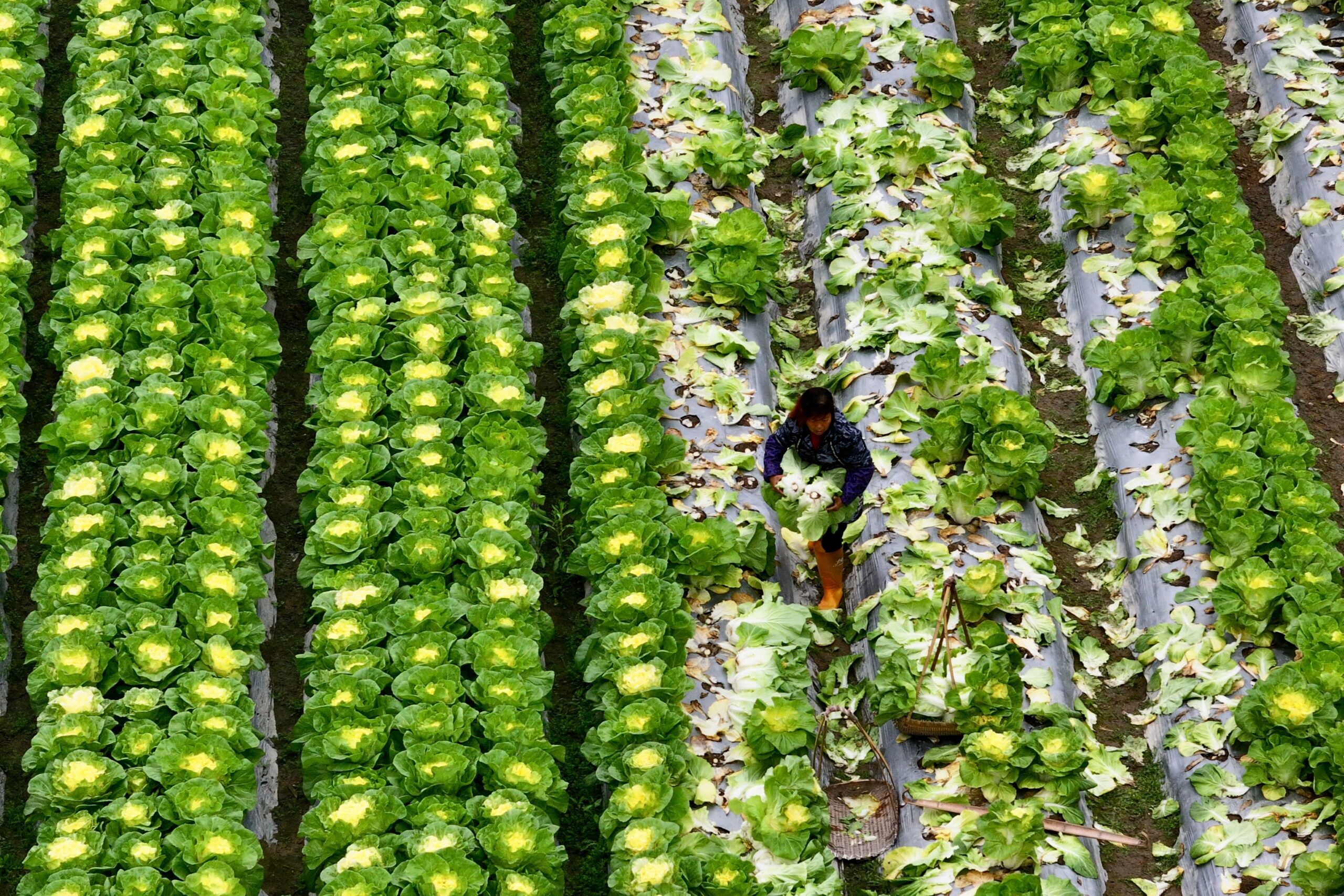
According to Han, agricultural technology is becoming a key driver of productivity. China’s agricultural science and technology contribution rate has exceeded 64 per cent, while improved crop varieties cover more than 96 per cent of farmland. Meanwhile, the comprehensive mechanisation rate of crop cultivation, planting and harvesting has reached 76.7 per cent, and major grain crops are now largely fully mechanised.
Today, agricultural drones in China operate across 460 million mu (about 30.7 million hectares) of farmland. In addition, new technologies such as intelligent harvesting robots, smart irrigation systems, and AI-powered laser weeding robots are gradually entering farms.
Smart Technology Across the Farming Chain
Artificial intelligence was one of the most discussed topics during this year’s “two sessions.” At the same time, food security remains a top national priority. As a result, many lawmakers and political advisors are focusing on how digital technologies can support grain production.
Experts say AI can help improve efficiency across the entire agricultural chain—from ploughing and planting to field management, harvesting and storage.
Zhao Zhihai, chief expert at the Zhangjiakou Academy of Agricultural Sciences in Hebei Province and a deputy to the NPC, is known for developing hybrid millet varieties. He believes AI and big data can help farmers make better decisions.
From “Farming by Weather” to “Farming by Screen”
China’s major grain-producing regions are already applying digital technologies on a large scale.
Heilongjiang Province, located in northeast China, has been the country’s largest grain producer for 16 consecutive years. During the two sessions, Liang Huiling, governor of Heilongjiang Province, said the province produced 164.006 billion jin of grain in 2025.
According to Liang, the province is building integrated smart agriculture systems that combine cultivation, planting, management, and harvesting. The goal is to move from traditional farming that relies on weather conditions to modern farming supported by digital monitoring.
“Farmers used to rely on experience and weather forecasts,” she said. “Now they can manage fields through digital platforms.”
Nie Shoujun, vice president of the Suihua Branch of the Heilongjiang Academy of Agricultural Sciences and a deputy to the NPC, said technological tools are already transforming daily farm work.
“In the past, farmers carried sprayers on their backs. Now drones handle aerial spraying,” Nie said. “The work is faster and more precise.”
He added that at Qixing Farm in Heilongjiang, many agricultural operations are now managed automatically, with minimal manual labour.
Digital Agriculture Creates New Opportunities
Technology is also changing the lives of farmers and young entrepreneurs.
Chen Yujia, a deputy to the NPC, returned to her hometown in 2016 to start an agricultural business. Over the past decade, she has seen how digital tools are reshaping rural production.
“Farming used to rely mainly on experience,” she said. “Today we use cloud-based weather platforms and solar-powered insect traps.”
Meanwhile, some members of the National Committee of the CPPCC have proposed deeper cooperation in agricultural innovation.
Wei Mingde, a member of the National Committee of the CPPCC from the HKSAR, suggested strengthening joint research and accelerating the application of new technologies.
He called for wider use of the Internet of Things, big data, artificial intelligence, and blockchain in agriculture. He also proposed improving rural digital infrastructure and training more professionals who understand both agriculture and advanced technologies.
As smart tools become more common in China’s countryside, agriculture is steadily moving toward a future shaped by data, automation and innovation.
Written by Chen Wang, additional reporting by CNS, HKCNA.
If you liked this article, why not read: Everyone’s Raising the “AI Lobster”: OpenClaw Craze Goes Viral in China.