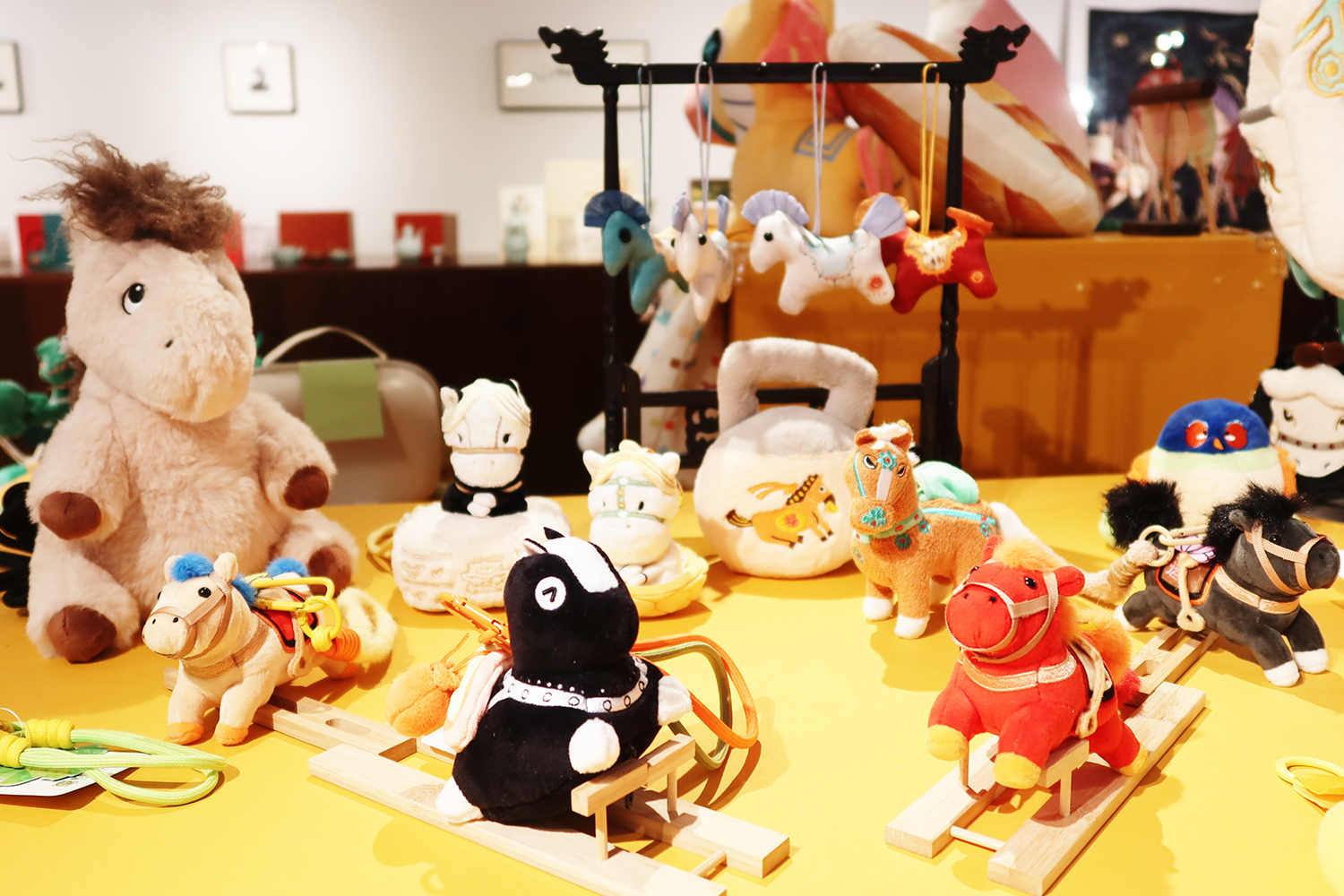

Chinese museums are ringing in the Year of the Horse with creative horse-themed merchandise. Here’s a look at what’s available.
In many Chinese museums, entry is free, yet visitors often leave having spent a fair bit of money on creative souvenirs. As the Year of the Horse approaches, horse-themed merch has become the latest craze. On social media, the ‘Year of the Horse Unboxing’ trend has emerged as a popular trend, with Gen Z shoppers sharing the cultural history behind the objects.
1. ‘Ma Biao Biao’: The Spirit of Freedom
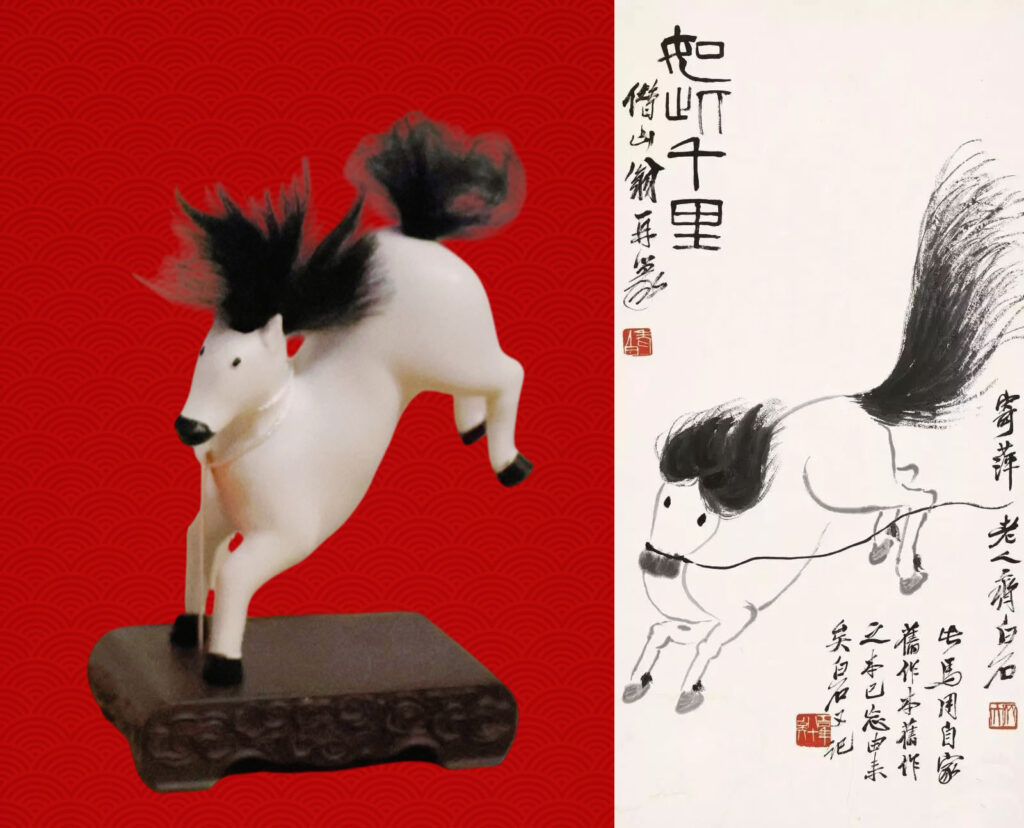
Ahead of the Year of the Horse, Shandong Art Museum introduced ‘Ma Biaobiao’ (马彪彪), a playful horse with deliberately messy hairstyles.
The online community has fallen for its ‘rough but free’ spirit. Many call it the ‘sloppy horse’. They restyle their hair, dye it in bold colours, and post these DIY makeovers across social media.
The design draws inspiration from So Swift a Thousand Miles (如此千里), a late-period galloping horse painting by Qi Baishi. Many young people see themselves in it, relating to its restless energy and unpolished honesty.
2. The Lucky Red Horse
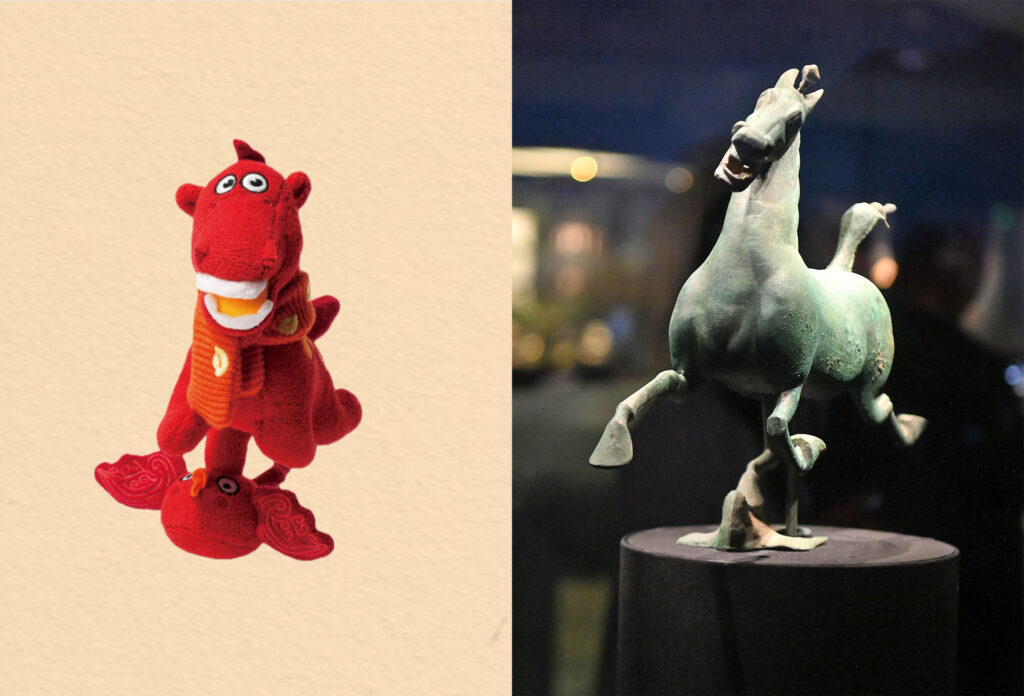
The Gansu Provincial Museum’s crown jewel is the Han Dynasty bronze sculpture Galloping Horse. Inspired by this iconic sculpture, the museum created its ‘Green Horse’ plush toy series. Its adorably quirky design makes it unforgettable.
This year, the museum launched the ‘Lucky Red Horse’, a festive red version for the Chinese New Year. They also released a ‘Zodiac Year Horse’ dressed in a red knitted sweater, and a ‘Western Pony’ incorporating cowboy-style elements. These plushies quickly drew attention when they launched.
‘Seeing the Galloping Horse in the museum is awe-inspiring, but the plush version really brings the artefact to life,’ a visitor said.
3. The ‘Dark Horse’ Collection
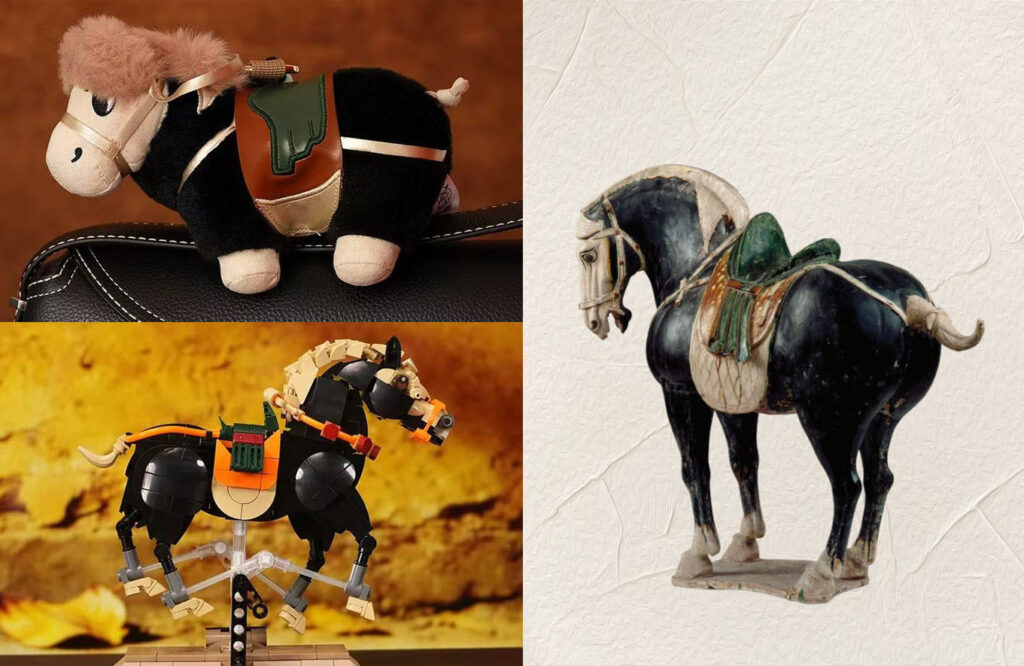
The National Museum of China has launched a merchandise collection inspired by a Tang Dynasty tri-coloured ceramic horse. In Tang tri-colour pottery, blue and black glazes were notoriously difficult to control at high firing temperatures, making high-quality pieces rare.
The collection includes a plush bag charm that neighs and makes galloping sounds when you pat its rump. It is a cheeky play on the Chinese idiom for ‘flattery’, which literally translates to ‘patting the horse’s rump(拍马屁)’.
There is also a building-block set. You can assemble the horse yourself and play with its moving parts, getting a feel for how Tang-era sculptors shaped their work.
4. Blessings on Horseback
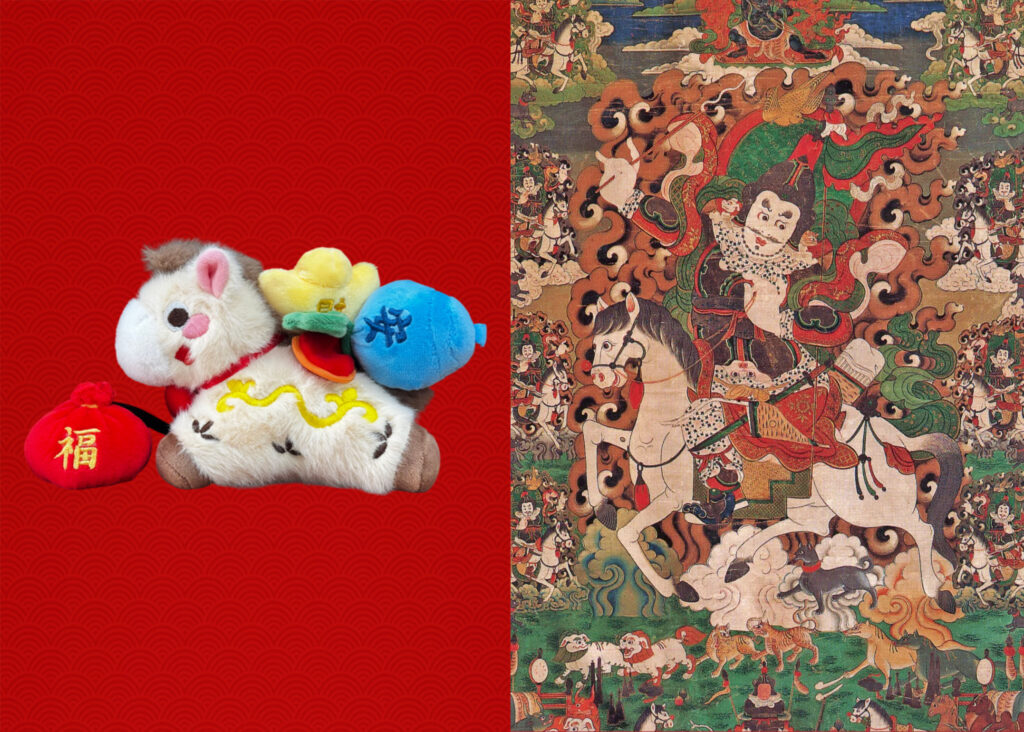
At Beijing’s Miaoying Temple (also known as the Temple of White Pagoda), a thangka painting of the ‘God of War’ (known as Dralha) rides atop a white horse.
Inspired by the white horse, the temple’s traditional pharmacy has released a plush charm called the ‘Blessings on Horseback’. The plush charm is decorated with traditional honeysuckle patterns, a design that originated in ancient Greece and spread to China via Buddhism.
A magnet on the horse’s back holds four interchangeable charms. Each symbol represents a wish: fulfilment, happiness, wellbeing and prosperity.
5. The Coloured Glaze ‘Heavenly Horse’
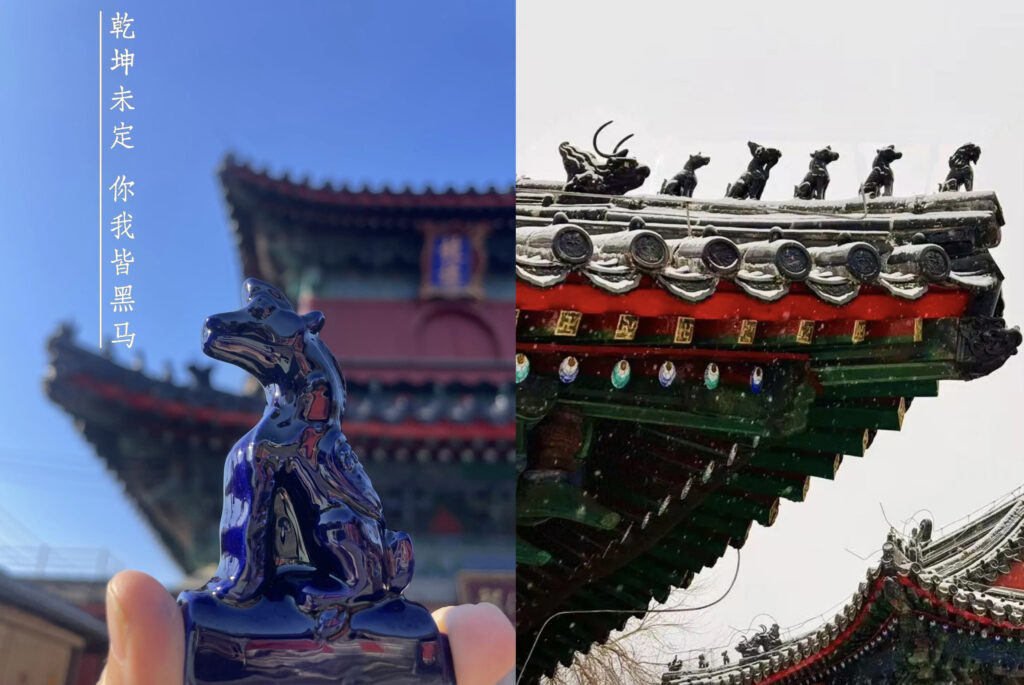
The Zhihua Temple preserves one of Beijing’s finest Ming dynasty timber complexes. The temple’s design team took inspiration from the ‘Heavenly Horse’ (a traditional roof ornament commonly seen in Ming architecture) and turned it into a series of vibrant fridge magnets. Using centuries-old Chinese glazed-ceramic techniques, they produced the set in seven rich colours.
Each piece is handcrafted through more than twenty steps and takes over a week to finish. The black-glazed horse, representing wisdom, is particularly popular. It carries an inspiring message: the race isn’t over yet—any of us could still be a dark horse (the surprise winner).
6. Spirit of the Grasslands
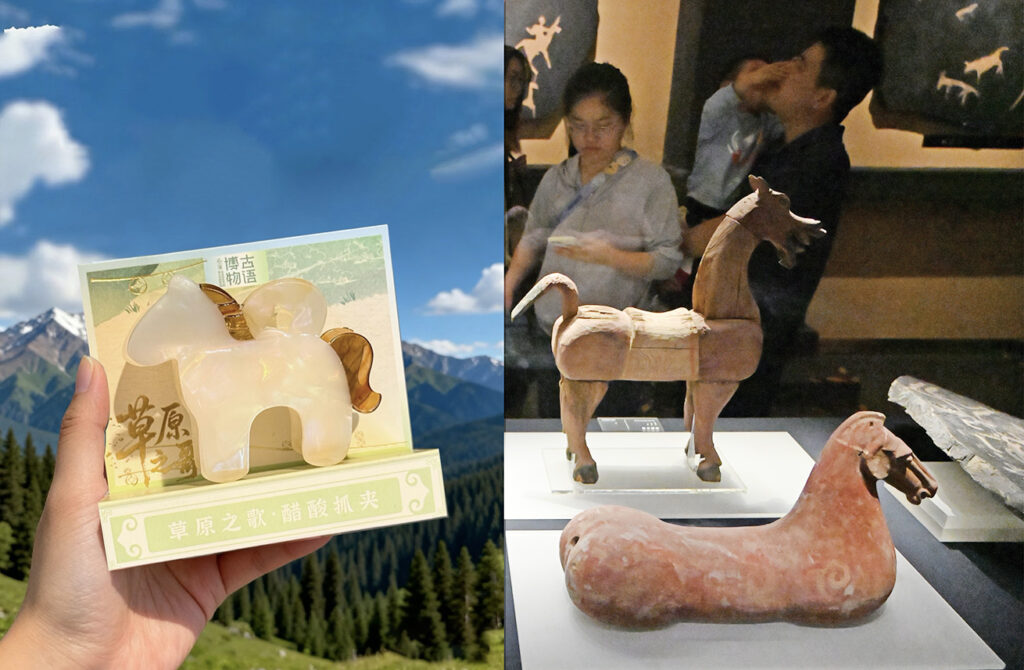
When people think of Inner Mongolia, they often imagine riders galloping across vast, open plains. Taking inspiration from the region’s iconic horses, the Inner Mongolia Museum has created the ‘Spirit of the Grassland’ pony hair clip, bringing a sense of wild freedom into everyday life.
The pony features a simple design and carries a small coin on its back. In Chinese, the phrase for ‘on horseback’ sounds like ‘swiftly’, so a coin on a horse’s back literally means ‘wealth comes swiftly’.
7. The Power of the Horse
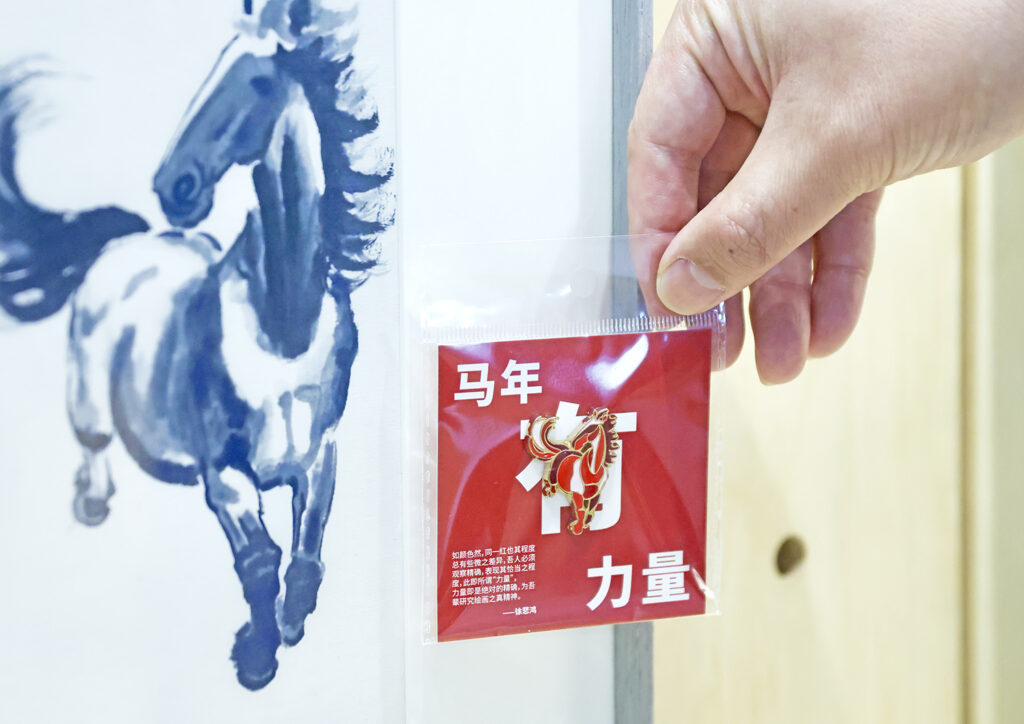
At the Xu Beihong Memorial Museum in Beijing, the artist’s famous galloping horses have been transformed into festive red badges. Each badge comes with a card printed with Xu’s quotes on strength and resilience.
The horse depicted is taken from Heavenly Horse Galloping across the Sky (天马行空), painted by Xu in 1948. Xu was known for combining Chinese ink traditions with Western techniques, and the merchandise reflects this mix. The designs merge traditional Chinese styles with Western influences, using Morandi-inspired colours and collage elements.
8. The New Year’s Steed Art Park
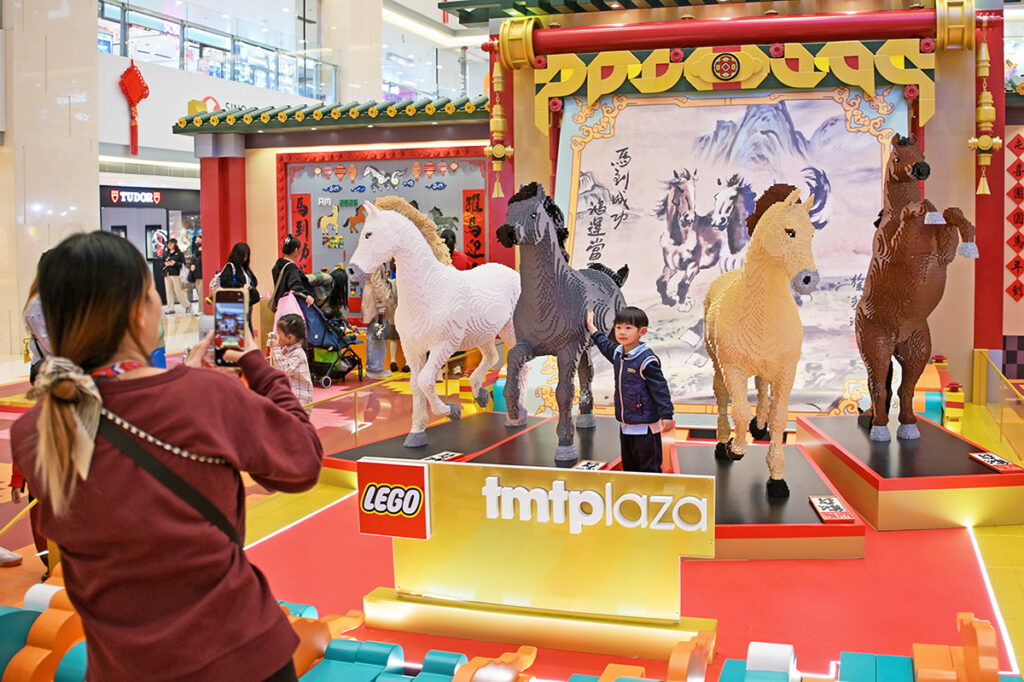
In Hong Kong, a major shopping centre has created the New Year’s Steed Art Park, inspired by Xu Beihong’s horse paintings and built from 400,000 LEGO bricks. Four horses, each standing two metres tall, are displayed alongside two ink-style horses on a backdrop, recreating Six Galloping Horses (六骏图).
The installation also features interactive lantern projections that combine artificial intelligence with traditional ink painting, making the park one of Hong Kong’s most popular spots for New Year photos.
‘Xu Beihong’s horses are ink-painting classics, and LEGO is a toy children immediately connect with,’ said a Hong Kong resident visiting with his child. ‘Bringing the two together is incredibly clever.’
Written by Estelle Tang.
If you liked this article, why not read: Year of the Horse: Myths, History and Art