
Yangxin Dian reopens at the Palace Museum after a decade-long restoration, featuring digital conservation techniques.
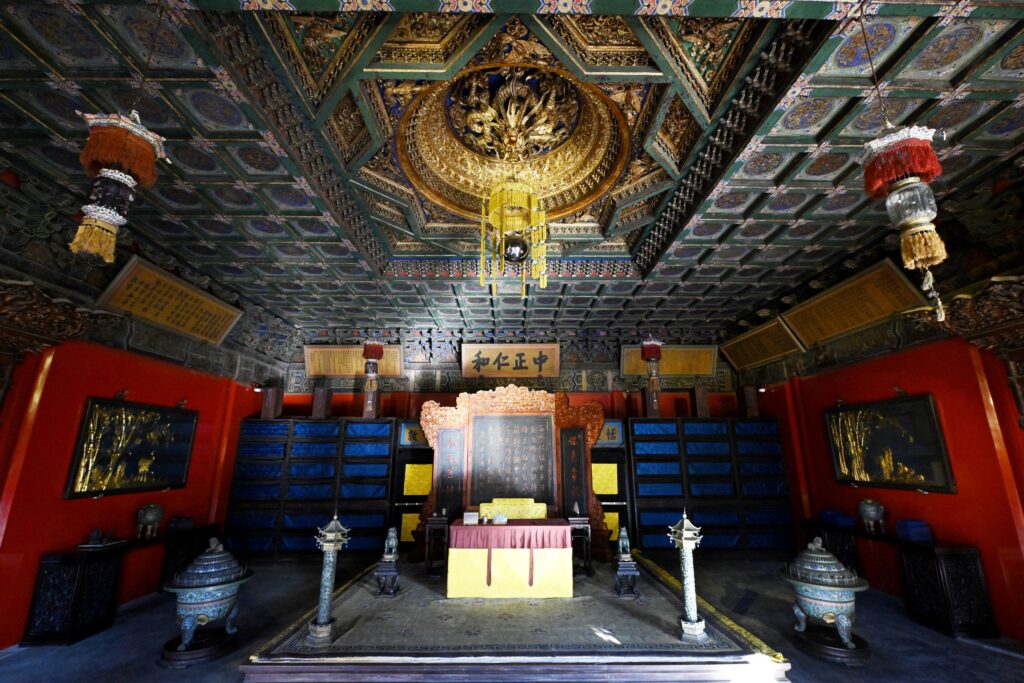
On December 28th, the Palace Museum in Beijing reopened the Hall of Mental Cultivation (Yangxin Dian), one of the most important spaces in the Forbidden City. Built in 1537, the hall served as the daily living and governing centre for Chinese emperors during the Ming and Qing dynasties.
Unlike grand ceremonial buildings, Yangxin Dian served as a working and residential space where imperial power was exercised on a daily basis. After nearly ten years of conservation work, the site is now open to the public for the first time in decades.
For many visitors, the reopening offers a rare look inside a once-restricted area. “I had only seen it in books and on television,” said one visitor waiting to enter. “This is my first time walking through it.”
Preserving History Through Original-Condition Displays
Instead of recreating a single historical moment, the Palace Museum adopted an “original-condition display” approach. Each room reflects the period when it played its most significant role.
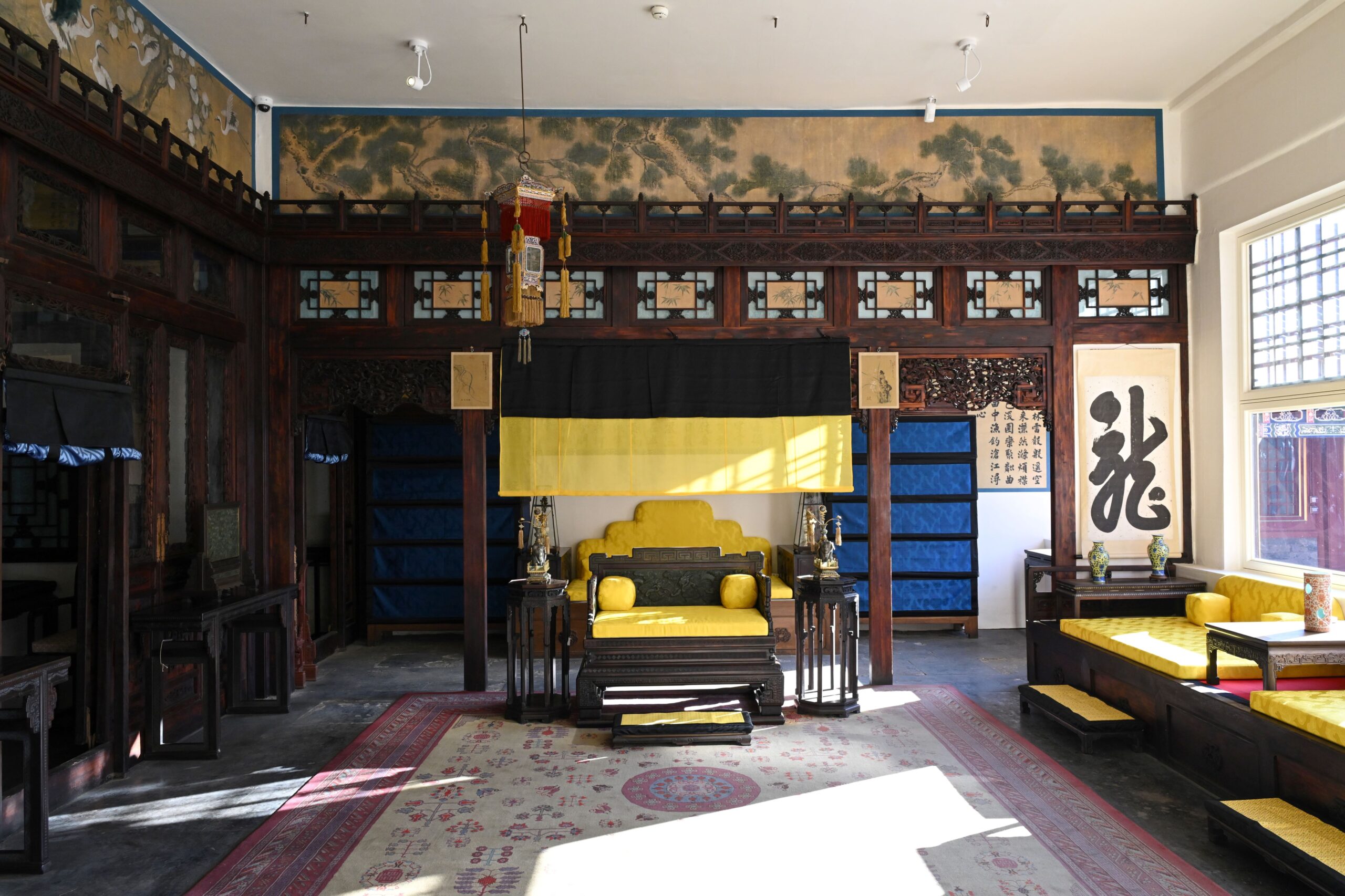
The Hall of Three Rarities (Sanxi Tang), once the private study of Emperor Qianlong, has been restored as a scholarly workspace with calligraphy tools on display. In the West Warmth Chamber (Xinuan Ge), a prominent plaque reading “Diligent in Governance, Respect for the Worthy (勤政亲贤)” highlights the governing ideals of the Yongzheng and Qianlong eras.
The East Warmth Chamber presents a lesser-known political scene. A raised platform, a young emperor’s throne, and a dividing curtain recreate the setting of “ruling from behind the curtain,” when empress dowagers exercised real authority.
Some visitors say the experience challenges expectations. “It’s not as grand as I imagined,” said Liu, a Beijing resident. “But it feels more real.”
Digital Technology Supports Heritage Conservation
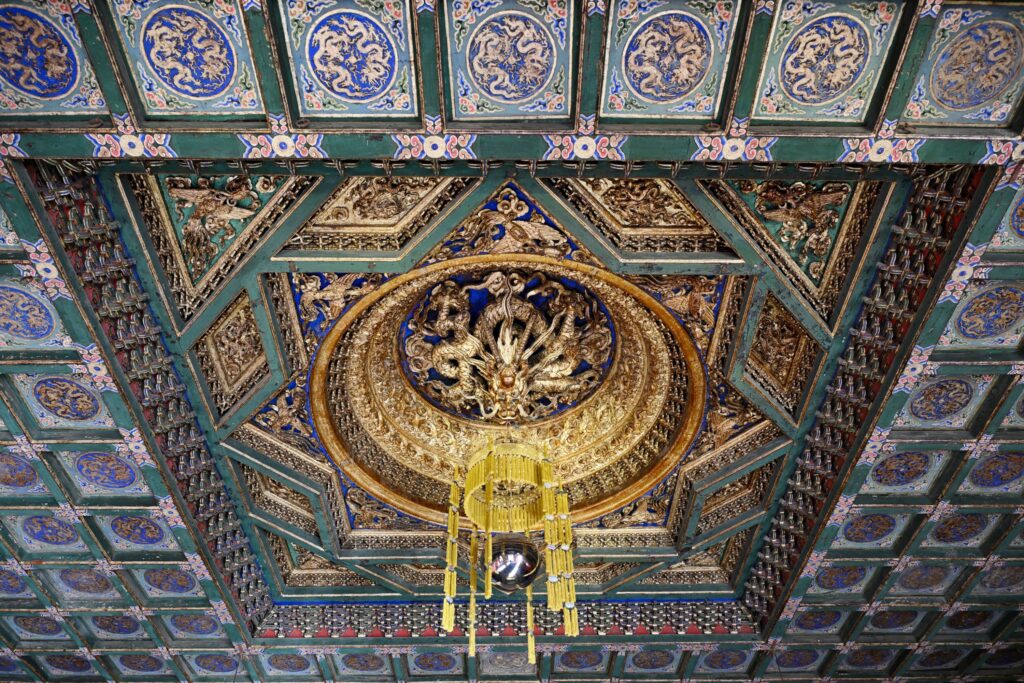
The reopening follows a research-based conservation project launched in 2015, the first comprehensive restoration of Yangxin Dian in over a century. Specialists repaired nearly 500 cultural artefacts and hundreds of architectural elements, many of which showed cracks or structural damage.
According to Qu Feng, head of the museum’s conservation department, the project combined traditional craftsmanship with digital tools. Damaged components were scanned in 3D, reconstructed virtually, and in some cases assisted by 3D printing before final manual repair. A dragon head above the “Yangxin Dian” plaque was restored using this method.
The Palace Museum has also released a digital twin of Yangxin Dian, allowing global audiences to explore the space online with guided explanations.
The reopening coincides with the museum’s 100th anniversary. Over the past century, public access has expanded to more than 80 per cent of the Forbidden City. With Yangxin Dian now open, another once-private imperial space has returned to public view.
Written by Ronnie Yu, additional reporting by HKCNA, CNS.
If you liked this article, why not read: New Reason to Visit the Palace Museum: Qianlong Garden Is Open