
China launches the BEST fusion project in Hefei to ignite the “Artificial Sun,” advancing burning plasma research and international collaboration in clean energy.
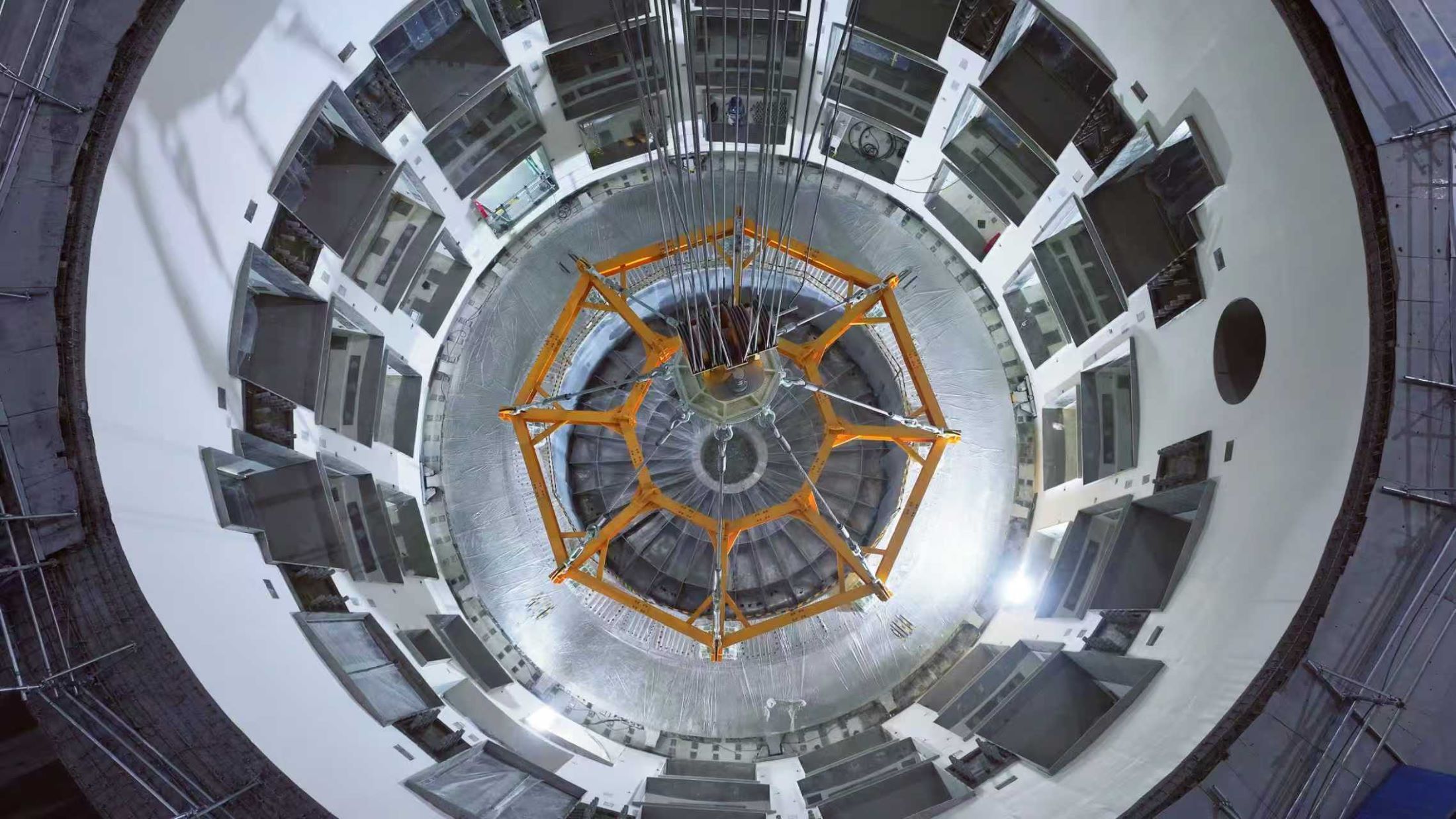
On November 24th, the Chinese Academy of Sciences officially launched the “Burning Plasma” international scientific program in Hefei, Anhui Province. At the same event, the institute unveiled the Burning Plasma Experimental Superconducting Tokamak (BEST) research plan, opening the project to the global fusion research community, according to HKCNA.
The program aims to conduct burning plasma experiments, demonstrate fusion power generation, and achieve energy output greater than consumption. The ultimate goal is to ignite the “artificial sun” — a controlled nuclear fusion reaction that mimics the energy generation process of the sun.
Towards the Artificial Sun
Nuclear fusion, often called humanity’s “ultimate energy,” fuses atomic nuclei like the sun, releasing vast amounts of clean energy. For decades, researchers have explored extreme conditions and long-pulse operations through magnetic confinement devices.
“We are entering a new stage in burning plasma,” said Song Yuntao, vice president of the Hefei Institute of Physical Science and director-general of the Institute of Plasma Physics. “The reaction sustains itself with the heat it generates, laying the foundation for continuous fusion power in the future.”
The BEST device, China’s next-generation “artificial sun,” will conduct deuterium-tritium burning plasma experiments after its completion in late 2027. The project aims for fusion power ranging from 20 to 200 megawatts to produce more energy than is consumed.
Global Partnership and Challenges Ahead
Scientists from over ten countries, including France, the UK, Germany, Italy, Switzerland, Spain, Austria, and Belgium, signed the Hefei Fusion Declaration. The declaration encourages open sharing, international cooperation, and joint research in fusion science.
“This is uncharted territory,” Song said. “We will face many engineering and physics challenges. For example, alpha particles are critical to maintaining the ultra-high temperatures needed for fusion, and their transport mechanisms still require study.”
The Burning Plasma International Science Program will open multiple large-scale fusion platforms, including BEST, to global researchers. Hefei has become a key hub for fusion research, supported by major facilities such as the all-superconducting tokamak EAST, EAST auxiliary heating systems, and the Comprehensive Research Facility for Fusion Reactor Technologies. These platforms underpin China’s advances in fusion energy and strengthen international collaboration.
If you liked this article, why not read: Robotic Finger Lifts Tofu and Potato Chips Without Breaking Them