

Overseas Chinese youth explored Shanxi, Shanghai and Chengdu this summer, experiencing ancient architecture, intangible cultural heritage and traditional Chinese culture through immersive activities.
This summer, groups of overseas Chinese youth travelled across China, exploring the country’s rich cultural heritage through firsthand experiences. From ancient temples and historic towns to traditional crafts and local cuisine, they discovered China beyond the pages of textbooks.
Following Wukong to Explore Ancient Architecture
Home to magnificent grottoes, well-preserved ancient towns and centuries-old temples, Shanxi became one of the most popular destinations for overseas Chinese youth this summer.
Overseas Chinese teenagers from Spain, Austria and other countries explored Shanxi by following Wukong’s trail, visiting historic sites that inspired locations in the video game Black Myth: Wukong.
Intangible cultural heritage was also a highlight of their visit. Through traditional crafts such as dough sculpture and paper-cutting, they got a firsthand taste of local Chinese culture. Some also sampled Shanxi specialities, including its famous noodles.
A teacher from a Chinese school in Bern, Switzerland, said her previous impression of Shanxi mainly came from textbook pictures. She hoped students could experience the region’s rich history and vibrant culture through museum visits and local food.

Making Herbal Sachets and Xiaolongbao
If Shanxi offered young visitors a glimpse into China’s ancient history, Shanghai showed them how tradition blends with modern city life. A group of overseas Chinese youth from the United Kingdom, France and other countries visited Shanghai for a cultural journey.
At the Shanghai Huangpu study camp, participants visited the Tong Han Chun Tang Traditional Chinese Medicine Museum. There, they learned about traditional Chinese medicine and made their own herbal sachets.
They also experienced traditional martial arts by practising the Jiaolong staff technique. Through the activity, they gained a deeper understanding of the spirit of Chinese kung fu.
At Nanxiang Steamed Bun Restaurant in Yuyuan Garden, they learned how to make xiaolongbao (steamed soup dumplings). They practised every step of the process, from preparing the dough to shaping the dumplings’ signature delicate folds.
Through these experiences, overseas youth discovered that Chinese culture is more than a treasured heritage preserved in museums. It is a living tradition, found in a handmade herbal sachet, the movements of a martial arts routine, and the warmth of a freshly made xiaolongbao.

Visiting Du Fu’s Home and Experiencing Bashu Culture
Chengdu has also become a popular destination for overseas Chinese youth to experience Bashu culture. In Chengdu, overseas youth visited Du Fu Thatched Cottage. They stepped into the world once inhabited by the renowned poet. They also explored sites related to the Three Kingdoms period, bringing stories from their textbooks to life.
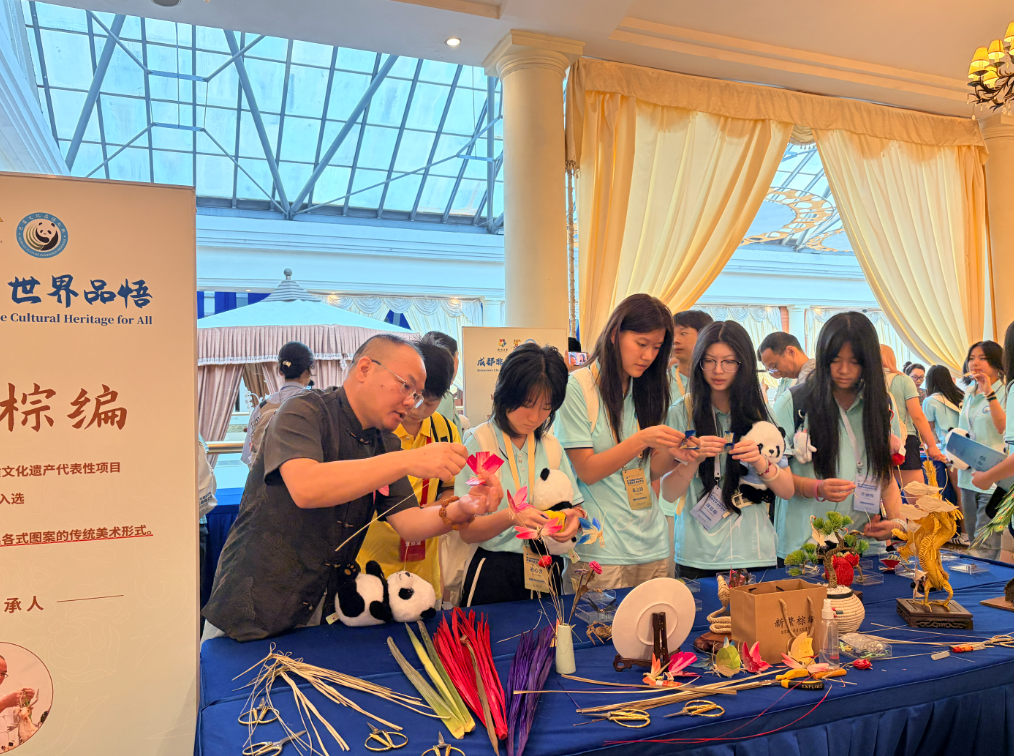
The Sichuan trip also featured a variety of hands-on cultural activities. Participants tried traditional crafts such as sugar painting, dough figurine making, and calligraphy. Under the guidance of skilled artisans, they created their own works.
Along the way, they also made new friends from different countries and regions. They shared their experiences, learned from one another, and built lasting friendships through their journey.
For these young travellers, Chinese culture was no longer something confined to history books. It became something they could see, taste, touch and experience firsthand.
Written by Sha Liu, additional reporting by CNS.
If you liked this article, why not read: How a Cat Village in China Became a Tourist Attraction


