
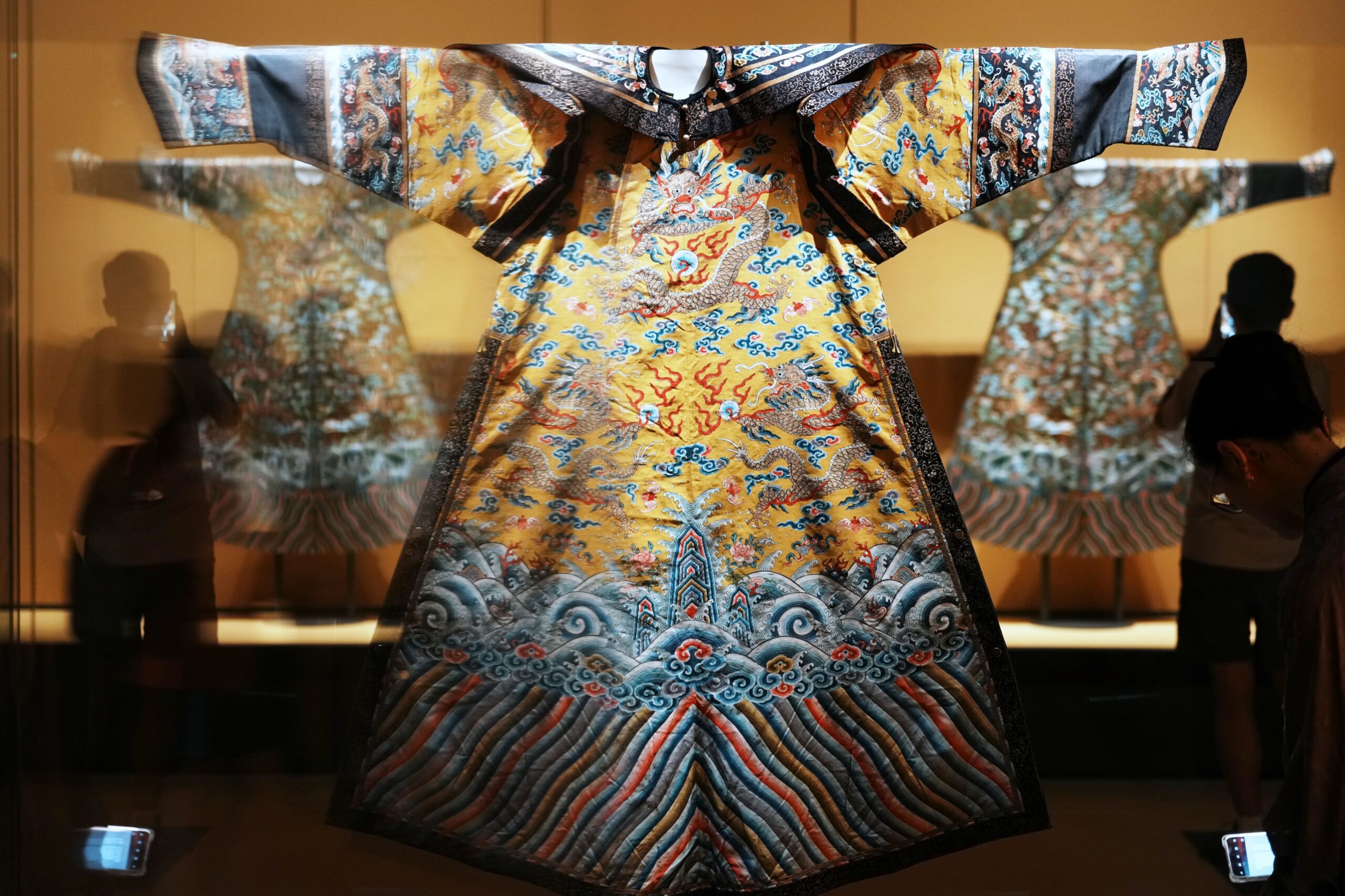

What did imperial fashion look like hundreds of years ago? A new exhibition in Shanghai answers that question with more than 100 rare court costumes and textiles from the Palace Museum.
Imperial Colours: Qing Dynasty Court Costumes from the Palace Museum opened at the World Expo Museum in Shanghai on July 6th. The exhibition brings together court robes, fabrics and accessories. Together, they showcase the craftsmanship, colour system and ceremonial traditions behind Qing imperial dress.
Imperial clothing ranked among the finest achievements of traditional Chinese textile art. Emperors and empresses wore different garments for different occasions. Every colour, pattern and decoration followed court etiquette. At the same time, master artisans created each piece with remarkable weaving and embroidery skills. In many ways, these garments were the ancient Chinese version of haute couture.
Nearly 90 per cent of the exhibits are leaving Beijing for the first time. More than 30 per cent are also making their public debut. Visitors can see robes once worn by four Qing emperors—Kangxi, Qianlong, Jiaqing and Tongzhi. The exhibition also features garments and textiles associated with six empresses and empress dowagers, including Cixi.
One of the most eye-catching exhibits is a brown satin dragon robe fabric embroidered with peacock feathers. Gold thread and coloured silk form dragons, clouds, bats, floral medallions and wave patterns. Meanwhile, the peacock feathers create shimmering colours that change with the light and viewing angle. Because peacock feathers were scarce, textiles like this were rare even in the Qing court.
Another highlight is a pale lavender satin robe embroidered with daffodils and longevity motifs in gold and silver thread. Late Qing court photographs suggest it belonged to Empress Dowager Cixi. In addition, the daffodil decoration matched the season. The flower sprouts in autumn and blooms in early spring, so the robe was likely worn then. The pale lavender shade also became a fashionable court colour in the late Qing period.
The exhibition runs through October 8th, offering visitors a rare chance to see many of these Palace Museum treasures outside Beijing for the first time.


Additional reporting by Wang Ji and Li Jiajia.
If you like this article, why not read: Gordon Cheung Exhibition Opens at Close Gallery, Somerset


