

An AI Brand Asset Development White Paper was released by the National Institute of Advertising at London World Future Technology Development Summit.
The World Future Technology Development Summit, an official fringe event of London Tech Week, was held on Thursday at IET London: Savoy Place on the banks of the River Thames. Organized by the World Federation for Future Technology Development (WFT) in partnership with the 48 Group Club and other institutions, the summit was geld under the theme “Connecting Eastern and Western Wisdom, Shaping the Future of Development,” focused on four key frontier sectors: artificial intelligence, robotics, intelligent manufacturing, and new energy technologies, and brought together more than 400 government officials, academics, industry experts, and business leaders to discuss technological collaboration between China and Europe and the future of global innovation.
During the event, the National Institute of Advertising (NIA), together with the UCL Centre for Artificial Intelligence, the World Federation for Future Technology Development, the Nouvelles d’Europe UK Edition, and International Brand Network, officially released the AI Brand Asset Development White Paper.
Wang Xin, Vice President of the National Institute of Advertising, said the study was developed against a profound technological backdrop. “As AI becomes the infrastructure through which people understand the world, the essence of branding, the nature of competition, and the metrics used to evaluate value will undergo fundamental transformation,” Wang said. “This is not merely a paradigm shift in marketing; it is a strategic issue that will determine the future survival and competitiveness of enterprises.”

The White Paper represents the institute’s latest research achievement in branding under the AI era. Led by the NIA over a 12-month period and supported by multiple international institutions providing technical and data assistance, the study covers North America, Europe, and the Asia-Pacific region. It examines five major sectors—including enterprise services, retail e-commerce, local services, content intellectual property, and education and cultural tourism, as well as 23 technology subsectors such as robotics, new energy, wearable devices, and medical equipment. According to the report, its objective is not to refine existing branding theories but to establish a comprehensive theoretical and evaluation framework for brand equity in the AI era at a pivotal moment of transformation in digital branding.
The White Paper identifies three stages in the evolution from “digital brands” to “intelligent digital brands.” The development of digital brands itself has gone through two major iterations. In the traffic era, brands competed primarily through search engine rankings and click-through rates, focusing on securing visibility. During the content era, competition shifted toward capturing attention and building emotional connections, emphasizing user engagement and relationship management. The widespread adoption of generative AI, the report argues, has fundamentally altered the logic of brand building. Nearly 80% of global internet users now reportedly follow a “consult AI first, decide later” behavior pattern, making AI the primary gateway for information access and moving the point of brand influence to an earlier stage in the decision-making process. At the same time, China’s generative content optimization market is growing at an annual rate exceeding 140% and is expected to reach RMB 13.7 billion (approximately US$1.9 billion) in 2026, signaling the arrival of what the report describes as the cognitive era of intelligent digital branding. The changes currently taking place includes:

First, future brand value will be determined by the combined value of assets in both the cognitive world and the semantic world. Brand equity must exist not only in consumers’ minds but also as a clear, stable, and reusable knowledge profile within AI-driven semantic ecosystems. Brands that fail to establish semantic-world assets risk becoming effectively invisible in AI-assisted decision-making processes, even if they continue to receive exposure through traditional channels.
Second, the logic of competition is shifting from traffic acquisition to credibility management. Data-backed evidence, semantic depth, and authoritative sources are becoming the three key criteria by which AI systems evaluate and cite information. Traditional search engine optimization (SEO) is increasingly evolving into a content-selection stage within Retrieval-Augmented Generation (RAG) systems. Excessive content production, the report warns, may create semantic noise that prompts AI systems to filter out brand-related information.
Third, AI governance is emerging as a new prerequisite for international expansion. Compliance-oriented knowledge systems are becoming essential for entering global markets. Regulations such as the European Union Artificial Intelligence Act require brand information to be supported by traceable evidence and clearly defined risk boundaries. Non-compliant content may face reduced visibility, content filtering, or even cross-border legal liabilities.
In terms of practical application, the theoretical framework outlined above offers three key benefits. In academia, it seeks to address a gap in AI-era brand equity research by proposing a complete theoretical framework covering definition, construction, and evaluation. The study introduces a four-part model consisting of: one objective (AIBE), one foundation (KNIT Enterprise Trusted Knowledge Network), one methodology (GEO), and one evaluation system (the AIBV Index Framework). For industry, the report argues that the concept of AI brand equity and its associated development strategies can provide practical guidance for companies navigating AI-driven branding challenges. In the future, the National Institute of Advertising plans to collaborate with global data organizations and think tanks to provide end-to-end solutions covering strategic planning, content monitoring, diagnostic assessment, and implementation. In the field of global governance, the framework is designed to align brand development with emerging AI regulatory requirements, including the European Union Artificial Intelligence Act, helping Chinese companies build trusted digital credentials for international expansion.

The report concludes that brand competition in the AI era is increasingly becoming a competition in the ability to supply trustworthy knowledge. By developing trusted knowledge networks, innovating generative-engine optimization methods, and establishing measurable brand equity indices, companies can create quantifiable AI brand assets while contributing to a healthier global AI branding ecosystem.
Li Qiang, General Manager of Nouvelles d’Europe UK Edition, said artificial intelligence is profoundly reshaping global communications, brand-building strategies, and international business expansion. As a multilingual media platform rooted in the UK and connecting China and Britain, the Nouvelles d’Europe UK Edition have long focused on technological innovation, brand globalization, and bilateral industrial cooperation. By participating in the White Paper and the co-establishment of a Brand Lab (London) Research and Innovation Base with National Institute of Advertising, we hope to further leverage the combined strengths of media, think tanks, and industry resources to support Chinese enterprises in building trusted, visible, and sustainable international brand assets in the AI era.
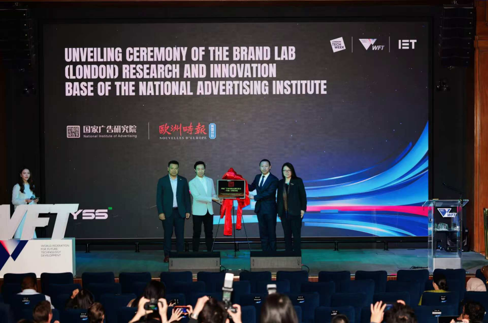
Following the White Paper launch, the National Institute of Advertising and the Nouvelles d’Europe UK Edition held an unveiling ceremony for their jointly established Brand Lab (London) Research and Innovation Base. The two organizations will use the platform to conduct collaborative research and promote practical applications in areas including AI-era brand equity and international brand expansion.
If you like this article, why not read: World Future Technology Development Summit Unveils Global Initiative for Trustworthy AI Training Data


