

The streaming giant’s plan to clone actors using artificial intelligence has ignited a fierce debate — and raised pressing questions about the future of human creativity.
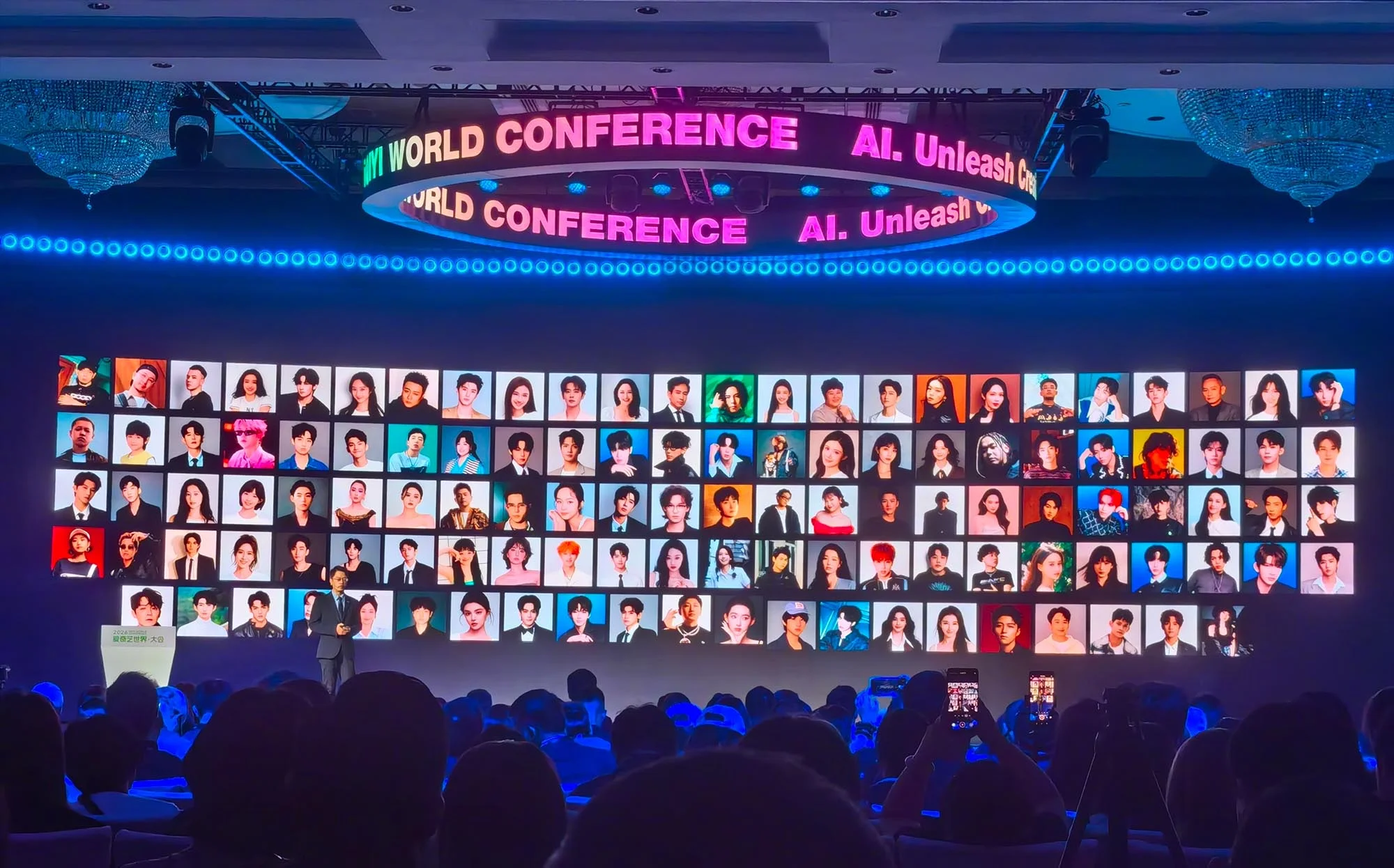
iQIYI, one of China’s leading video streaming platforms, has sparked industry-wide debate following the announcement of several AI-driven initiatives, including a digital ‘AI Talent Library’ and plans to produce fully AI-generated feature films.
Let AI Do the Acting
At the iQIYI World Conference held in Beijing on 20th April, the company’s founder and CEO Gong Yu unveiled what he called an ‘AI Talent Library’ — a system designed to digitally clone actors’ appearances, facial expressions and voices. Once cloned, a performer’s likeness could be deployed across multiple productions simultaneously, without the actor ever setting foot on set.
Gong pitched the initiative partly as a gesture of goodwill towards overworked performers. Actors, he argued, routinely spend three or four months on set with little time for personal life. His solution: let an AI counterpart take on the burden, freeing performers to live what he called a normal ‘white-collar’ life.
Gong even suggested that traditional on-set filming may eventually be seen as a ‘legacy craft’, kept alive by preservation efforts rather than commercial demand.

Why Would I Pay to Watch AI Actors?
The backlash was immediate. #iQIYI has lost its mind immediately trended on the social media platform Weibo. ‘So the actors get a holiday, and we’re left watching AI?’ one user wrote. ‘Why would I pay for a subscription to watch fake people?’ Others were more pointed: ‘Fine, they’ve licensed the face — but whose acting are they planning to steal?’
While iQIYI claims to have already signed over 100 artists to the library, several high-profile celebrities have issued statements denying any involvement or authorisation of their AI likenesses.
The talent library was just one part of a broader set of announcements. The platform also confirmed that Soul Ferryman: A Fleeting Dream, the first fully AI-generated feature film, is scheduled for release later this year.
Legal and Ethical Concerns
The shift towards AI performance has raised significant legal questions. Chen Jing, a lawyer at Beijing Guozun Law Firm, warned that the lack of clear regulatory standards in China regarding AI-generated performances poses substantial risks for talent.
‘If an AI is trained on an actor’s expressions, voice and movements, does the result even count as a performance under Chinese law?’ Chen noted. She also pointed out that transparency in revenue sharing remains a major hurdle, as the platform would have sole control over data regarding how often an AI likeness is utilised.

Beyond the legal risks, critics argue that the initiative rests on a fundamental misreading of what acting actually is. ‘Some ideas and inspirations are simply beyond what AI can reproduce.’ Li Yan, a lecturer at the Guangzhou Institute of Science and Technology, described AI as fundamentally an ‘assembly of data’ that lacks genuine inspiration. ‘Human inspiration is the beating heart of film and television — and that cannot be replicated.’
The Peaks Above the Flood
While major platforms seek formal agreements, a ‘grey market’ for human likenesses is reportedly already emerging in lower tiers of the industry. Some production companies are allegedly purchasing image rights from models and bit-part actors. The price can be as low as 100 to 500 yuan (£10 to £50) for use in short-form dramas.
Despite the controversy, some prominent figures are embracing the change. In February, acclaimed director Jia Zhangke, a regular at European film festivals, released a short New Year film, Jia Zhangke’s Dance, featuring two AI-generated versions of himself.

Reflecting on the technological shift during a lecture at the University of Hong Kong, Jia described the rise of AI as a flood. When the waters rise, everything mediocre gets submerged, but the peaks stay visible. ‘The test for creators,’ he remarked, ‘is whether we can remain the mountain peaks that stand above the water.’
Written by Estelle Tang, additional reporting by Chinanews.com.cn, Hkcna.hk.
If you liked this article, why not read: China’s Racing Boom Beyond F1: How Celebrity Influence is Reshaping the Sport


