
China is exploring space-based computing as AI drives rapid growth in data centre demand, raising new questions about energy use and infrastructure limits.
As artificial intelligence systems expand, demand for computing power is rising quickly. Data centres now consume large amounts of electricity, placing increasing pressure on the power supply.
The International Energy Agency estimates that global data centre electricity use could approach 1,000 terawatt-hours by 2030. The increase is closely tied to the rapid development of AI models.
China is exploring a new approach: moving part of its computing infrastructure into space.
A New Direction for Computing Infrastructure
In early 2026, China announced plans to build a space computing innovation centre in Beijing. The project will focus on space-based AI chips and related applications.
The plan includes building an integrated network that links ground and space-based computing systems.
This direction reflects existing land constraints. Data centres require stable power and large-scale cooling systems. In some regions, water use is also a concern. As computing demand grows, these factors are becoming more restrictive.
Space provides different conditions. Solar energy is readily available, and heat dissipation works differently than on Earth. These factors have prompted research into orbital computing.
Rising Demand Across Regions
The move toward space computing comes as China expands its computing capacity on the ground.
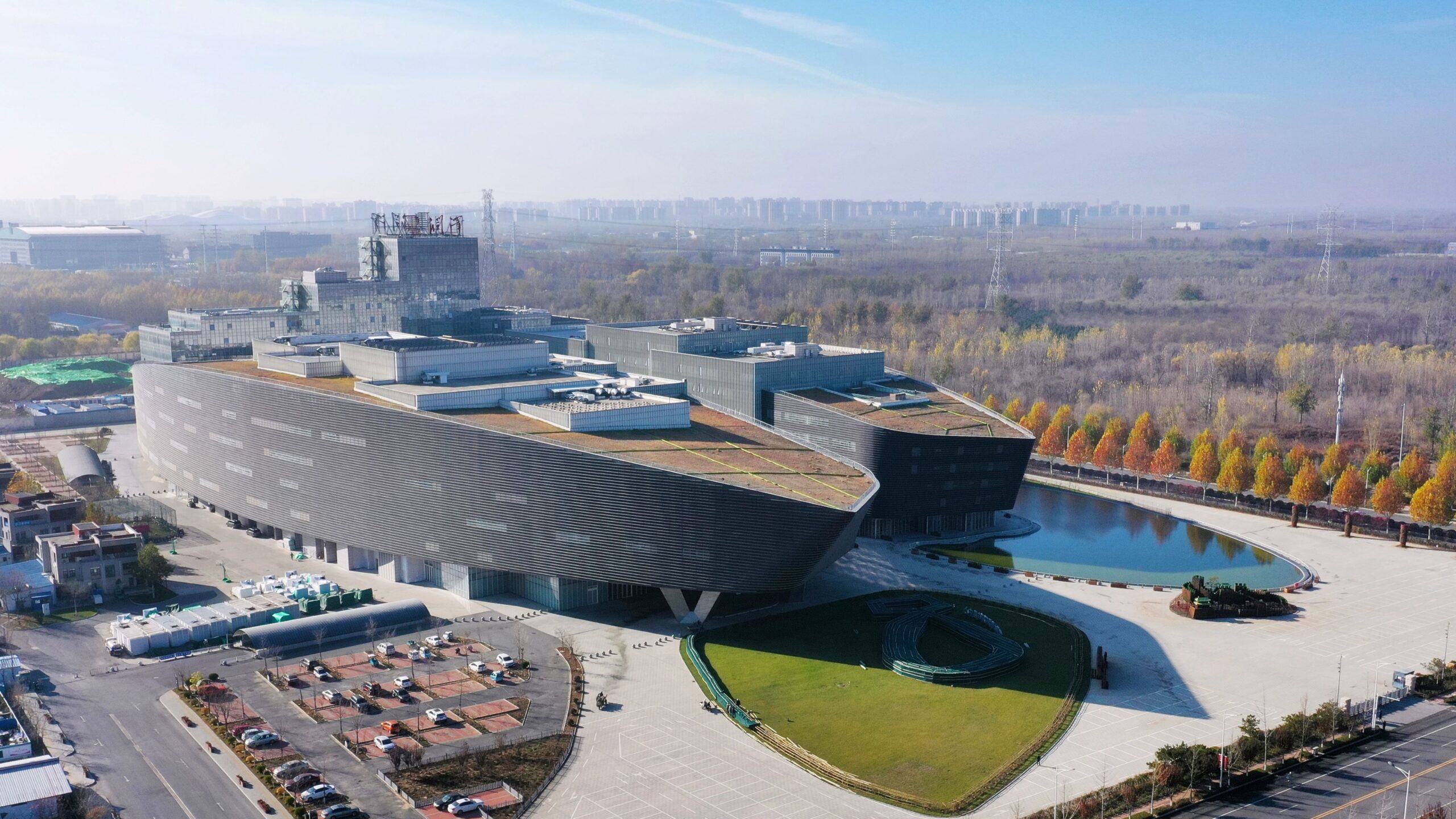
In Tianjin, a former industrial site has been converted into a data centre cluster. Facilities there now operate at high utilisation, processing data from the Beijing-Tianjin-Hebei region with low latency.
Electricity use reflects this growth. In the first quarter of 2026, power consumption from internet data services in Tianjin increased by more than 65 per cent compared with a year earlier.
Other regions are also taking measures to support the sector. In Guizhou province, local authorities have expanded subsidies for computing services. The policy now includes AI model services and data procurement, with higher incentive levels.
In Hong Kong, construction has begun on a large data centre project in the northern metropolitan area. Once completed, it is expected to significantly increase local computing capacity.
Technical Challenges Remain
Despite growing demand, space computing is still at an early stage.
Hardware must operate in a high-radiation environment. Standard commercial chips require additional protection to function reliably. Communication between space and ground systems also presents technical constraints.
Thermal management is another issue. High-performance computing generates heat, which must be controlled in a closed environment over long periods.
These challenges limit large-scale deployment in the near term. However, research and early-stage projects are moving forward.
Demand for computing power continues to rise, as expansion efforts extend beyond traditional data centres.
Written by Ronnie Yu, additional reporting by Xinhua, CNS, HKCNA.
If you liked this article, why not read: China Reports Over 140 Trillion Daily AI Token Usage