
From brain-based therapies to job training programs, China is building a more connected support system for people with autism, linking healthcare, education, and employment.
On a morning in Beijing, 17-year-old Yangyang heads out alone to buy groceries. Back home, he cooks a bowl of seafood noodles for his younger sister.
It looks like an ordinary routine. For his family, it once felt out of reach.
Yangyang was diagnosed with autism as a child. He struggled to follow instructions and often found it hard to interact with others. His mother spent years searching for help before enrolling him in a nearby support centre.
There, progress came slowly. One-on-one therapy helped him build basic skills. A baking class, which he attended for years, gave him something more — confidence. Step by step, he learned to complete tasks on his own. Now, his family hopes he can one day work in the food industry.
Yangyang’s story reflects a broader shift now underway in China. Families are no longer relying on isolated efforts. A wider support system is beginning to take shape.
New Tools for Early Intervention
For decades, autism treatment has faced two persistent challenges: diagnosis often depends on behavioural observation, and intervention outcomes can vary widely.
New technologies are starting to change that.
In Chengdu, a nine-year-old boy sits quietly in a clinic, wearing a cap fitted with dry electrodes. The device records his brain activity in real time. Doctors use the data to guide targeted neurofeedback training, aiming to regulate atypical neural patterns.
After several weeks of treatment, his parents noticed changes. He began to respond more quickly and showed better language comprehension.
Clinicians say such approaches are still evolving, but they offer a more precise way to understand and support the autistic brain. In recent years, similar trials have appeared in several Chinese cities, combining early screening with coordinated intervention.
These efforts do not replace traditional therapies. Instead, they add another layer — one that focuses on measurable signals from the brain itself.
From Training to Real-World Skills
Support does not end with therapy. For many families, the bigger question is what comes next.
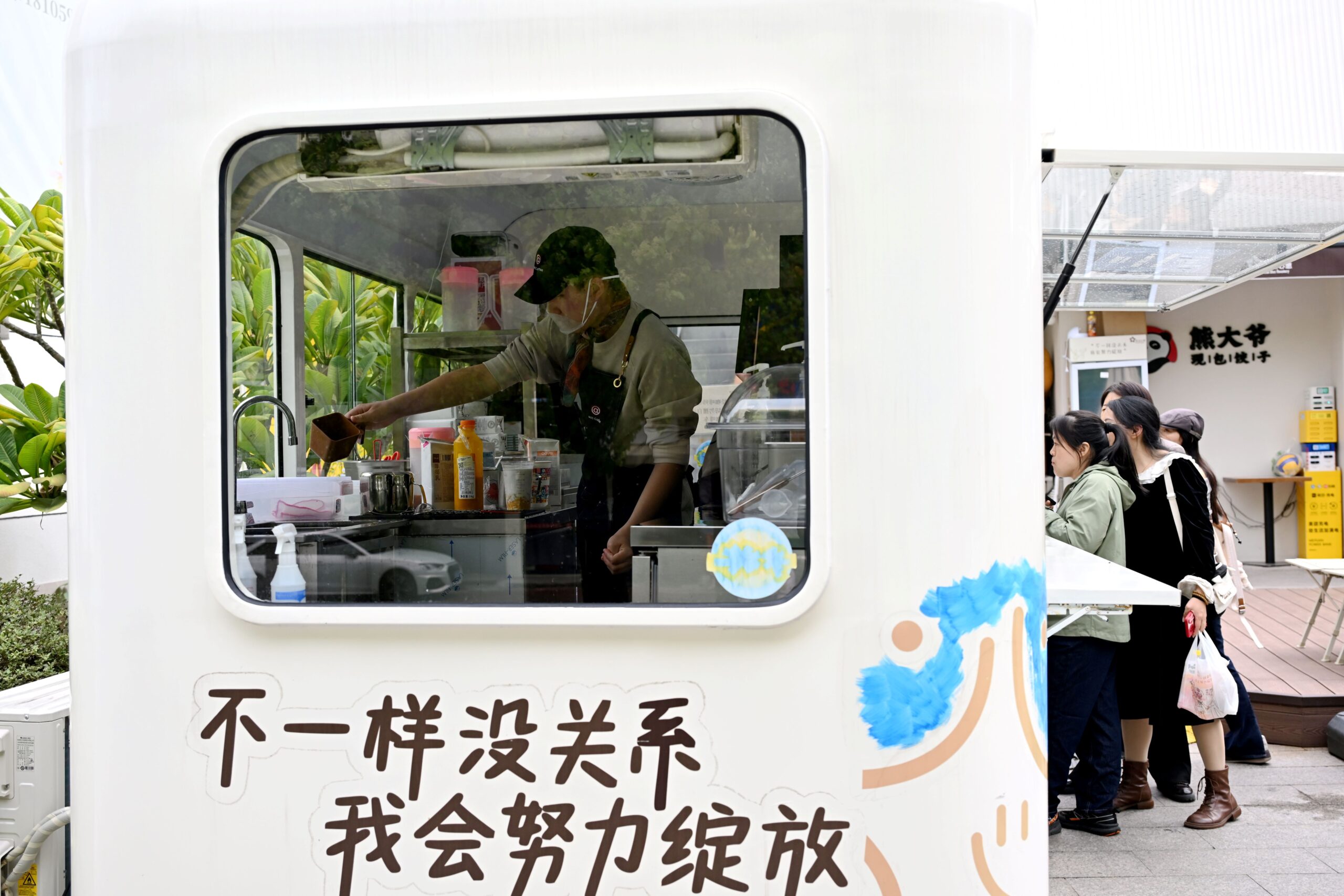
In Beijing, the centre Yangyang attends has expanded its programs beyond basic rehabilitation. It now offers courses in baking and coffee-making, along with job coaching. Staff work with local businesses to create pathways into employment.
Elsewhere, new models are emerging. Some programs provide stable jobs, such as car-washing services run by people with intellectual disabilities. Others focus on creative work. In one case, a group of young adults with autism formed a band. They rehearse, perform, and take part in commercial shows.
For participants, these experiences offer more than income. “They don’t just need care,” one organiser said. “They need to be part of society.”
A System Taking Shape
These changes are also reflected at the policy level. In recent years, Chinese authorities have placed greater emphasis on early intervention, inclusive education, and employment support for people with autism.
Some cities have introduced targeted regulations. Others have launched pilot programs that link rehabilitation services with schools, community centres, and employers.
The goal is to move beyond fragmented support. Instead of treating autism as a challenge for individual families, the system aims to share responsibility across institutions.
The shift is still in progress. Access to services remains uneven, and long-term outcomes vary. But the direction is becoming clearer.
For Yangyang and others like him, that direction matters.
What once depended almost entirely on family effort is slowly expanding into a wider network, linking therapy, education, and work. It does not remove every barrier, but it makes the way forward easier to see.
For many families, that is where hope begins.
Additional reporting by CNS, Xinhua.
If you liked this article, why not read: Lighting Up the Stars: Autism Inclusion in China