
Masterpieces from the Centre Pompidou arrive in Beijing, exploring modern art through colour, global exchange, and new ways of seeing.
A burst of colour fills the canvas. Through shifting reds, blues, and yellows, the Eiffel Tower appears beyond a window. The painting belongs to Windows, a landmark series by French modernist Robert Delaunay.
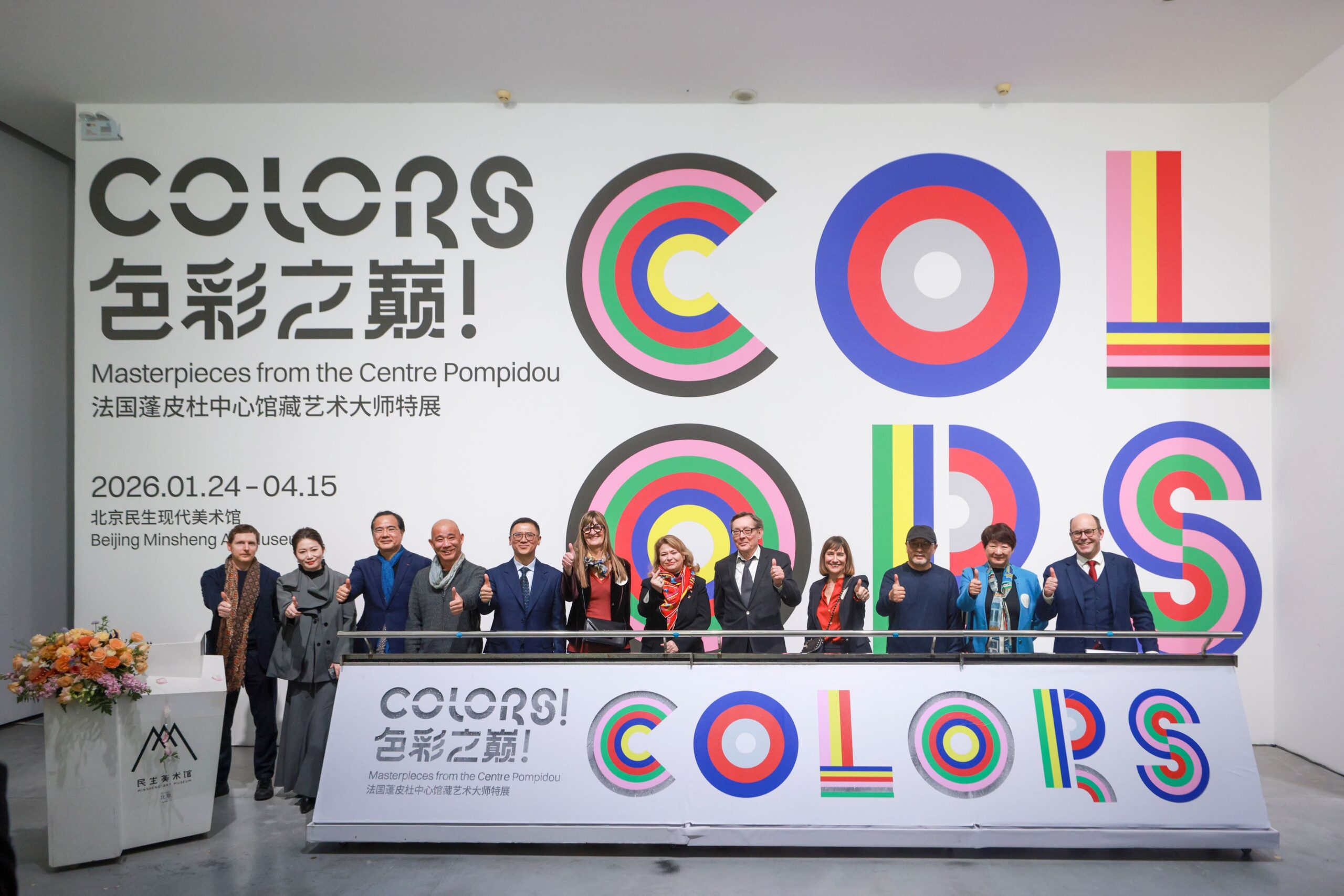
The work is now on view in Beijing. From January 24th to April 15th, Masterpieces from the Centre Pompidou is presented at Beijing Minsheng Art Museum. The exhibition brings together 86 works by 55 major Western artists and 16 contemporary Chinese artists, offering a rare encounter with modern and contemporary art through the universal language of colour.
From Paris to Beijing
France has long stood at the centre of modern art history. However, that history is no longer confined to Europe.
The Centre Pompidou in Paris closed in September last year for a large-scale renovation scheduled to last five years. During this period, the museum launched the Centre Pompidou | Constellation program, sending selected masterpieces from its collection on international tours. The exhibition in Beijing marks one of the program’s key stops in China.
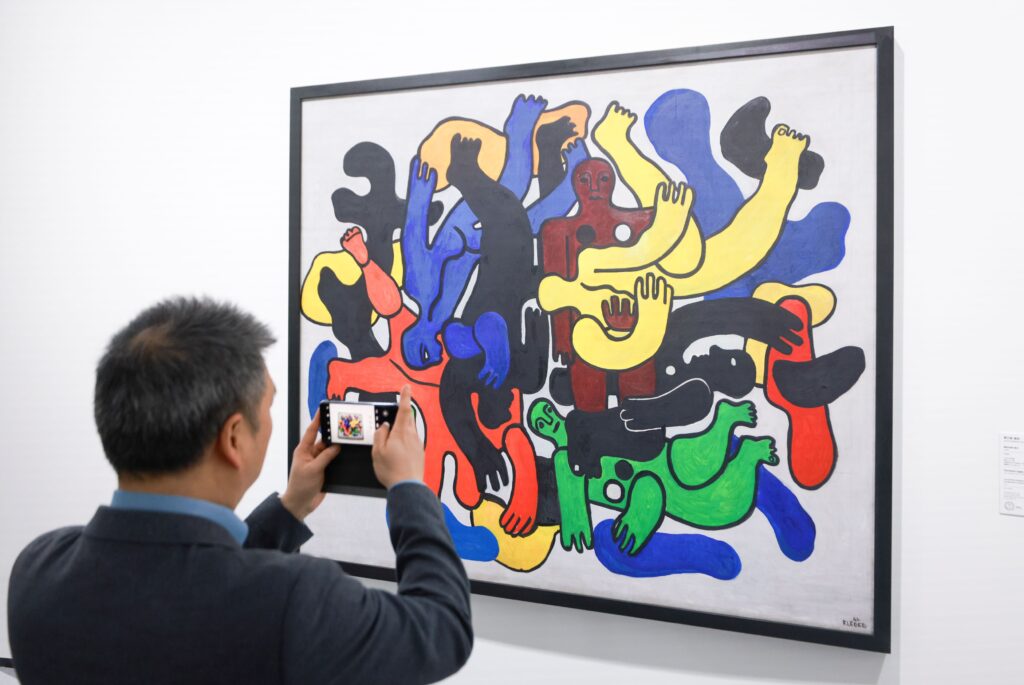
The show features original works by artists such as Pablo Picasso, Robert Delaunay, and Yves Klein. Picasso’s Woman dressed in Blue, Delaunay’s Circular Forms, Sun No. 2, and Klein’s IKB 3, Monochrome bleu are displayed together, tracing the evolution of modern art across movements including Fauvism, Cubism, Surrealism, Abstract Art, Pop Art, and Conceptual Art.
Liu Zhenzi, Chairman of Beijing Minsheng Art Museum, first encountered the collection in Monaco last summer. “Seeing these works in person was deeply moving,” he said. “I wanted audiences in Beijing to experience that same moment of recognition.”
Despite a compressed schedule, the exhibition moved from planning to opening in just four months. According to Liu, the process required close cooperation and mutual trust between institutions on both sides.
Opening a Window Through Colour
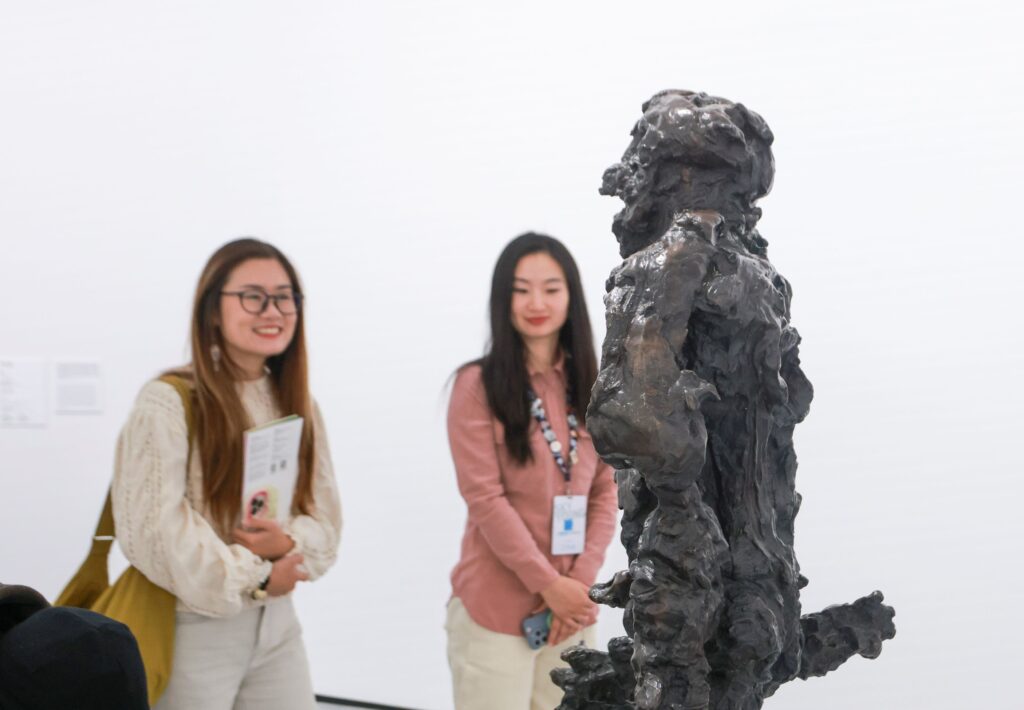
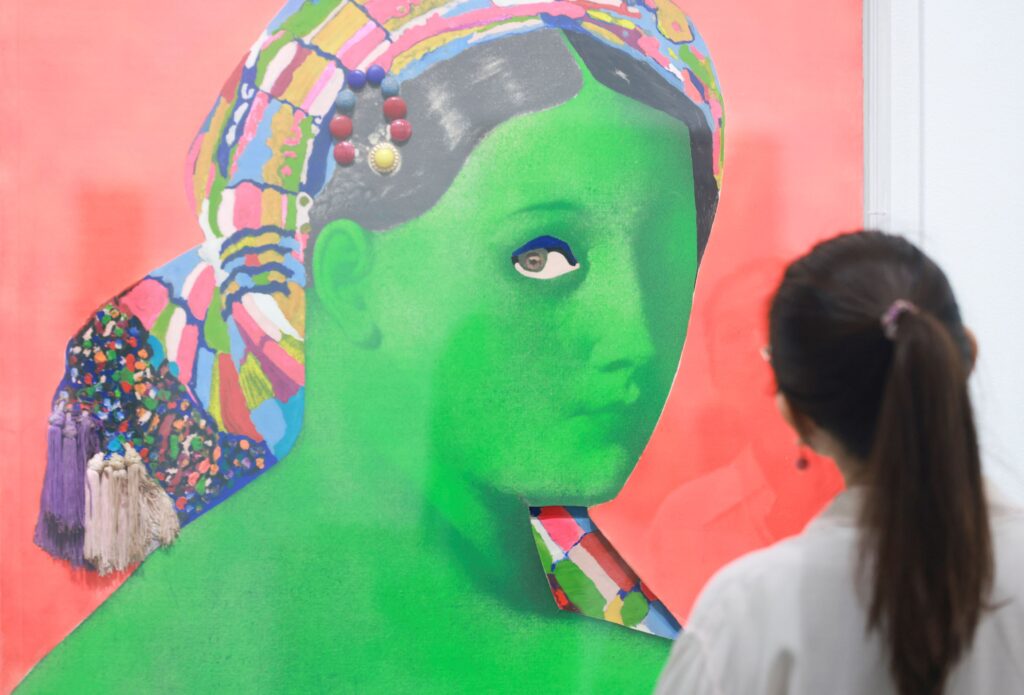
Instead of following a traditional chronological narrative, the exhibition is organised by colour. Eight sections—multicolour, red, yellow, blue, white, green, pink, and black—guide visitors through different emotional and visual experiences.
This curatorial approach, Liu explained, aims to make modern art more accessible. By focusing on colour, the exhibition invites viewers to respond intuitively before engaging with art-historical context.
That idea is echoed by Didier Ottinger, Deputy Director of the Centre Pompidou and the French curator of the exhibition. At the opening ceremony, he noted that colour offers a direct and inclusive entry point into modern art. It allows audiences to feel first and reflect later.
Meanwhile, the experience extends beyond the visual. A specially designed synesthetic space allows visitors to hear and even smell colour. Composer Roque Rivas collaborated with IRCAM on a sound installation, while perfumer Alexis Dadier worked with Fragonard to create scent-based interpretations of colour. Together, these elements add new sensory layers to the exhibition.
Alongside the exhibition, Beijing Minsheng Art Museum is hosting lectures, family programs, and workshops centred on colour, perception, and emotional well-being. These public programs encourage audiences to engage with art not only as spectators, but as participants.
“All art history is contemporary history,” Liu said. “The artists we admire today faced uncertainty and anxiety in their own time. When visitors stand before these works, they are not just looking at masterpieces. They are entering a dialogue across time.”
Additional reporting by Chen Yi.
If you like this article, why not read: From London to Beijing: David Hare’s Skylight Finds a New Voice.