
A look at Laba garlic, a seasonal Chinese dish made before the Spring Festival. From its emerald colour to the winter rituals behind it.
If you’re curious about Chinese traditions leading up to the Spring Festival, the Laba Festival is a good place to start.
It falls on the 8th day of the 12th lunar month—known as “Laba” in Chinese—and marks the final stretch before China’s most important holiday. This year, it lands on January 26th. As winter deepens, families turn to warm foods and simple rituals, easing into the festive season.
What People Eat on the Laba Festival
One of the most familiar traditions is Laba porridge, a warm, home-style dish made with grains, beans, nuts, and dried fruits. Recipes vary from family to family, but the idea is the same: sharing a pot of food, together.
In northern China, another seasonal dish appears around this time: Laba garlic.
Laba Garlic: A Winter Side Dish
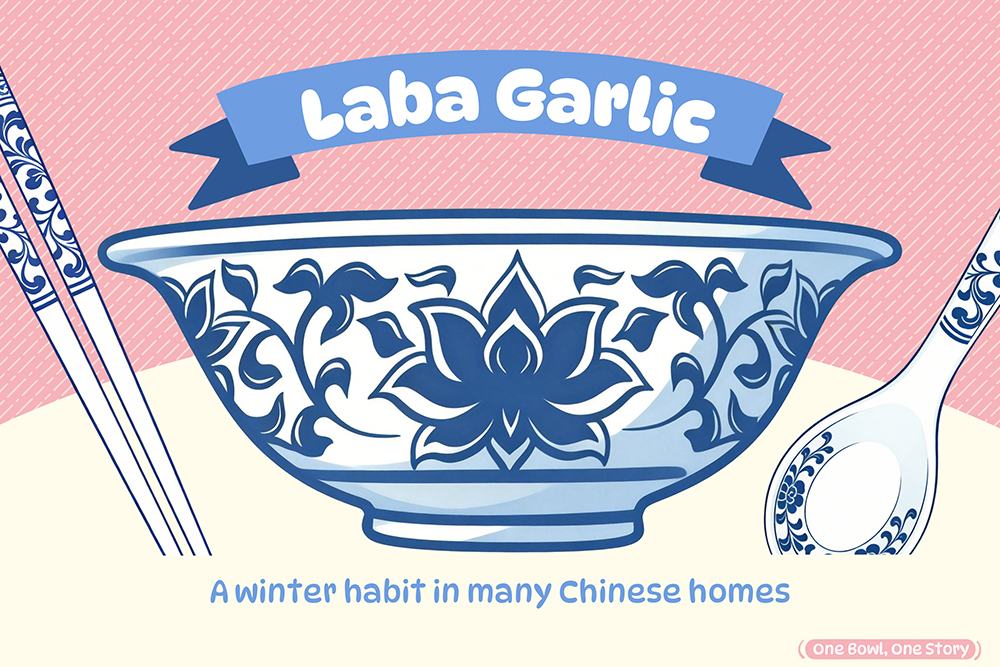
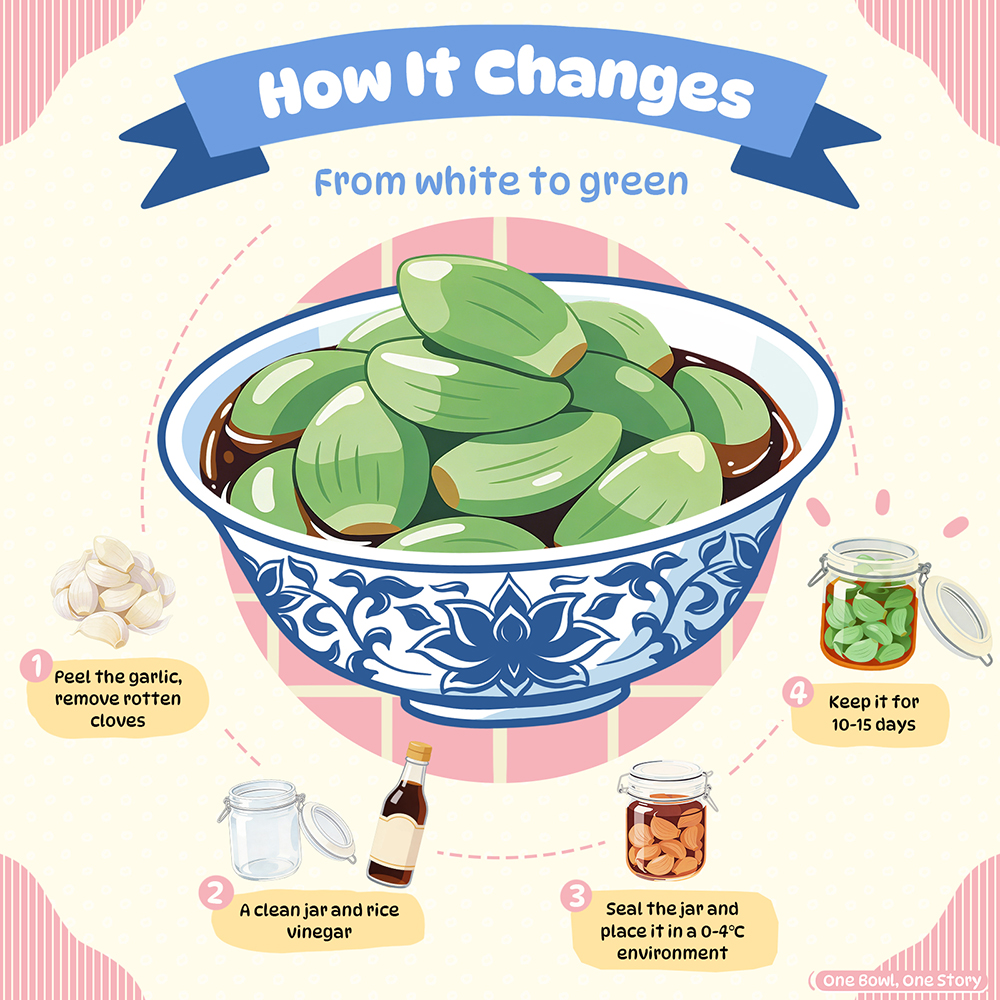
Laba garlic is made by soaking garlic cloves in vinegar during the coldest days of winter. Over time, the cloves slowly turn a bright emerald green.
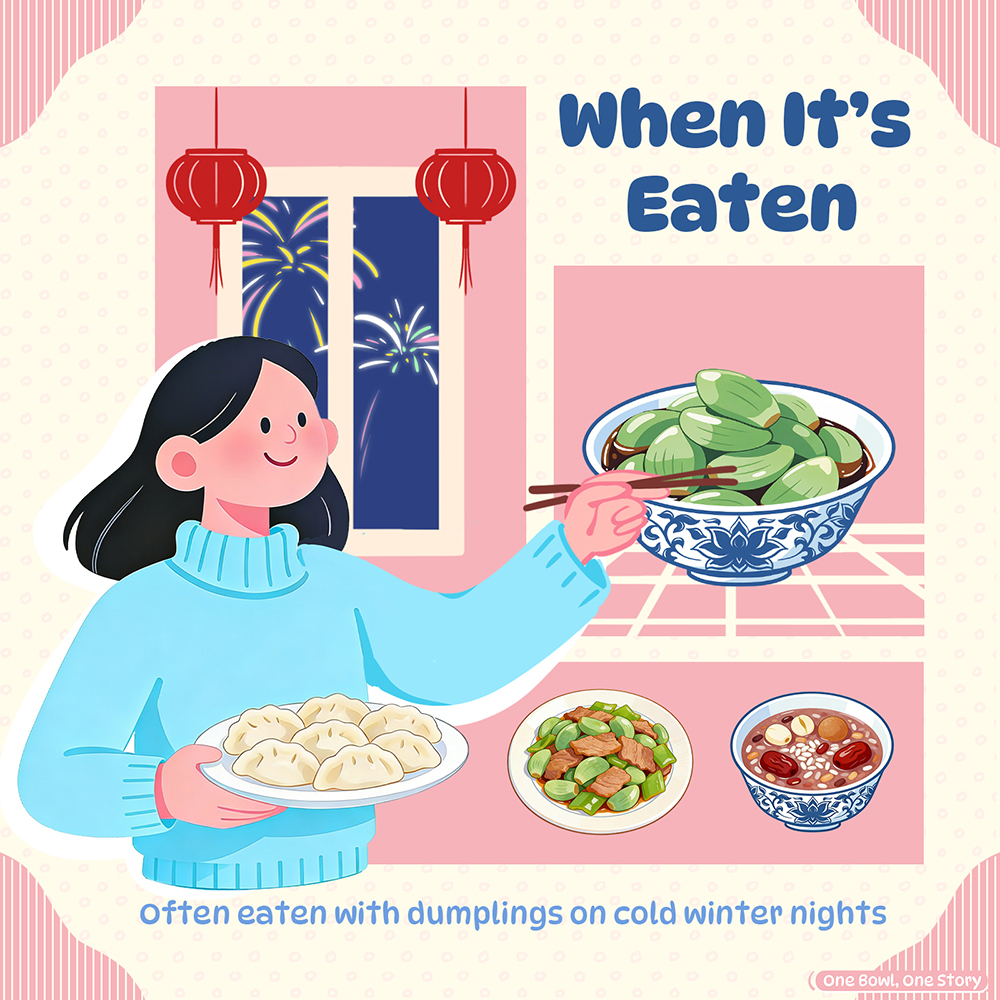
The flavour is mildly sour, slightly sweet, and less sharp than raw garlic. It’s often eaten with dumplings or noodles, especially on cold winter nights.
Why Garlic Turns Green
The colour change isn’t symbolic—it’s chemical.
At low temperatures (around 0-4℃), compounds in garlic react with vinegar, creating the green hue. The process is safe and softens the garlic’s bite, making it easier to enjoy.
A Quiet Start to the Festive Season
Preparing Laba garlic is less about the recipe and more about timing. Making it on Laba marks the beginning of Spring Festival preparations.
In many homes, it’s simply part of winter life—quiet, patient, and shared.
Written by Yi Shen, posters designed by Wang Di.
If you like this article, why not read: Nezha Musical Superbly Brings Chinese Mythology to a London Stage