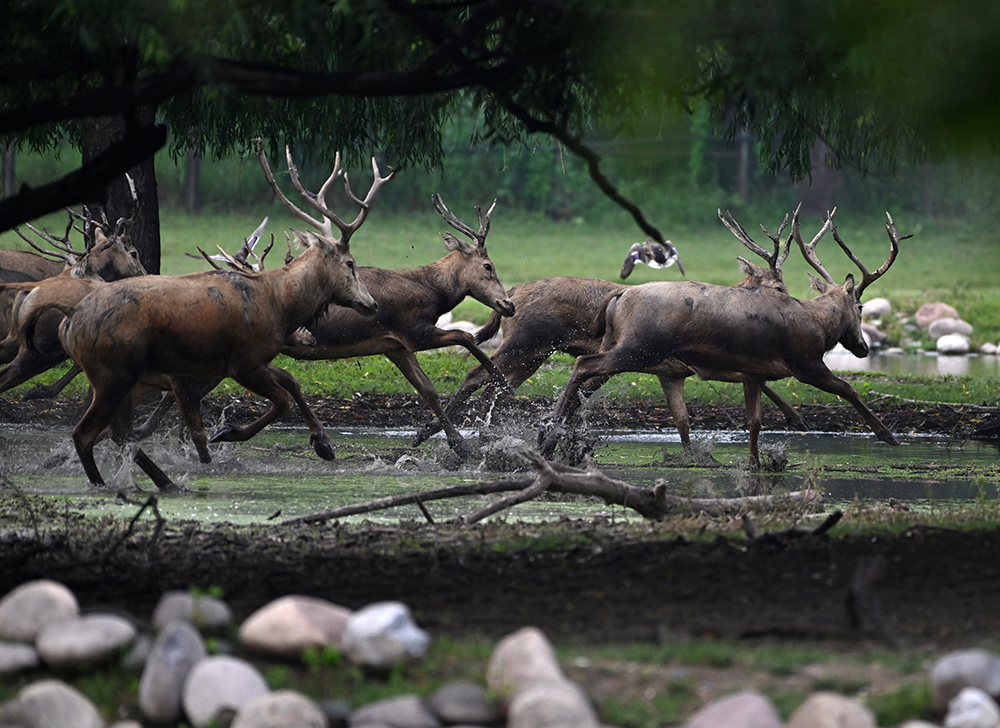

China recently celebrated the 40th anniversary of the milu’s return at the Shishou Milu National Nature Reserve in Hubei Province. During the event, experts announced a milestone: the International Union for Conservation of Nature (IUCN) officially adopted the Chinese transliteration “Milu” as the species’ international name. This change replaces the long-used Western name “Pere David’s Deer.”
The milu, known in China as “sibuxiang,” carries deep cultural roots. Ancient texts such as the Book of Rites and the Compendium of Materia Medica recorded it, and the character “Mi” appeared even in oracle bone scripts. Moreover, fossils show the species has lived in China for 2 million years. It even appears in mythology as the mount of strategist Jiang Ziya.
Western science first encountered the animal in 1865, when French missionary Armand David described it. Soon after, foreign collectors moved the remaining deer to European zoos. As poaching, habitat loss, and natural disasters intensified, the native population in China went extinct around 1900. Yet a small group survived in Europe. The Duke of Bedford gathered the last 18 individuals at Woburn Abbey, preserving the species.
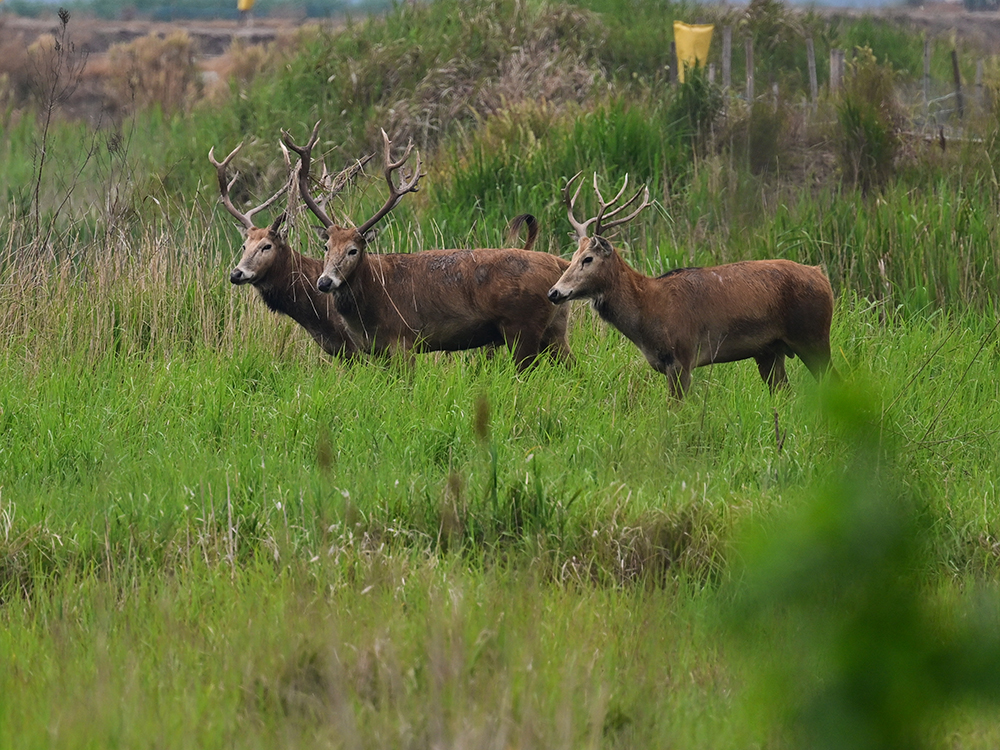
China launched its modern conservation journey in 1985, when the United Kingdom returned 22 milu. This step marked the beginning of what many experts now call one of the world’s most successful species reintroductions. In fact, IUCN President Razan Al Mubarak praised it as the “Chinese Paradigm for Wildlife Reintroduction.”
From there, China rapidly expanded conservation efforts. It created two main parks, one in Beijing and another in Jiangsu, to support breeding and research. The Beijing Milu Ecological Research Center built a strong ex-situ foundation, while the Dafeng reserve in Jiangsu restored habitats for in-situ reintroduction. Meanwhile, the Shishou reserve in Hubei grew into another key site, receiving 64 milu from Beijing in the early 1990s.
In addition, China established more than 100 breeding groups across 27 provinces. As a result, wild and captive populations surged. The Shishou reserve alone restored over 23,000 mu of habitat, helping wild instincts return. By now, the population has risen dramatically: Shishou’s herds grew from 64 individuals to more than 4,500, while nationwide numbers have reached about 15,000. Furthermore, wild groups now thrive in multiple regions, including Hubei and Hunan, forming at least four natural populations. Overall, experts count six major wild herds and more than 6,000 wild milu.
International researchers highlighted these achievements at the 2025 International Symposium on Milu and Ecological Conservation in Beijing. More than 100 experts from nine countries attended. Many praised China’s methodical approach, which moves step-by-step from captive breeding to wild re-establishment with strong scientific management. UN biodiversity official Astrid Schomaker noted that the success reflects persistent science and global cooperation.
John Mackinnon, a longtime biodiversity researcher, also emphasized public awareness. He urged broader storytelling so more people understand and value the species. He further praised the recovery of the milu’s wild instincts during visits to Shishou.
During the symposium, researchers announced another breakthrough: the first complete gapless milu genome sequence. This achievement will support future studies on genetics and health. The event also released the Report on the Effectiveness of Milu Deer Conservation in China, which summarizes 40 years of lessons and outlines next steps.
Looking ahead, Chinese experts aim to strengthen habitats, expand wild populations, and apply new technologies. As Bai Jiade of the Beijing Milu Ecological Research Center stated, China hopes to make milu protection a global model for wildlife conservation.
Written by Yi Shen, additional reporting by CGNT and China Daily.
If you liked this article, why not read: Poyang Lake: A Haven for Migratory Birds and Eco-Tourists