
Discover Ancient Egypt at Hong Kong Palace Museum: pharaohs, Tutankhamun, mummies, sacred cats, and Saqqara’s latest finds.
Starting from November 20th, the Hong Kong Palace Museum will host “Ancient Egypt Unveiled: Treasures from Egyptian Museums”, the largest and most comprehensive exhibition of ancient Egyptian artefacts ever held in the city. The exhibition features 250 treasures from seven major Egyptian museums and the Saqqara archaeological site, including statues, stelae, gold ornaments, mummy coffins, and animal mummies. Together, these exhibits allow visitors to explore nearly 5,000 years of Egyptian civilisation, from politics and art to daily life and religious beliefs.
Pharaohs and the Young King: Explore Ancient Egypt’s Royal World
The exhibition is divided into four sections: The Land of Pharaohs, The World of Tutankhamun, The Secrets of Saqqara, and Ancient Egypt and the World. Each section focuses on a unique aspect of this ancient civilisation.
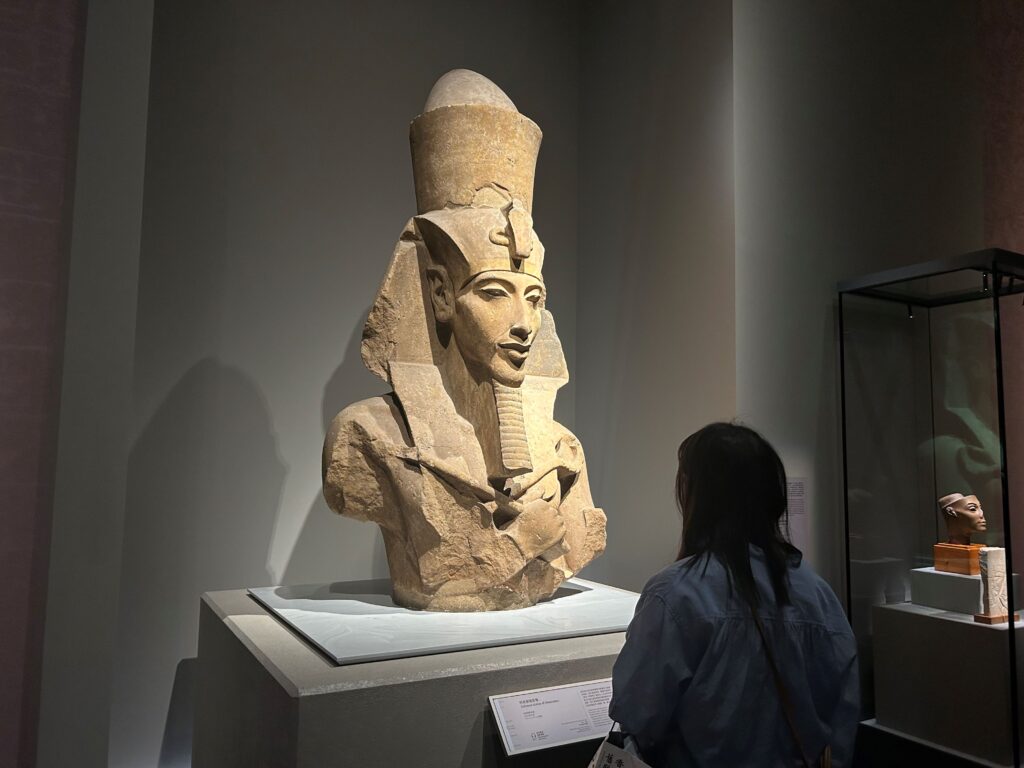
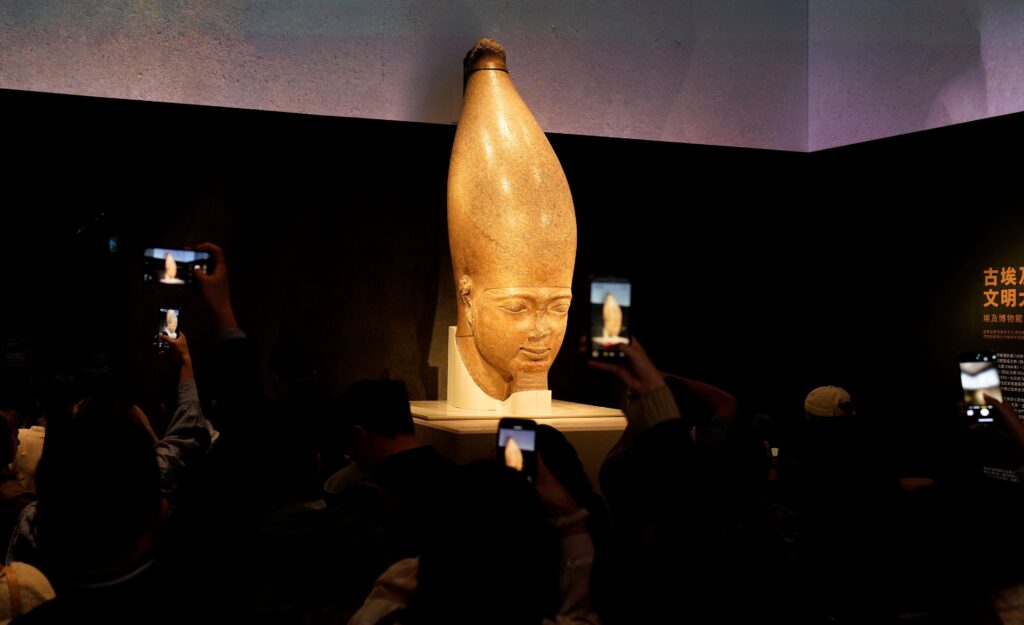
As visitors enter, they first encounter the colossal head of Senusret I, one of the first pharaohs of the Middle Kingdom. Experts estimate that the original statue stood almost 10 meters tall. Next, another highlight is the kneeling statue of Hatshepsut, one of the few female pharaohs. She wears a traditional male kilt and a false beard, demonstrating her respect for royal tradition.
The exhibition also explains the Egyptian obsession with the afterlife. Specifically, mummification was a careful process: organs like the heart, lungs, liver, and stomach were removed, treated separately, and stored in canopic jars. This process illustrates the belief that death was a transition rather than an end.
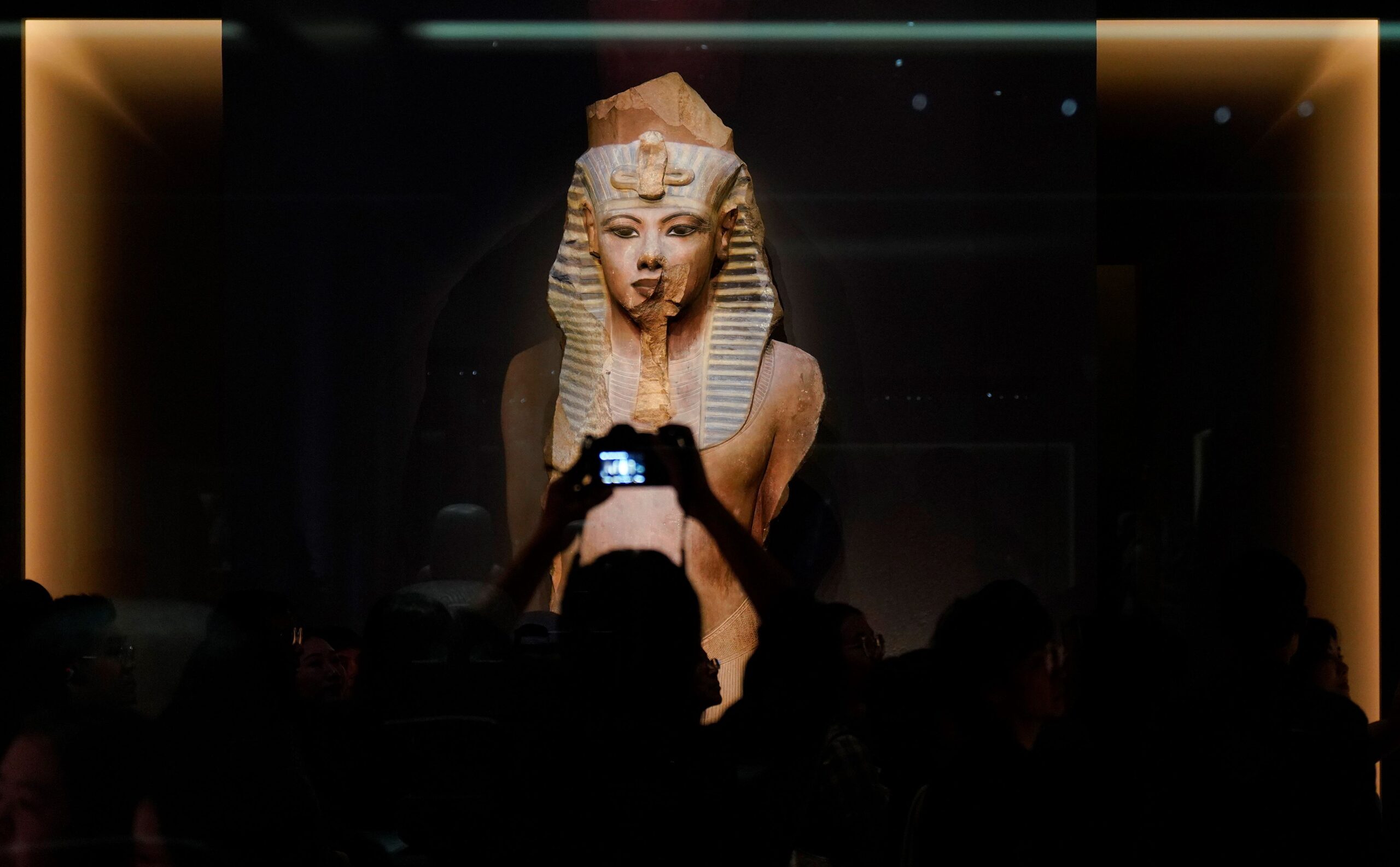
In the second section, Tutankhamun’s statue stands out as the heaviest and tallest piece on display. The boy king ascended the throne at nine and ruled for about ten years. However, his successor tried to erase traces of his reign, and even his statue shows signs of name alterations. Using digital projection and colour reconstruction, the museum restores missing parts and original colours, allowing visitors to imagine how the statue once looked.
Secrets of Saqqara: Mummies, Cats, and Sacred Animals
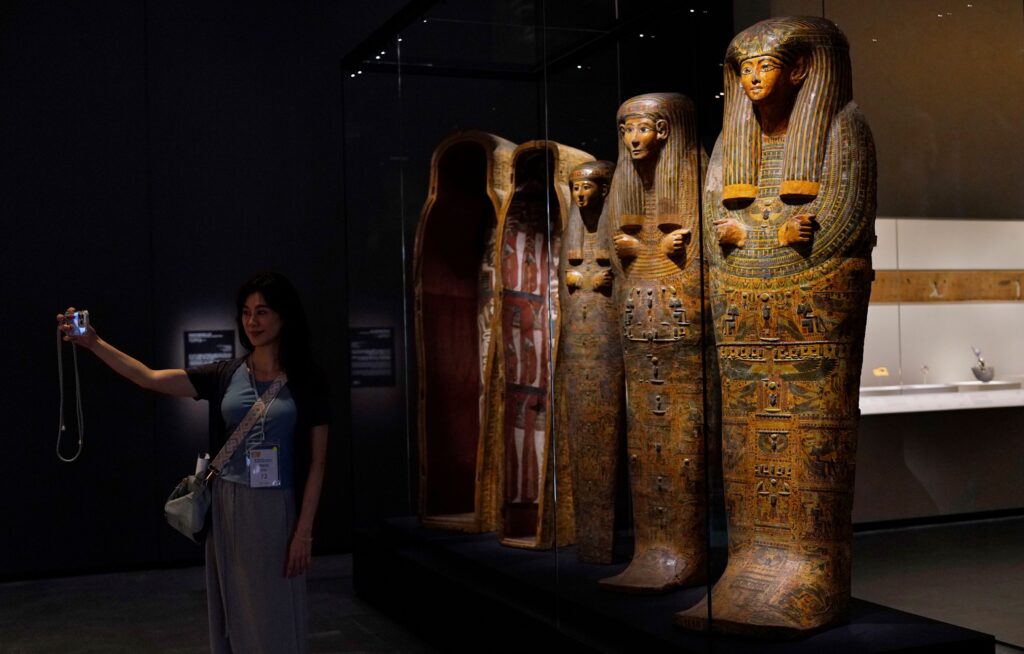
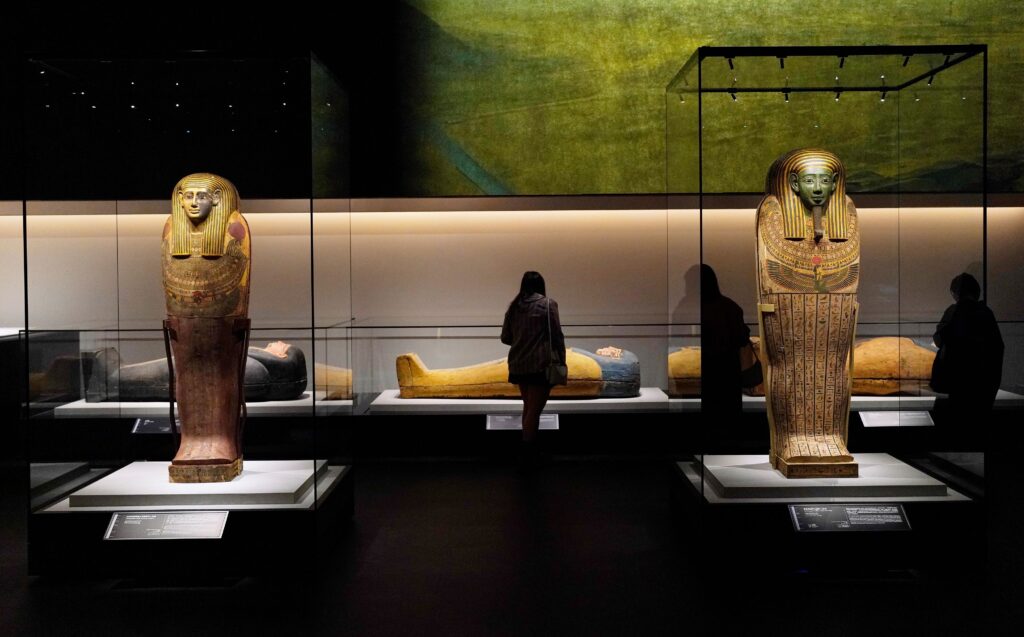
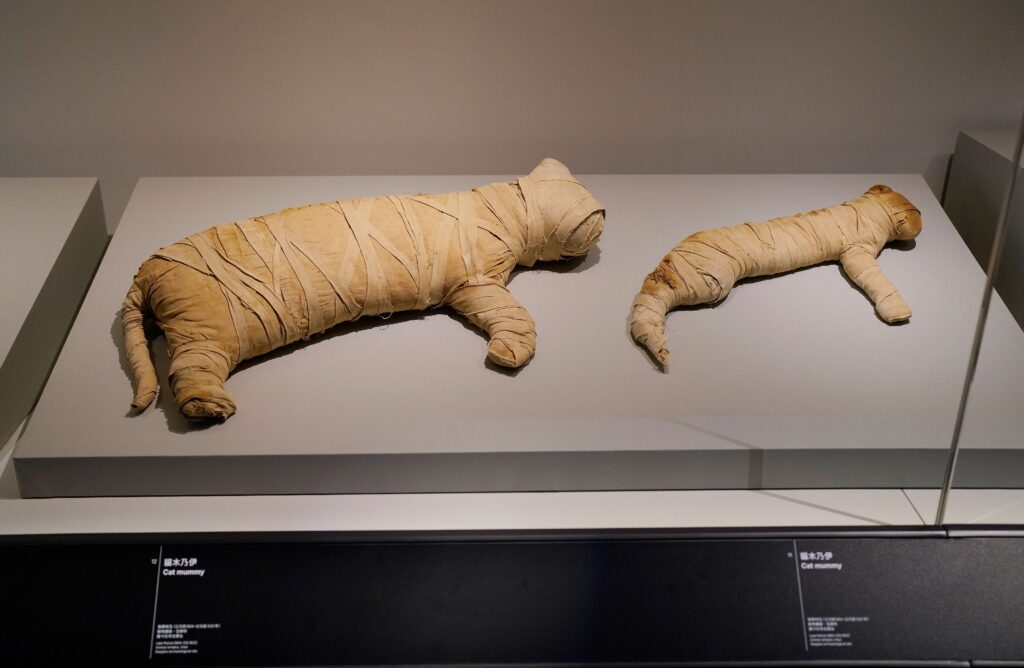
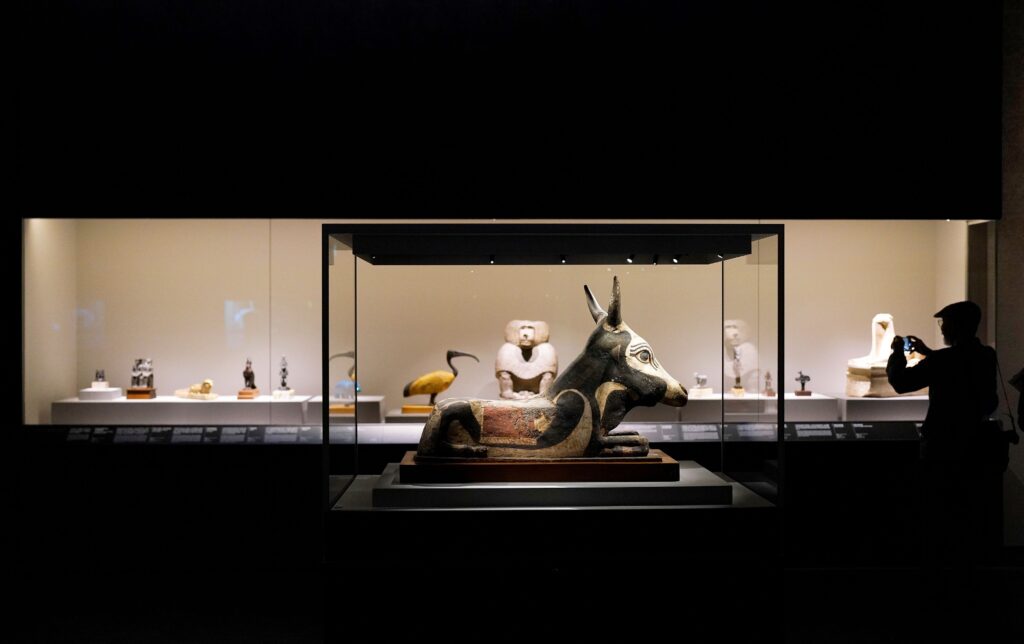
The third and fourth sections focus on Saqqara, a site at the heart of ongoing Sino-Egyptian archaeological collaboration. Visitors can see the latest discoveries, including human-shaped coffins, cat mummies, calf mummies, and baboon-shaped statues, which reveal ancient Egyptians’ reverence for sacred animals.
Notably, one finds a temple dedicated to the cat goddess. Professor Yan Haiying from Peking University, who recently returned from Saqqara, notes that most human-shaped coffins contain female remains. In fact, cat worship was mostly led by women, who offered mummified cats as offerings. Over time, this practice became commercialised, with cats bred and mummified for sale.
Ancient Egypt Meets the World: Timelines of Cultural Exchange
To mark the 70th anniversary of China-Egypt diplomatic relations in 2026, the exhibition concludes with a timeline showcasing joint archaeological projects. Overall, it demonstrates how both countries have promoted cultural exchange between two ancient civilisations.
The exhibition runs from November 20th to August 31st, 2026, and is jointly organised by the Hong Kong Palace Museum and the Supreme Council of Antiquities of Egypt.
Written by Chen Wang, additional reporting by HKCNA.
If you liked this article, why not read: From Liverpool to Shanghai — Step into Ancient Rome