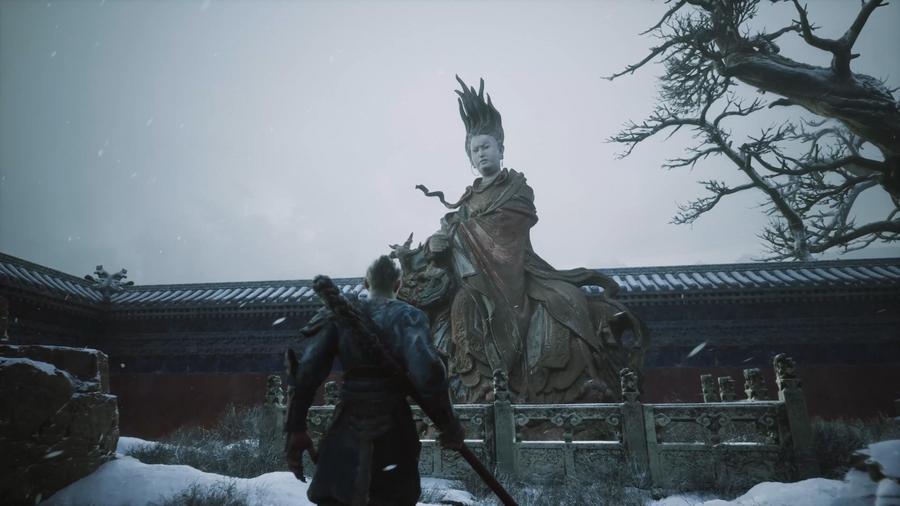

Inspired by the game Black Myth: Wukong, Chinese tourists are pouring into Shanxi.
The success of Black Myth: Wukong has caused a massive increase in Chinese tourists visiting Shanxi province, to see locations that featured in the game.
Black Myth: Wukong is the first AAA game developed by the Chinese company Game Science.
It officially released globally on Aug 20th and quickly became the most-played single-player game of all time.
The game is an action role-playing game set against the backdrop of Chinese mythology.
Black Myth: Wukong is inspired by the classic Chinese story Journey to the West. The game integrates elements from both the novel and the 1986 TV adaptation. Both are famous and popular in China.
China’s natural beauty and historical sites feature as impressive backdrops throughout the game.
Developers from Game Science visited numerous ancient sites to scan and use in the game. Locations include Lingyin Temple in Hangzhou, Zhejiang Province, the Jade Emperor Temple in Shanxi Province, and the Dazu Rock Carvings in Chongqing Municipality.
According to Art Director Yang Qi, 3D modelling brought the Dazu Rock Carvings to life with remarkable precision, reaching an astounding 1.2 billion facets.
“Traditional culture is right there, and you’ll like it when you see it,” said Yang Qi. “What we can do is to give people a closer look through the game.”
China’s northern Shanxi province boasts 27 of the 36 locations featured in the game.
It has become a tourist hotspot in China thanks to Black Myth Wukong’s popularity. On the day of the game’s launch, searches for “Shanxi tourism” doubled. Locations featured in the game such as Jade Emperor Temple, Chongfu Temple, Iron Buddha Temple, and Shuanglin Temple have become popular destinations.
Tickets sold for Xiaoxitian Temple in Shanxi province have increased by 236% year-on-year.
The Shanxi Provincial Department of Culture and Tourism has capitalized on the trend. They have released videos and post on social media related to destinations on the game, and have even published a travel route showing all the destinations.
If you liked this article why not read: Behind-the-Scenes Glimpse of Black Myth: Wukong Motion Capture