
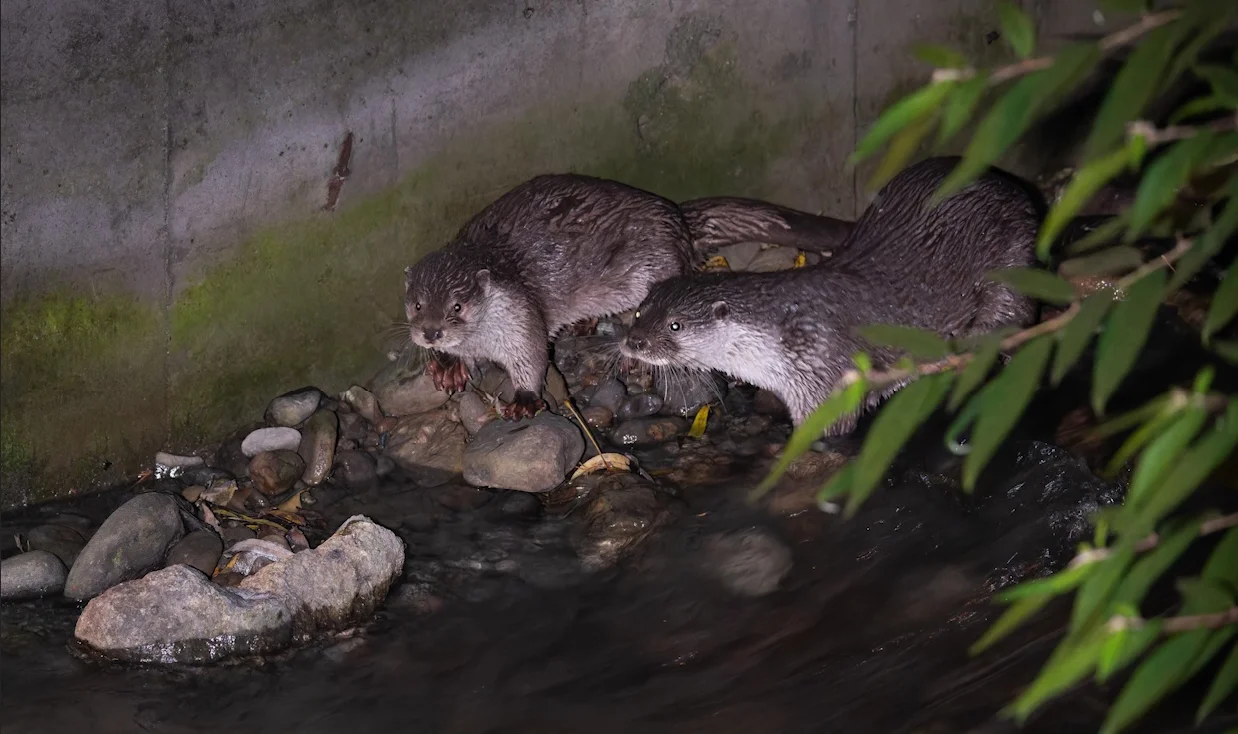

Eurasian otters have returned to Chengdu after decades of absence, with new footage showing how they adapt to urban waterways and drainage canals.
An infrared camera recently captured a rare scene in Chengdu, southwest China. Late at night, a Eurasian otter (Lutra lutra) moved along a narrow drainage channel on the edge of the city.
It swam through the water with ease. Then, using its tail for balance, it climbed a near-vertical concrete bank almost two metres high. After that, it crossed the pavement and slipped into a nearby pond to hunt, according to CNS.
Such sightings are becoming more frequent. For researchers, they offer a glimpse into the return of a species long absent from the city.
Tracking a Quiet Return
The Eurasian otter was once widely found across Europe and Asia. In China, however, it largely disappeared from urban rivers in recent decades. Pollution and habitat loss played a major role.
In 2024, that picture began to shift. Nature enthusiasts reported possible otter activity in Chengdu. Some residents also shared clear footage online. These early signs led to the launch of a citizen science project, bringing together volunteers, researchers and university staff.
By July 2025, the group had started a more systematic survey across the Minjiang and Tuojiang river basins. Progress was slow at first. Otters are nocturnal and difficult to track. Searching for them along a dense network of waterways often meant long nights with no results.
Still, small discoveries added up. Traces such as droppings, footprints and scratch marks helped confirm their presence. The first verified finding drew a strong reaction from the team, some of whom had spent weeks without a single lead.
Reports have increased steadily since then. By March 2026, otter activity had been recorded in 10 districts across Chengdu. In five key areas, researchers installed 11 infrared cameras. Together, they have captured more than 800 usable video clips.
Learning to Live Alongside the City
The footage suggests that otters are adapting to the urban environment in practical ways. Drainage channels provide cover during the day. They also act as corridors, linking rivers with ponds where fish are easier to catch.
At the same time, the animals appear able to move across built structures. They follow subtle changes in the terrain and make use of vegetation along the banks.
There are also early signs of social behaviour. Cameras recorded two otters interacting over several days. As the species is usually solitary, researchers believe this could be linked to breeding.
Further work is underway to understand the population more clearly. Scientists are analysing genetic samples to assess diversity and overall numbers. Early indications suggest that Chengdu’s waterways now offer enough food and shelter to support them.
The otter’s return reflects wider changes in the city’s waterways. Water quality has improved in recent years, and sections of the river system have begun to recover.
If you liked this article, why not read: China’s “Smiling Angels” Are Rebounding in the Yangtze River


