
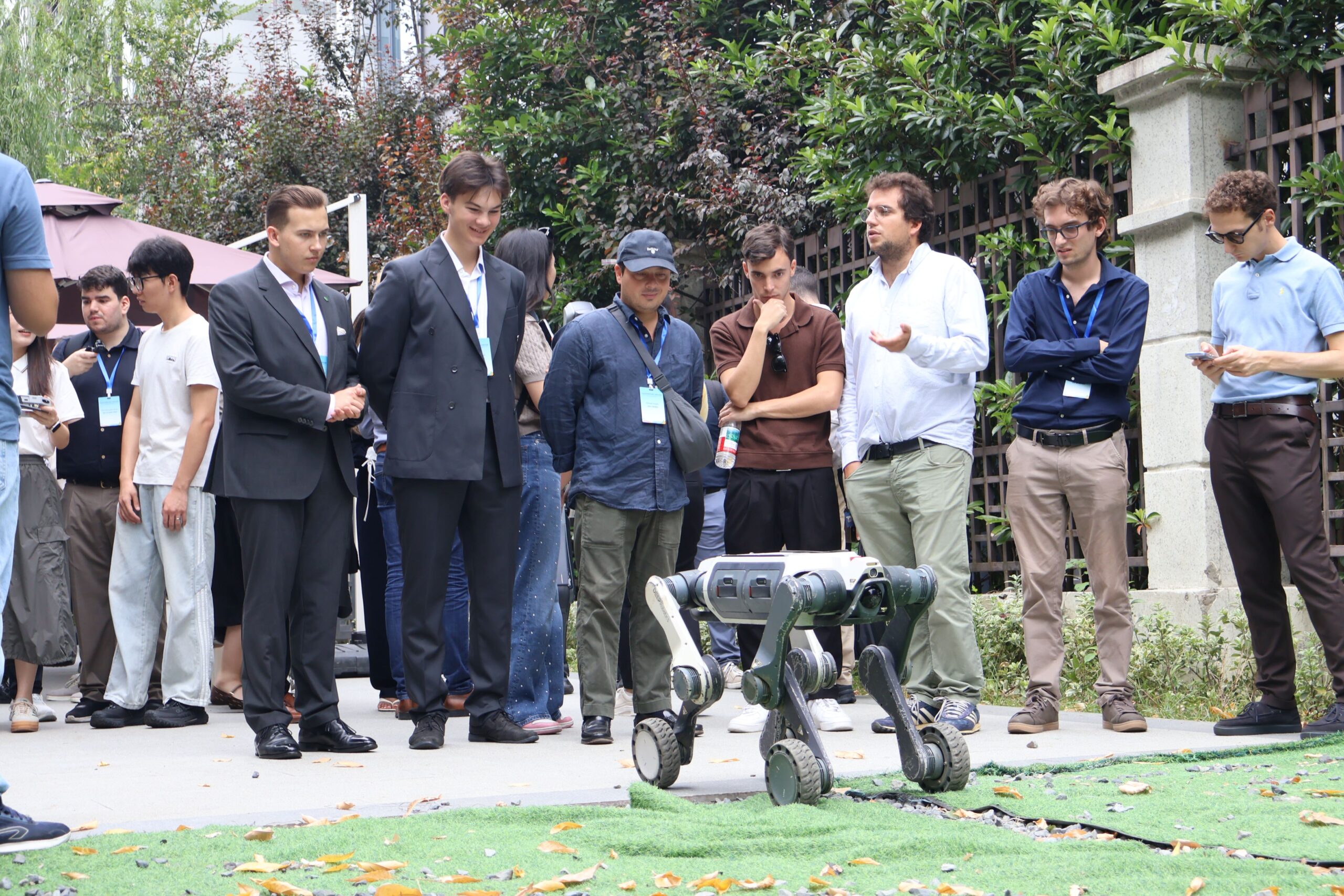

More than 30 young leaders from 11 European countries joined Chinese counterparts in Hangzhou to discuss China-Europe relations, AI governance and technology cooperation.
More than 30 young lawmakers, government officials and youth organisation leaders from 11 European countries joined their Chinese counterparts in Hangzhou, east China’s Zhejiang Province, on September 20th for a dialogue on China-Europe relations, CNS reported.
Themed “China-Europe Relations in a Multipolar World”, the event was part of the 2026 China-Europe Youth Leaders Training and Exchange Camp. Discussions focused on technology cooperation, economic ties and other issues concerning China-Europe relations.
Augusto Gonzalez, president of Young European Leadership (YEL), said Europe and China were not cut off by geographical distance.
For him, dialogue between the two sides means more than trade and investment. It also raises a broader question: how can different civilisations coexist within a shared international system? He called for a practical approach to managing both competition and cooperation, alongside closer economic links.
AI was one of the main topics of discussion. The rapid development of the technology is changing competition in the global tech sector. It is also raising questions about digital governance and technology ethics.
Nicole Rita Napoli, director of operations at Young European Leadership, said Europe had adopted a risk-based legal framework aimed at making AI more trustworthy.
China, she said, had shown strong capabilities in developing and applying AI technologies on a large scale. The two sides should not focus on deciding which regulatory approach is better. Instead, they could learn from each other about how to support innovation while maintaining public trust.
Fang Yi, chairman and general manager of Merit Interactive Co., Ltd., said AI was opening up new tools for research and new space for innovation. Yet its rapid development also brings uncertainty. Society, he said, needs to consider in advance how the technology could change everyday life.
Yu Hanzhi, a tenured associate professor and researcher at Zhejiang University’s School of Public Affairs, said many of today’s global challenges involve several factors, from limited resources and cross-border effects to differences in values.
He said China and Europe need more channels for cooperation on different issues. Regular social dialogue can also help the two sides better understand each other and keep differences from deepening.
During the programme, participants visited Westlake University and Chinese technology companies Deep Robotics and Daily Interactive. The visits offered the European delegates a closer look at technology development and innovation in China.
If you liked this article, why not read: China-EU Youth Science Collaboration Begins


