
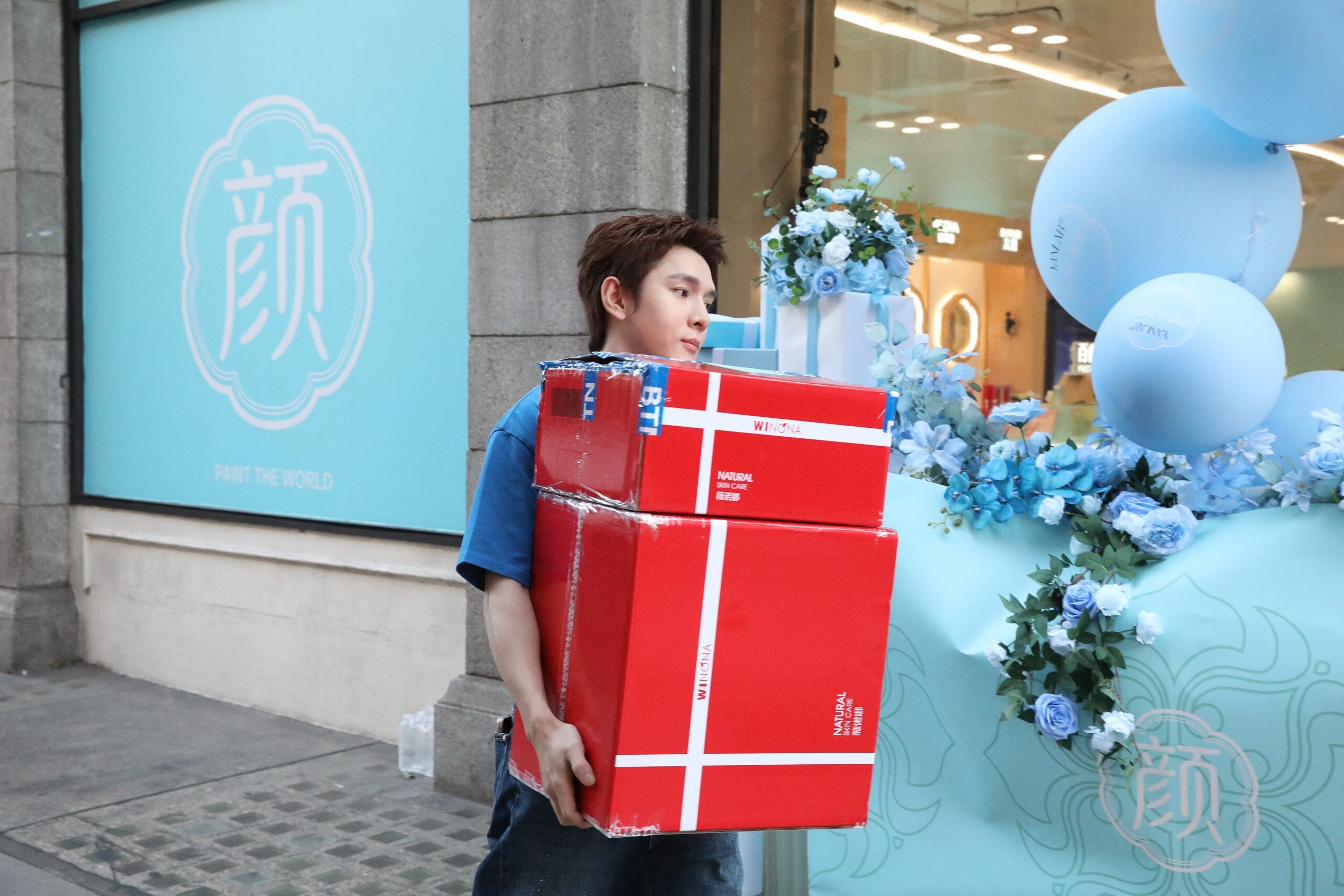

In a London store, celebrity Li Jiaqi is selling Chinese goods — and offering a new perspective on China — in the show London Partners.
A few years ago, if you asked a random young person in London what they thought of Chinese goods, the answer might have been “cheap” or “everywhere”. But those answers are beginning to change. Young people are talking about Chinamaxxing, and about being in a distinctly Chinese phase of their lives.
The shift has changed the conversation around Chinese goods, moving it beyond simply how cheap something can be towards the aesthetics of a product and the lifestyle it represents. For the first time, Chinese design, craftsmanship and aesthetics are entering the consciousness of young people around the world.
You can see this change on the streets of China. In Shanghai, outside distinctive local brands such as Songmont or PANE, foreign tourists can be seen queuing outside shops. Having discovered the brands online and been impressed by their image, they have added a visit to the store to their itineraries.
The willingness of consumers to seek out these stores in China reflects a growing acceptance of Chinese brands, as well as the lifestyles and aesthetics they represent. But it also raises a question: can brands simply wait for tourists to stumble across them? Or can they proactively reach out and meet consumers on street corners around the world?

Finding China on Great Portland Street
On Great Portland Street in London’s West End, Li Jiaqi has offered an answer.
In London Partners, a follow-up season to Paris Partners, a Chinese pop-up store called Yan Lab opens on the banks of the Thames. Li Jiaqi, a brand director renowned for his product selection, along with partners Shang Wenjie, Zhang Yuxi, Zhao Zhaoyi, Yan An and Mika, are responsible for bringing the store to life.
For Li Jiaqi, who has spent years immersed in livestreaming and working with countless domestic brands, it is a continuation of a familiar journey — moving from recommending products to audiences through a screen to standing on the streets of a foreign country, deciding for himself what a store should sell and what it should look like.
Located just a nine-minute walk from bustling Oxford Street, the store does not cram its shelves with merchandise in the manner of a typical gift shop. Instead, it divides 14 Chinese brands into five sections: beauty and skincare, smart technology, lifestyle products, fashion accessories and gourmet food. Under Li Jiaqi and his team’s direction, the result is less a conventional shop than a carefully curated space dedicated to Chinese lifestyle and aesthetics.

Not selling goods, but translating culture
The first challenge is product selection — and this is where Li Jiaqi’s experience comes into play.
What kind of product can represent Chinese design while also standing up to the scrutiny of discerning London consumers? It is not as simple as copying the best-selling lists from China. The aggressive, high-impact approach that can work in the Chinese market does not necessarily translate to European or American consumers, who may be less familiar with the brands. They are often more interested in whether a product has a story, offers a distinctive experience and resonates with their own values.
Li Jiaqi and his team therefore devised a variety of approaches.
Some products offered an Eastern perspective, such as fragrances and skincare products made with traditional ingredients including ganoderma lucidum and matsutake mushrooms. Rather than competing directly with Western brands on the basis of chemical ingredients, they leaned into the sustainable and herbal approach already favoured by many European and American consumers.
Others focused on familiar concerns, selecting products built around core ingredients for anti-ageing and sensitive-skin repair, paired with high-quality, minimalist packaging. The result was designed to fit the aesthetic expectations surrounding “dermatological skincare” in Europe and America.
Some of the strongest selections were also among the most affordable: products with a clear cultural identity. Creative heritage pieces and cultural products featuring blue-and-white porcelain motifs, modern Chinese-style tea drinks, and art derivatives developed by the partners themselves all helped draw Londoners through the doors.
Li Jiaqi brought his years of first-hand product-selection experience to the project without reservation. “Will it attract the attention of a British person who has never been to China?” became a basic test for whether a product belonged on the shelves.
During the process, Amazon Ads provided local insights that helped the team refine their instincts — translating what they believed was good into what London consumers might actually want to buy.

Neither inflated nor undervalued
If product selection determines what to sell, pricing determines whether people will buy it.
Upon arriving in London, the partners were quickly confronted with the realities of the city’s high cost of living and the expense of opening a shop. The entire team soon switched into actuarial mode, factoring international logistics, pop-up rent, local staffing and exchange-rate fluctuations into their calculations.
They did not attempt to replicate the price-war tactics common in China, nor did they opt for the kind of low-price strategy that might generate publicity at a loss.
Li Jiaqi has a clear view of the issue. If Chinese products are priced too cheaply in Europe and America, he believes, they risk reinforcing the old stereotype of Chinese goods as cheap and low-quality. Instead, the team chose to position its products within the mid-to-high-end range occupied by independent European brands, using stories of Eastern herbs, craftsmanship and slower-paced quality to support a different image of Made in China.
Price, in this context, is not a compromise. It is an expression of confidence.
What can truly reduce price sensitivity, however, is the experience itself. In London, Li Jiaqi returned to one of his most familiar skills: engaging directly with consumers. In-store beauty classes gave customers the chance to listen, test products and exchange ideas with him face-to-face.
Once a London customer understands the cultural background and specific qualities behind a product, price can become less of a barrier.

A two-way door is opening
The Chinese shop in London may have ambitions that extend beyond selling goods.
“We hope to attract more overseas tourists to travel and spend money in China with good products, and to visit the places where good stories happen,” Li Jiaqi explains.
For him, Yan Lab has a longer-term purpose. When young people in London become curious about China because of a shop on a street corner, they may eventually want to travel there themselves — to see where the designs came from, and the places where their stories began.
This creates a two-way door.
As Chinese brands move overseas and become visible to a wider audience, those audiences may in turn be drawn towards the places where the brands originated. Such efforts are still relatively young. But every considered product selection, every carefully calculated price and every face-to-face exchange contributes to a more nuanced and confident image of China.
For readers in Europe, the door on Great Portland Street is there, ready to be opened — an invitation to see for themselves what kind of Chinese aesthetics Li Jiaqi and his partners have brought to the shelves of London.
If you like this article, why not read: Li Jiaqi and the Chinese Brands Going Global in TV Show Paris Partners


