
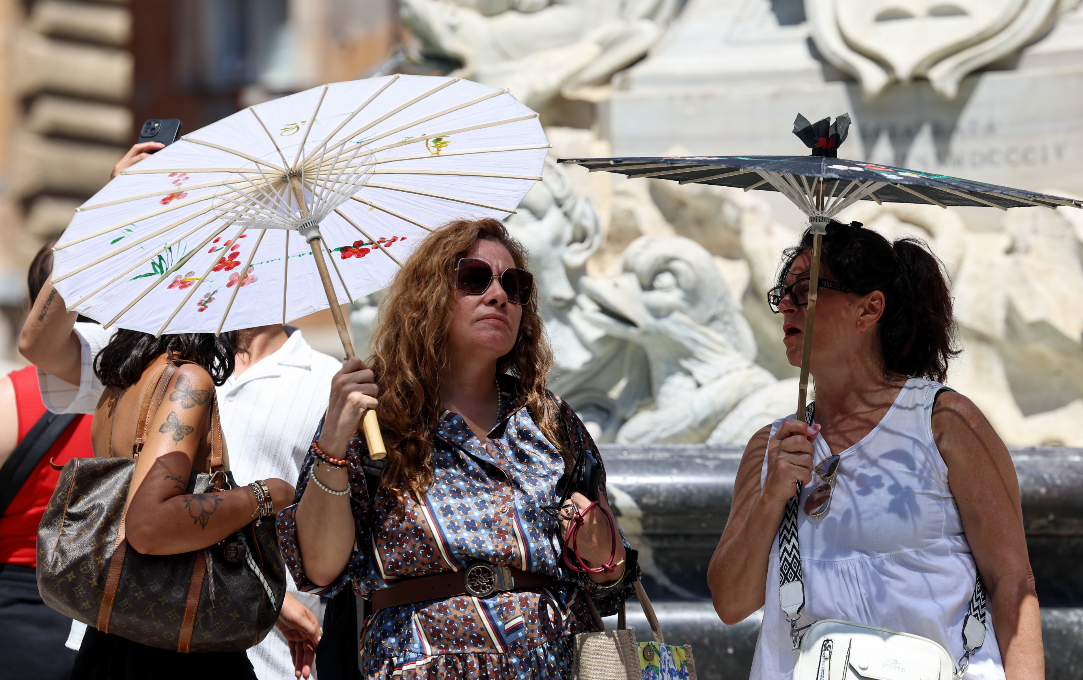

As Europe faces another heatwave, discover traditional ways to stay cool, from window tricks to yoga breathing and winter melon.

Another heatwave is pushing temperatures higher across Europe. Health authorities are urging people to drink plenty of water, avoid the hottest hours of the day and keep their homes as cool as possible.
Air conditioning remains one of the best ways to protect against extreme heat. Yet people have lived through hot summers for centuries without it. Across different climates, they developed simple ways to stay comfortable. Some rely on basic science. Others grew out of everyday life and local traditions.
Many of these ideas are still shared today—not because they replace modern cooling systems, but because they offer practical ways to make the heat a little easier to bear.
Keep Heat Out of the House
The first step is often to stop heat from building up indoors.
Across Europe, many people open their windows after sunset, when the air becomes cooler. During the day, they keep curtains or blinds closed to block direct sunlight.
Another simple trick may seem surprising at first. Instead of pointing a fan at yourself, point it toward an open window. The fan helps push hot indoor air outside, while cooler air enters through another window. The method works best in the evening or early morning, when temperatures begin to fall.
People have also looked for ways to reflect sunlight before it enters the house.
In parts of southern England, some households once coated their windows with a white chalk mixture known as whiting during the summer. The pale coating reflected sunlight and reduced the amount of heat passing through the glass.
Although modern materials have replaced chalk in most homes, the principle remains the same. Light-coloured surfaces reflect more sunlight than dark ones. That is why reflective roofs and light-coloured buildings have become more common in hot climates around the world.
Another well-known tip is the Egyptian-style sleeping method, sometimes called the wet-sheet method.
The idea is simple. Lightly dampen a bedsheet or towel before going to bed. As the moisture evaporates through the night, it helps draw heat away from the body. The method works best in hot, dry climates, where evaporation happens more quickly.
Cool the Body, Calm the Mind
Not every cooling method changes a room’s temperature—some focus on helping the body cope with the heat instead.
In India, yoga has been practiced for centuries as part of daily life. Among its many breathing exercises is Sheetali Pranayama, which people traditionally use during hot weather.
The technique involves curling the tongue into a tube while breathing in slowly and breathing out through the nose. It does not lower the air temperature. However, many practitioners say it creates a cooling sensation and helps them feel calmer on hot days.
In China, people have also found comfort in seasonal traditions.
Winter melon has long been a familiar summer ingredient. It appears in soups and home cooking during the hottest months of the year because of its high water content.
Over time, it also became part of a simple home remedy. Some families place a freshly washed winter melon beside them while resting. Because its surface stays cool to the touch, it can provide temporary relief from the heat, much like a naturally cooled pillow.
The practice is considered a folk remedy rather than a medical treatment. Instead, it reflects the way everyday experience often shapes traditional ways of living with the seasons.
Another idea that has gained popularity in recent years is frozen socks.
Simply soak a pair of socks in cold water, wring them out, place them in a sealed bag and chill them in the freezer for about 15 minutes. Wearing them briefly may help cool the feet, where blood vessels lie close to the skin. The effect is temporary, and care should be taken when walking to avoid slipping.
Old Wisdom for a Warming World
Not every cooling idea comes from history. Some spread from one household to another and, more recently, across social media.
One simple DIY method is to place a bowl of ice in front of a fan. As air passes over the melting ice, the breeze feels cooler for a short time. While the effect is limited, it can make a small room feel more comfortable during the hottest part of the day.
These methods come from different places and different traditions. Some rely on simple household tricks. Others draw on breathing techniques, seasonal foods or evaporative cooling. Even so, they all reflect the same idea: people adapt to their climate with the resources around them.
Of course, traditional methods cannot replace proven heat-safety measures during periods of extreme heat. Health experts still recommend drinking plenty of water, limiting outdoor activity during the hottest hours, keeping homes shaded and checking on older neighbors, young children and anyone who may be vulnerable to heat.
Written by Xingchen, charts created by Di Wang.
If you liked this article, why not read: China’s Cooling Appliance Exports Rise Amid Global Heatwaves


