
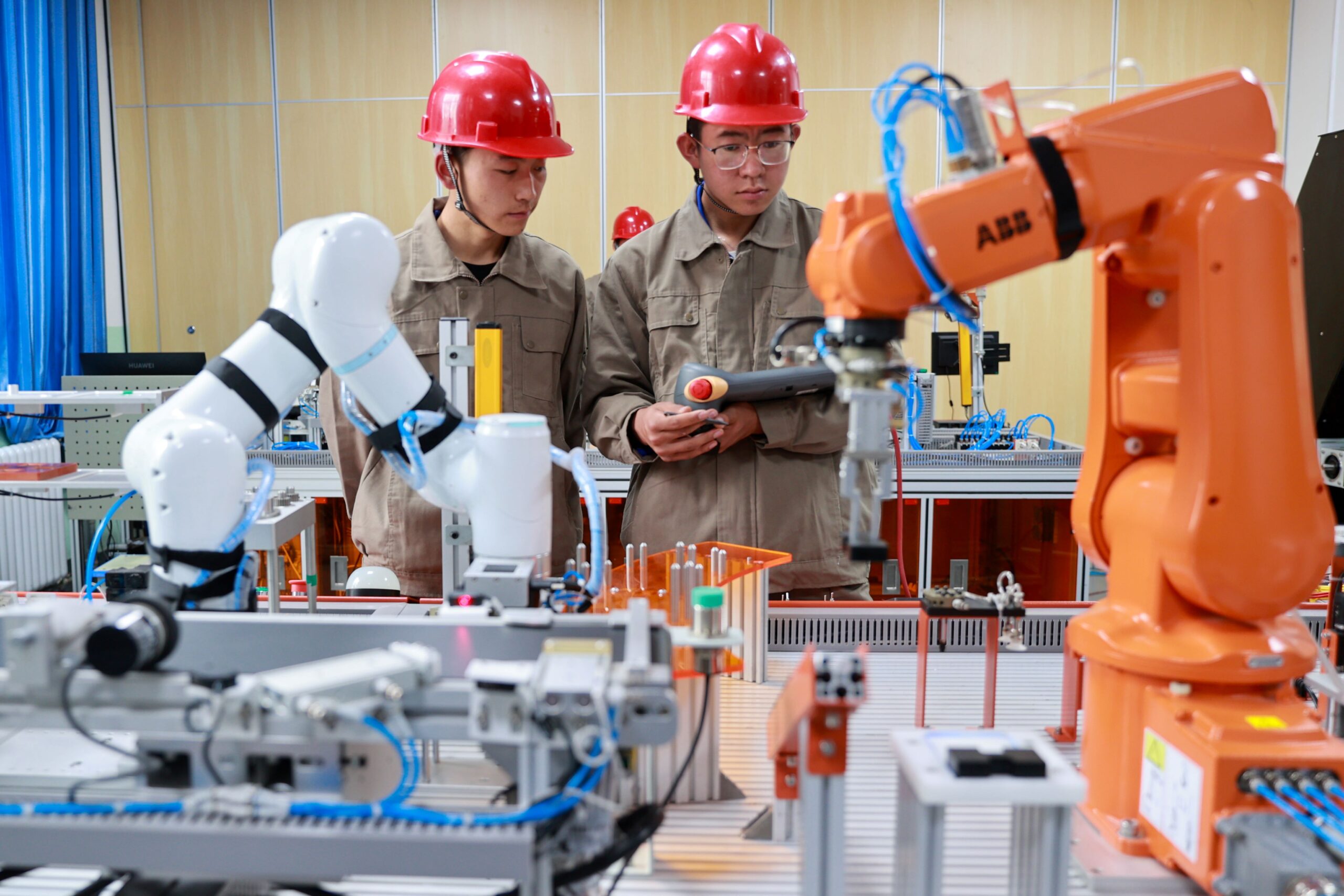

China has added 27 new vocational education majors in fields including AI, the low-altitude economy and humanoid robotics. The new programmes will begin enrolling students in 2027.
China has added 27 vocational education majors to better match skills training with the needs of emerging industries.
The Ministry of Education (MOE) announced the new programmes on July 16th. They include nine higher vocational college majors and 18 vocational undergraduate majors, covering 14 broad subject areas and 20 specialised fields. Students will begin enrolling in 2027.
The new majors focus on sectors driving China’s industrial development, including the digital economy, low-altitude economy, artificial intelligence, high-end manufacturing, urban renewal and other areas facing talent shortages.
For example, the ministry has introduced vocational undergraduate programmes in technology brokerage services, low-altitude transport engineering technology and hydrogen energy engineering technology. It has also added higher vocational college programmes in infant family care and guidance, wellness tourism operations and management, and intelligent operation and maintenance technology for energy storage equipment.
Meanwhile, the ministry has added programmes in humanoid robot engineering technology, digital twin engineering technology and vehicle-to-everything (V2X) communication technology. These programmes respond to demand for skills linked to emerging occupations.
The latest update also adds majors to support urban renewal, advanced equipment manufacturing, major infrastructure projects, childcare and elderly care.
Since China released its Vocational Education Majors Catalogue in 2021, the ministry has added 169 new majors. They account for 11 per cent of the catalogue and aim to keep vocational education aligned with industrial development and labour market demand.
If you like this article, why not read: Why China’s Regional Food Industries Are Moving Into the Classroom


