

China is tightening academic integrity through stricter plagiarism rules, AI guidelines and stronger oversight in higher education.
China is stepping up efforts to strengthen academic integrity, as two well-known literary figures recently lost their master’s degrees over confirmed academic misconduct. The cases come alongside broader measures to tighten oversight of research ethics and regulate the use of artificial intelligence in higher education.
Two High-Profile Cases Draw Public Attention
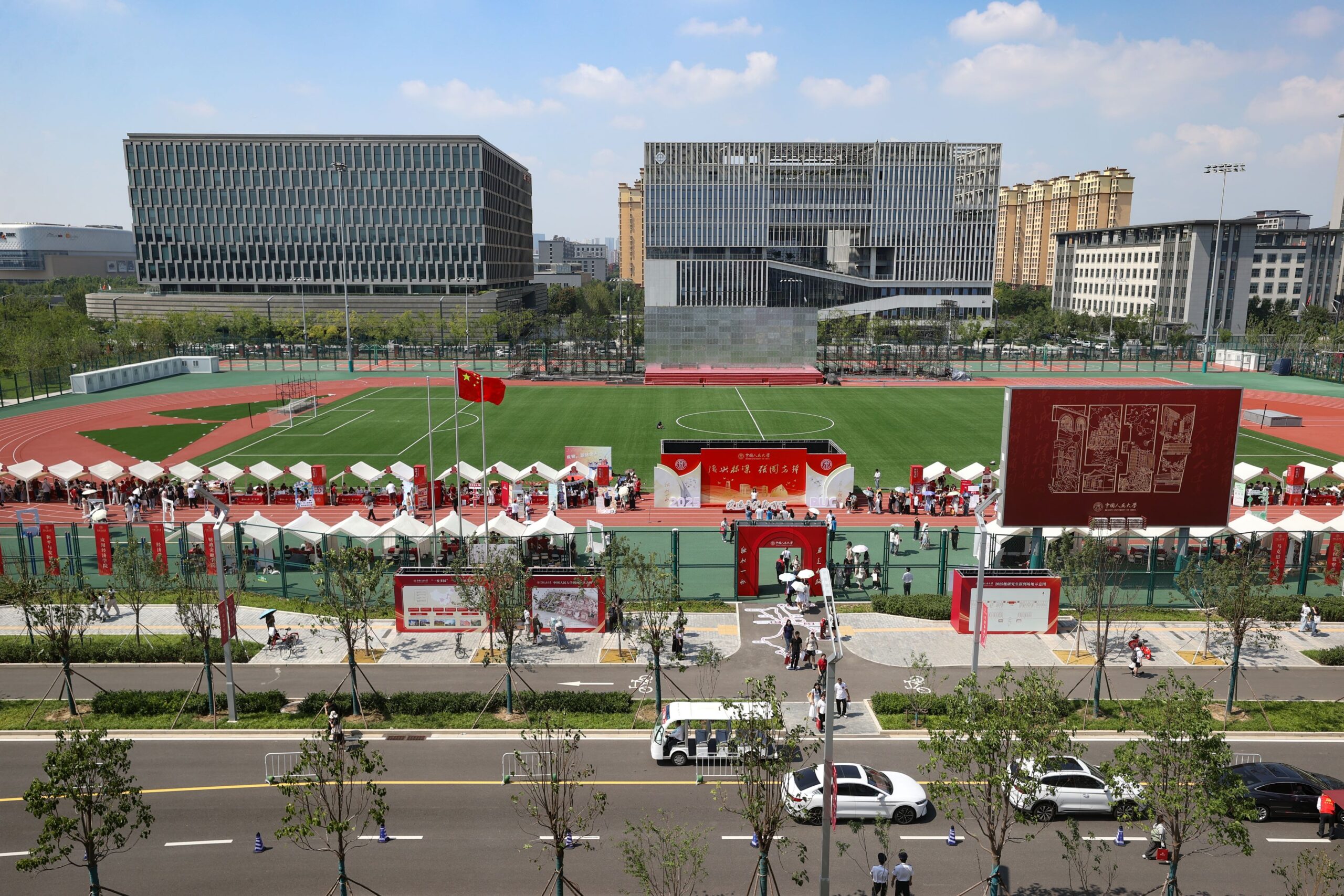
Renmin University of China announced on July 13th that it had revoked the master’s degree of writer Jiang Fangzhou, a 2019 graduate of its School of Liberal Arts, after an investigation found academic misconduct in her master’s thesis.
The university reopened the case after receiving new evidence online. It then formed an investigation panel with experts from both inside and outside the university. The panel reviewed source materials, compared documents, conducted formal inquiries and heard Jiang’s response.
The investigation found that Jiang’s thesis contained nine passages that overlapped with a previously published journal article without proper citations or references. Based on China’s Degree Law and regulations on academic misconduct in higher education, the university revoked her master’s degree.
The decision came just over a week after the university’s earlier statement on July 5th, which had concluded that Jiang’s thesis contained citation irregularities but did not constitute academic misconduct. That earlier investigation also suspended her supervisor from recruiting postgraduate students for one year.
Following the latest decision, Jiang said on the Chinese social media platform Weibo that she accepted the university’s handling of the case.
Meanwhile, Northwest University announced on July 15th that teacher and poet Jia Qianqian had committed academic misconduct. The university said an investigation found plagiarism in several of her published academic papers. It also found that the main arguments, evidence and conclusions in her master’s thesis substantially overlapped with previously published books and academic papers.
As a result, Jia’s master’s degree was revoked. Northwest University also revoked her associate professorship and teaching qualifications, accepted her resignation and terminated her employment.
The latest cases come as Chinese authorities continue to strengthen research integrity through new policies and oversight measures.
Broader Push for Academic Integrity
The latest cases follow a wider effort by Chinese authorities to strengthen research integrity.
Earlier this year, China’s Ministry of Science and Technology launched a nationwide campaign targeting retracted papers in international journals involving Chinese researchers in the natural sciences. The campaign focuses on plagiarism, data fabrication, image manipulation, paper trading and fraudulent peer review.
Authorities also plan to establish a long-term monitoring system for retracted papers. They will further strengthen oversight of research misconduct. Serious violations will be recorded in a national research integrity database and may affect future research funding, awards and academic appointments.
At the university level, institutions are also tightening rules on the use of artificial intelligence in thesis writing.
In late March, several universities, including Qingdao University of Science and Technology, Jiangsu University Medical School and Hebei University of Environmental Engineering, introduced new guidelines on AI use in academic work.
The rules stress that students must complete their theses independently under the guidance of supervisors. AI tools may assist with tasks such as literature searches and other non-creative work. However, they cannot be used to generate core arguments, research methods, conclusions, data analysis or original charts. Directly copying AI-generated text is also prohibited and may constitute academic misconduct.
Together, the recent cases and new AI guidelines form part of China’s broader efforts to strengthen academic integrity in higher education.
Written by Ronnie Yu, with additional reporting by CNS, HKCNA and China Daily.
If you like this article, why not read: China Reshapes University Majors to Match Future Industries


