
Demos Chiang’s monochrome paintings offer a quiet pause, inviting viewers in Chengdu to reflect amid a fast-paced world.
In a city that rarely stops, one exhibition invites viewers to pause. Artist Demos Chiang transforms simple colours into moments of reflection, using 37 monochrome paintings to slow the rush of modern life.
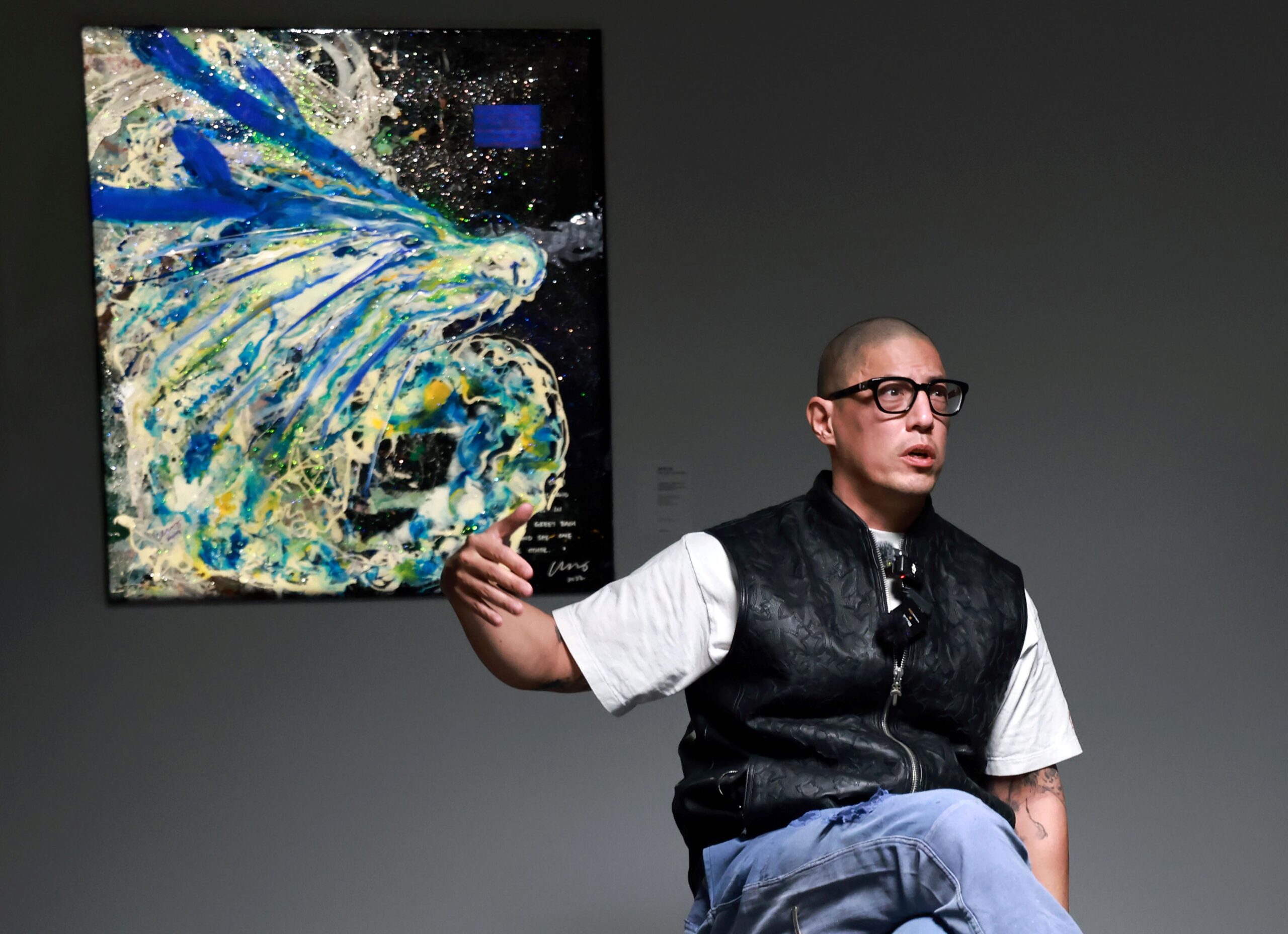
On March 14th, Chiang, an artist from Taiwan, opened his latest solo exhibition, The Spirit Within All Things | Infinite Reflection, at the A4X Art Centre. Each canvas centres on a single colour, from beige and silver grey to crimson red and indigo blue.

A Quiet Dialogue Between Colour and the Viewer
The works hang against white walls, each colour standing alone. The restraint is deliberate. Limiting each painting to one dominant hue slows the act of viewing. The eye notices subtle textures and layered resin forms, resembling clouds, foam, or flowing traces.
In A Sunny Day Dream, soft beige resin forms cloudlike shapes. In the lower corner, an abstract animal appears faintly. Its accompanying text reads: “I look up at the sky and imagine a brand-new world, until one day I become that world myself.”
Let It Snow spreads silver grey resin like a vast snowy plain, with an animal figure at its centre, gentle yet sorrowful. For Chiang, colour is instinctive. He hopes viewers pause and ask themselves: What does this colour evoke in me now?

Testing Limits Through Monochrome
Chiang has exhibited frequently across mainland China. Yet each show is a personal test. Every exhibition must present new works. Nothing repeats. This discipline pushes him to evolve and lets audiences judge whether his work can stand on its own.
Monochrome painting challenges his habits. Controlling layers and depth within a single tone proved difficult at first. Over time, he found the restriction meaningful. Life is not always colourful. Sometimes it moves through a single emotional tone. Finding variation within limitation became both a technical exercise and a way to reconcile with oneself.
Once a painting leaves the studio, Chiang believes it gains an independent life. Each viewer brings their own interpretation, adding to the work’s ongoing story. The exhibition is less about spectacle and more about pause, inviting visitors to step back from the constant outward gaze of modern life.
Written by Chen Wang, additional reporting by Chinanews.com.
If you like this article, why not read: Mosaic Secrets of Europe: Discover the Timeless Art in Beijing