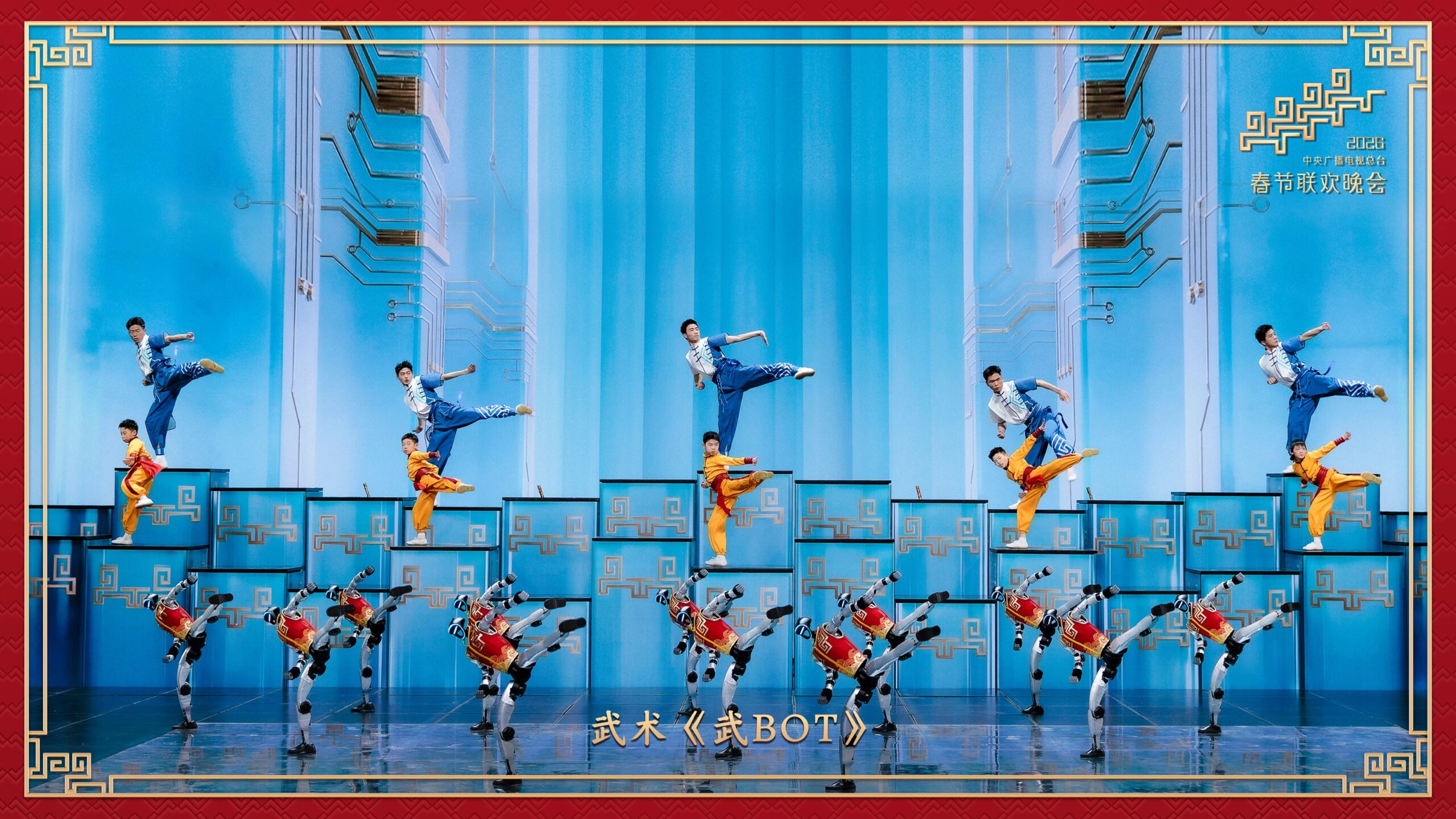

China’s humanoid robots are shifting from televised kung fu performances to factory floors, warehouses and elderly care.
On February 16th, Lunar New Year’s Eve in China, humanoid robots performed kung fu, executed backflips and moved in synchronised formations before hundreds of millions of viewers. The show aired during the annual Spring Festival Gala hosted by China Media Group.
The performance drew global attention. However, the bigger story is unfolding off stage.
Across China, humanoid robots are moving from televised spectacle into factories, warehouses, transport hubs and residential communities.

From Stage to Shop Floor
In a smartphone factory in Shenzhen, the Walker S robot developed by UBTech now handles one of the most repetitive tasks on the production line. It plugs and unplugs charging ports, lights up screens and checks pixel quality. The robot operates six devices at once. According to the company, it works about 15 per cent faster than experienced technicians and maintains a near-zero error rate.
On an assembly line operated by electric vehicle maker Nio, humanoid robots lift battery packs and control torque with high precision. Engineers say the machines reduce reliance on fixed mechanical arms. That flexibility helps when production layouts change.
In e-commerce warehouses, robots from Geek+ move through aisles, pack goods while in motion and adjust their path when they encounter obstacles. The machines resemble mobile workers rather than static industrial equipment.
Production volumes are also rising. AgiBot, a Shanghai-based robotics firm, reported shipments exceeding 5,000 units in 2025 and aims to expand annual capacity to 30,000 units in 2026. The figures indicate that humanoid robots in China are entering early commercialisation rather than remaining laboratory prototypes.

Moving Into Everyday Life
Industrial adoption is only part of the shift. Consumer-facing robots are also gaining ground.
The Bumi robot developed by Noetix sells for just over £1,100. It accompanies elderly users on walks, reminds them to take medication, monitors heart rate and can trigger alerts after detecting a fall. As China’s population ages, companies are positioning humanoid robots as accessible care assistants.
In hotels and shopping malls, smaller humanoid models from AgiBot greet visitors, guide guests in multiple languages and perform short welcome routines. Museums and retail spaces in major cities, including Beijing, Shanghai and Guangzhou, have introduced robots as guides and service staff.
The scale remains limited. Nevertheless, the presence of humanoid robots in public spaces signals a gradual normalisation of the technology.

Building a Robotics Ecosystem
High development costs remain a barrier to wider adoption. To address this challenge, local governments are investing in shared testing platforms.
In Hangzhou, authorities established an embodied intelligence pilot base that functions as a training and validation hub for robotics companies. The facility simulates real-world scenarios across agriculture, logistics, manufacturing, engineering and service industries. Companies can test applications, refine hardware and reduce development costs before commercial rollout.
Hangzhou already hosts major technology firms, including Alibaba, and robotics developers, including Unitree Robotics. Officials hope the shared platform will accelerate cross-industry integration and strengthen the city’s position in advanced manufacturing.
Across China, policymakers now treat artificial intelligence and robotics as strategic growth sectors. Subsidies, pilot zones and industrial clusters aim to shorten the path from prototype to product.
Additional reporting by CNS, HKCNA, CCTV.
If you liked this article, why not read: China’s Robot Trainers: Train Robots For Real-life Applications