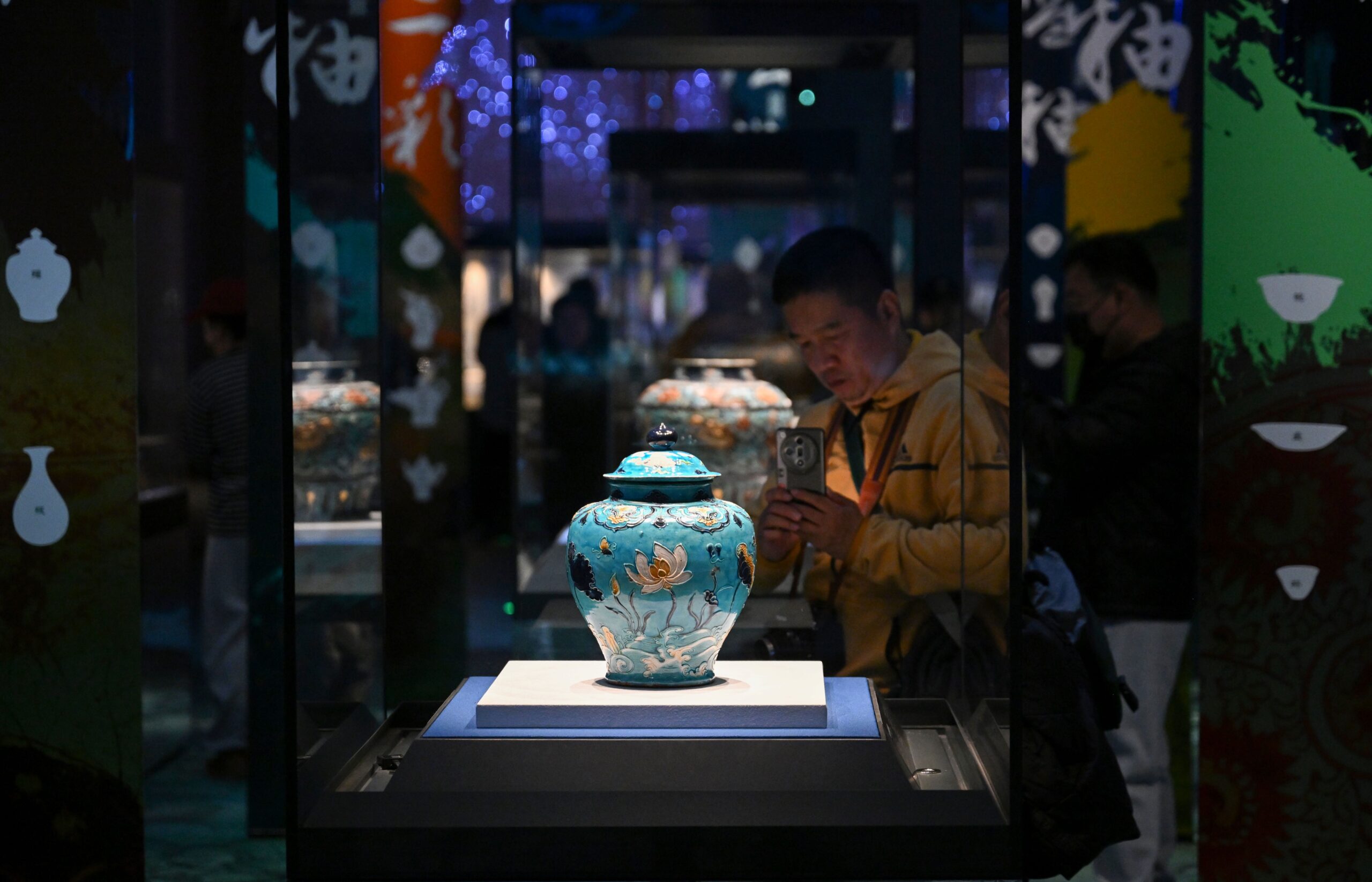

A new exhibition in Beijing showcases two Ming Dynasty shipwrecks, revealing China’s early ocean trade and maritime exchange.
More than 1,500 meters below the South China Sea, two shipwrecks have preserved a rare record of early maritime trade. Discovered in October 2022, the wrecks lie on the northwestern slope of the sea, between Hainan Island and the Xisha Islands. Together, they offer new insight into China’s role in long-distance ocean trade during the Ming Dynasty.
The two ships date to the early 16th century, during the Hongzhi and Zhengde reigns. Despite their depth, both sites remain largely intact. Cargo is still stacked in place, allowing archaeologists to study how goods were transported across the sea centuries ago. Today, these discoveries form the core of a special exhibition in Beijing, where deep-sea archaeology meets cultural history.
Two Ships, One Trade Route
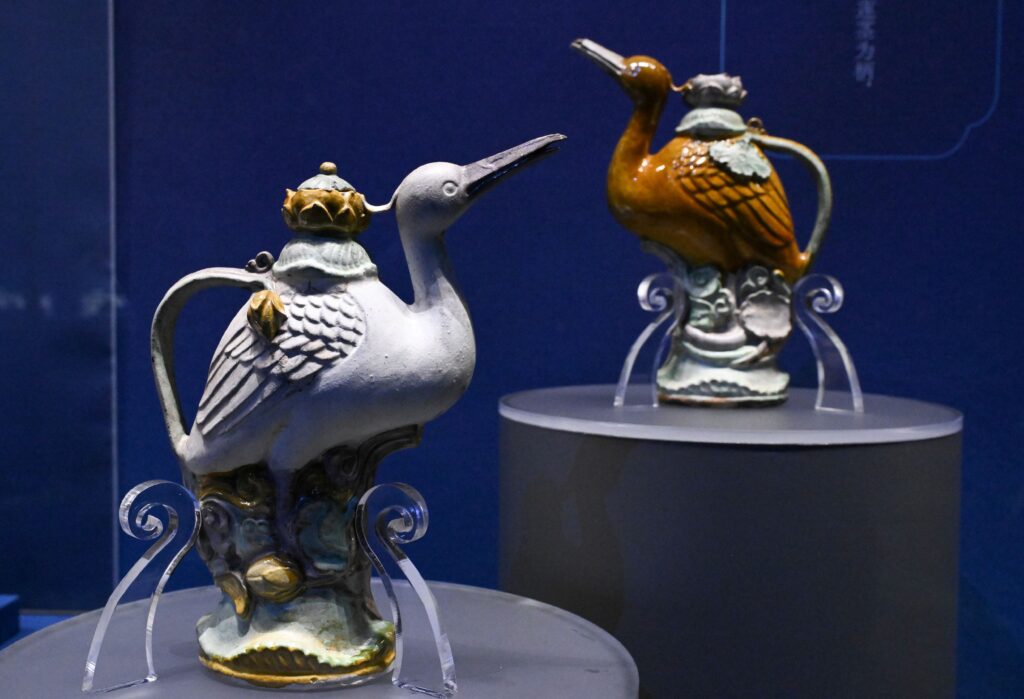
What makes the discovery unusual is the relationship between the two vessels. One ship was sailing outward, carrying large quantities of Chinese export ceramics. The other was returning, loaded with imported timber, including ebony. This marks the first time archaeologists have identified both an outbound and a homebound merchant ship from China’s ancient maritime trade routes at the same site.
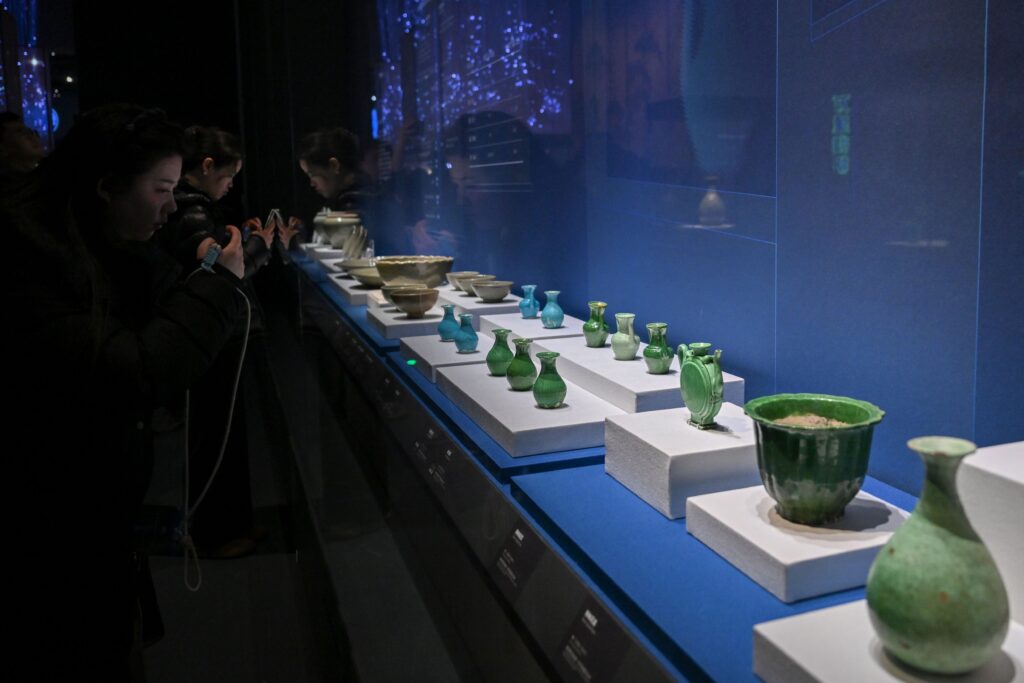
As a result, researchers can examine the full cycle of overseas trade. The ceramics from the first ship include many blue-and-white porcelain pieces, once widely exported and highly valued across Asia. Through vessel shapes, decorative patterns and production techniques, these objects reflect both commercial demand and cultural exchange.
Meanwhile, the second ship tells a different story. Its cargo is dominated by neatly arranged ebony logs. Historical records show that ebony was sourced from overseas regions and used in high-end furniture and utensils. In the exhibition, the timber is shown alongside gilded ebony chopsticks from the Capital Museum, helping visitors understand how imported materials entered daily and elite life in Ming China.
Deep-Sea Archaeology at 1,500 Meters
Studying these shipwrecks required advanced deep-sea technology. The sites lie far beyond the reach of traditional diving. Over three survey stages, archaeologists used remotely operated vehicles and underwater imaging to document the wrecks and recover artefacts.
From the first ship alone, nearly 900 sets of artefacts were brought to the surface. The second site yielded dozens of items, despite its compact cargo layout. At the same time, high-definition underwater footage allowed researchers to record the original condition of the wrecks before recovery. These methods highlight how modern technology is expanding the possibilities of maritime archaeology.
From the Seafloor to the Gallery
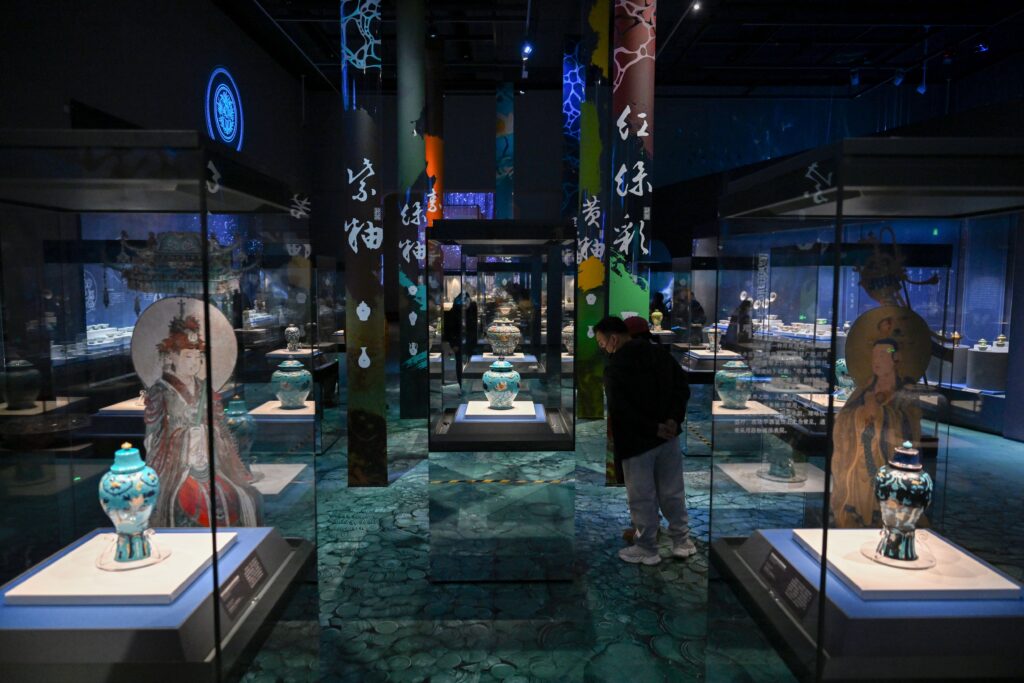
The exhibition follows a clear narrative, moving from the discovery of the wrecks to life aboard the ships and, finally, to the research behind the finds. Artefacts are displayed alongside underwater images and first-hand archaeological accounts, making complex research accessible to the public.
Rather than focusing only on objects, the exhibition places the shipwrecks within a broader history of maritime exchange. It shows how goods, materials and ideas travelled across the sea long before modern globalisation. By bringing these deep-sea discoveries into the museum space, the exhibition offers a new way to understand the cultural connections shaped by ocean trade.
Written by Chen Wang, additional reporting by CNS.
If you liked this article, why not read: Golden Journeys: Ancient Chinese Treasures Shine in Beijing