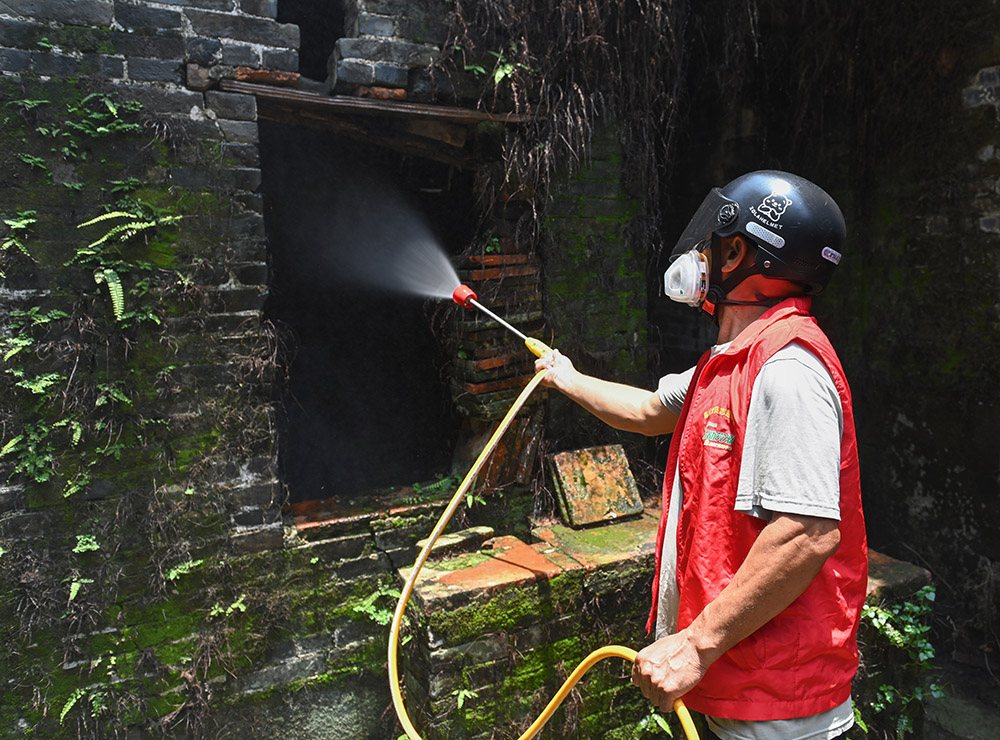

From July 20 to July 26, Guangdong has reported 2,940 new local cases of Chikungunya, with 2,882 cases occurring in Foshan.
As of July 29, China’s Guangdong Province has launched targeted measures, including citywide cleanup efforts, to effectively curb the spread of Chikungunya fever, a mosquito-borne viral disease.
Release Fish to Eat Mosquito Larvae
Data released on July 28 shows that 78 per cent of Foshan’s affected villages and communities have seen their mosquito density indexes drop to safe levels through water cleanup and mosquito eradication efforts. The city has been hit hardest by the outbreak in Guangdong,
Foshan has designated 53 hospitals as treatment centres and expanded its number of mosquito-proof isolation beds to 7,220. As of July 27, the city had reported a total of 5,155 confirmed cases.
To eliminate mosquitoes at their source, Foshan’s Chancheng District has released over 5,000 larva-eating fish into the city’s lakes.
“The fish fries feed on mosquito eggs and larvae, which helps to eliminate mosquito eggs and larvae in the water,” Zhang Huabin, deputy director of Chancheng district urban management and comprehensive law enforcement bureau.
According to statistics, a larvivorous fish fry can eat between 100 and 200 mosquito larvae every day. The strategy is pollution-free, environmentally friendly, and sustainable compared to traditional chemical disinfection and sterilisation methods.

New Protocol to Guide Treatment
China’s National Health Commission and the National Administration of Traditional Chinese Medicine (NATCM) on July 31 released the 2025 protocol for Chikungunya fever to guide treatment and improve standardised care across medical institutions.
Chikungunya fever is an acute infectious disease caused by the Chikungunya virus, transmitted through the bite of Aedes mosquitoes. It is clinically characterised by fever, joint pain, and rash.
Chikungunya fever is widely prevalent in tropical and subtropical regions around the world, with its geographic spread continuing to expand. There is currently no available vaccine for the Chikungunya virus in China. Individuals are better to use mosquito coils, repellents, and mosquito nets to prevent mosquito bites.
On July 29, China held a national conference on the prevention and treatment of Chikungunya fever. The conference urged hospitals and health institutions to strengthen quality control of relevant testing and management of outpatient and emergency services to ensure early detection and proper treatment of the disease and to minimise possible severe cases or deaths.
Besides, it also stressed sound public health education and information release to boost people’s confidence in the fight.
Written by Gu Yetao, additional reporting by China Daily, Xinhua and Global Times
If you liked this article, why not read: Why Reptiles Are the Coolest Pets in China