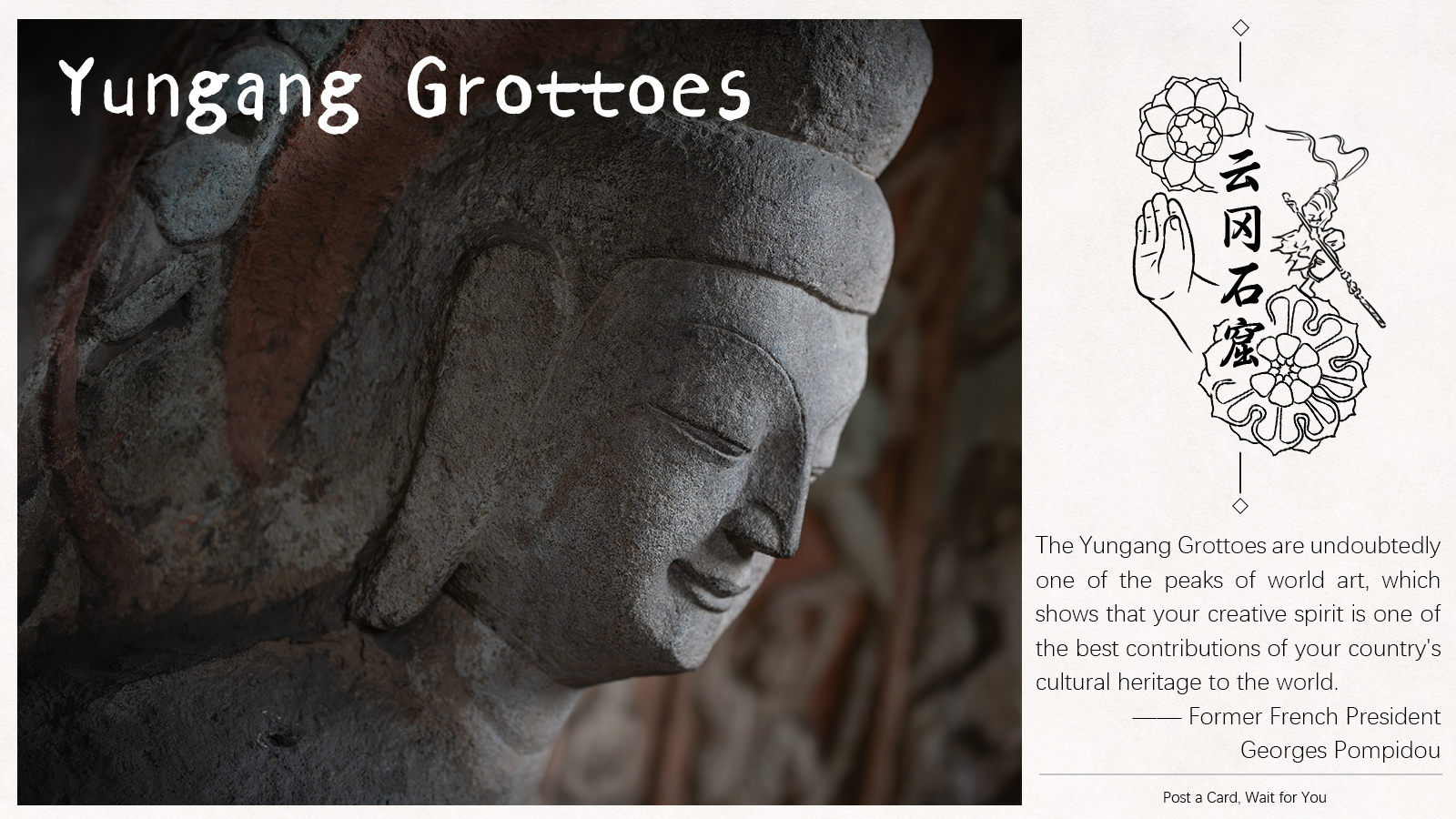


Recently, a young UK couple (@ Wine Fairy Couple Jack & Paige) has punched in at the Yungang Grottoes, where Black Myth: Wukong is set. The couple’s popularity on China’s short-video social platform Douyin has skyrocketed.
“How on earth did they make this?”, the couple asked when arriving at the Grottoes. People say that Yungang Grottoes’ magnificent beauty will shock everyone who came here. The couple is no exception. “This is a true wonder of the world. It’s truly incredible!” they said.
In 2001, Yungang Grottoes became part of the world’s cultural heritage. Moreover, It’s one of the three most famous grottoes in China. With a history of 1,500 years, the Grottoes were originally special stone temples. Ancient people believed that stone was better than metal or wood because it didn’t rust or rot.
There are 45 main grottoes with a total of 51,000 statues, a breathtaking example of Buddhist cave art in China in the 5th and 6th centuries. The most representative of these are masterpieces during the first peak of Chinese Buddhist art after Buddhism was introduced to China from India in the Han Dynasty (206BC-220). For example, Cave 20 houses the sitting statute of Sakyamuni, also called Open-air Buddha. It is 13.7 meters high and a beautiful example of the Buddha sculptures in the Grottoes.
Yungang Grottoes represents the multi-cultural aspect of ancient China. As well as the Indian influences, people can find Western styles in the grottoes from ancient Greece and Rome. Scholars say the grottoes created “Chinese Buddhism”, which is different from Indian Buddhism. The layout and decoration of the grottoes in the late period of Yungang have a strong Chinese style, reflecting the “Sinicization” of Buddhist art.
Written by Liu Sha, pictures created by Wang Di.
If you liked this article, why not read: Liangzhu: China’s 5,000 Year Old Neaolithic Jade Capital