
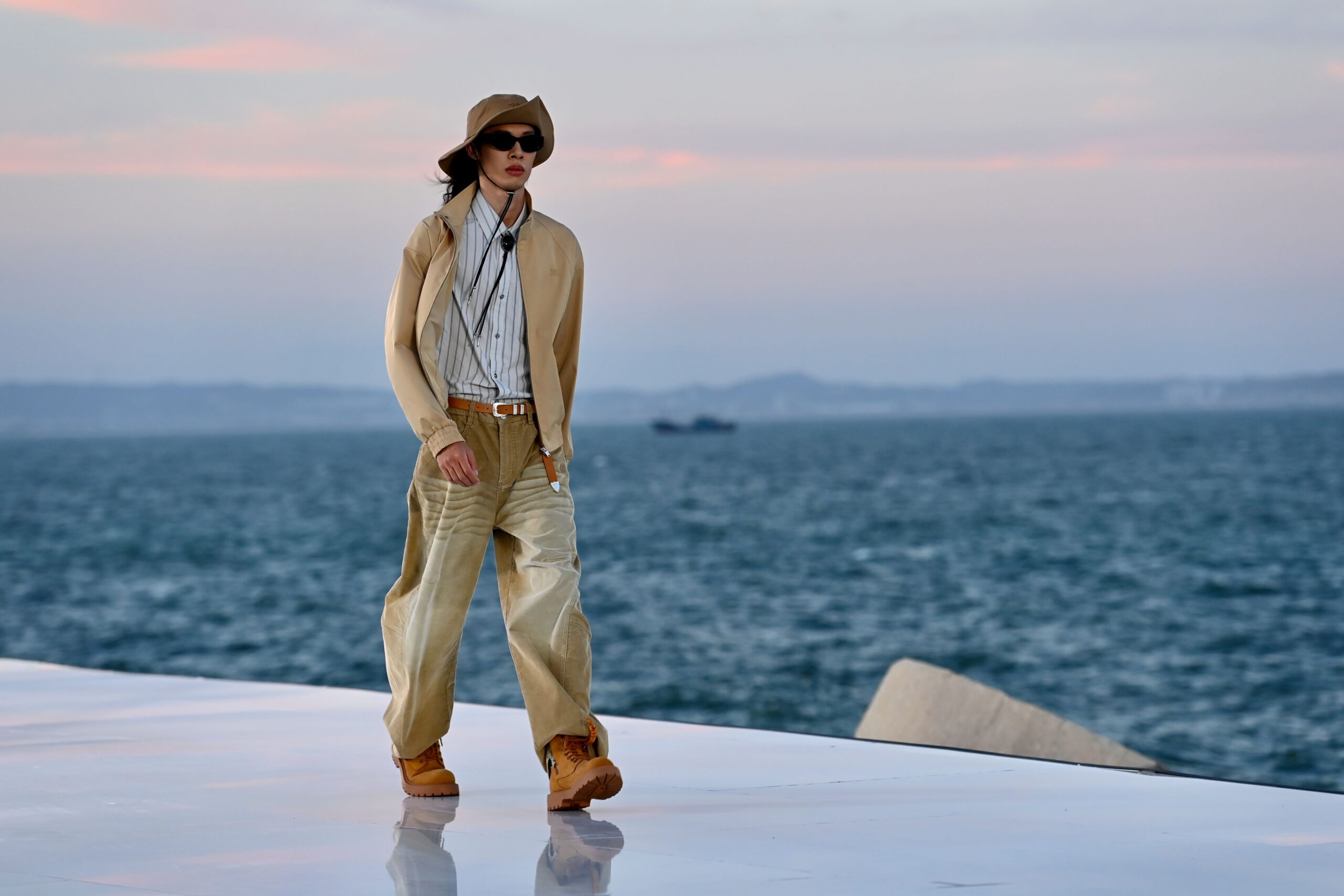

Chinese men are turning from leather shoes to sneakers as workplace dress codes change, putting pressure on traditional brands like Aokang.
For decades, a pair of polished leather shoes was a familiar part of Chinese men’s business wardrobes. A suit and shiny leather shoes once signalled professionalism, success and social status.
That is changing.
More Chinese men are now choosing sneakers and casual shoes for work and other occasions. The shift has put pressure on traditional leather shoe brands, including Aokang International, one of China’s best-known domestic footwear companies.
Men’s shoes account for more than 60 per cent of Aokang International’s business. Yet the company has struggled in recent years. It recorded losses for four consecutive years from 2022 to 2025, with cumulative losses exceeding 900 million yuan (about £98 million).
Aokang returned to profit in the first half of 2026, reporting revenue of 769 million yuan and net profit of 17.57 million yuan. However, revenue fell 28.88 per cent year on year. Its net profit excluding non-recurring items, a measure of its core business performance, remained in the red at 6.61 million yuan.
Aokang is not alone. Fuguiniao was delisted and went bankrupt in 2019, while Red Dragonfly reported losses in both 2024 and 2025. Several established Chinese leather shoe brands now face similar pressure.
So, why are Chinese men moving away from leather shoes?
When Leather Shoes Meant Success
The rise and fall of leather shoes in China has closely followed changes in the workplace and ideas about social status.
In the 1980s and 1990s, as China’s market economy expanded, a suit and a pair of polished leather shoes became a familiar look for businessmen. Leather shoes were more than footwear. They were part of a new image of success.
Aokang became one of the best-known brands of that era. Its advertising slogan, “Wear Aokang, Travel the World”, became widely known across China.
The company reached a business peak in 2012, when Aokang International listed on the Shanghai Stock Exchange. That year, it recorded revenue of 3.455 billion yuan and net profit of 513 million yuan. It also operated 5,315 stores nationwide.
But the market began to change.
The arrival of younger workers helped reshape workplace dress codes. At the same time, technology and internet companies adopted more relaxed office styles.
Zhang Yi, CEO and chief analyst at iiMedia Research, said the entry of the first large group of people born in the 1990s into the workforce coincided with more relaxed workplace dress codes. As a result, business wear became increasingly casual.
T-shirts, casual trousers and sneakers gradually became common in the workplace. Comfort also became a bigger factor in everyday clothing choices.
The change is visible among business leaders as well. Apple CEO Tim Cook has worn Zegna Triple Stitch sneakers at Apple events, while Alibaba founder Jack Ma has appeared in Loro Piana Flexy Walk shoes. Xiaomi CEO Lei Jun has also frequently worn On and Salomon footwear.
These examples reflect a broader shift in business dress. Sneakers no longer belong only to sports or leisure. They have also become part of the modern business wardrobe.
For traditional leather shoe makers, that has meant a shrinking market.
Aokang’s production figures show the change clearly. In 2015, the company produced about 12.6 million pairs of men’s shoes and 7.24 million pairs of women’s shoes, for a total of 19.84 million pairs. By 2025, those figures had fallen to about 6.19 million, 2.53 million and 8.72 million pairs, respectively.
The company’s total footwear production therefore fell by more than half in a decade.
Aokang Tries to Change
As its core business came under pressure, Aokang looked for new ways to grow.
Its first major attempt was to move into sports footwear through international brands. In 2015, Aokang secured distribution rights for Skechers in mainland China and set a target of opening 1,000 stores within five years. It later added Puma to its portfolio.
At its peak, Aokang’s agency network grew to 160 Skechers stores and 77 Puma stores. The company hoped sports footwear would offset the decline in leather shoes.
However, the strategy did not work as planned.
By the end of 2025, Aokang had closed all of its Skechers stores. Only seven Puma stores remained. Its decade-long attempt to build a sports footwear business had effectively come to an end.
Zhang said Aokang brought an old wholesale and distribution model into the sports footwear business. However, sports brands require stronger capabilities in product development, youth-oriented marketing and inventory turnover.
At the same time, Skechers and Puma moved towards direct-to-consumer retail models and took back more control over their sales channels. Competition also intensified.
Aokang’s financial results show the pressure on margins. In 2025, the gross margin of its Skechers business was 19.49 per cent. The gross margin for other brands, which included Puma, fell to 8.37 per cent.
Zhou Ting, director of the Yaok Research Institute, pointed to several other factors. She said the footwear and apparel industry was moving towards fewer intermediaries, while Aokang’s team lacked experience in some of the new business areas. She also said the company had not invested enough in its agency businesses for the long term.
In response to questions from the publication, Aokang said the decision to end the sports brand partnerships followed internal discussions. The company said it would now focus on its leather shoe business.
That focus has already led to changes.
Aokang has continued to close underperforming stores. It recorded a net reduction of 79 stores in the first half of 2026. Over the past four years, it has closed nearly 800 stores in total.
The company has also cut operating expenses. In the first half of 2026, its operating costs fell 38.46 per cent year on year to 427 million yuan. Selling expenses fell 32.82 per cent, while administrative expenses dropped 28.44 per cent. Financial expenses fell 46.34 per cent.
Product strategy has changed as well.
Aokang now positions itself as a footwear specialist focused on comfort. It has introduced a category known as “sports leather shoes”, which combines the appearance of traditional leather shoes with elements of sports footwear.
Its Sports Leather Shoes 3.0 range, for example, uses an EPR lightweight foam sole and Dyneema fibre uppers. Aokang says the design can cut weight by 50 per cent while providing water resistance and breathability.
Yet the new category has not become a major sales driver.
On Aokang’s Tmall flagship store, which has more than 3 million followers, the best-selling products remain traditional leather shoes priced at around 200 to 300 yuan. Many customer reviews say they bought the shoes for weddings.
Aokang’s investor relations office also acknowledged that sports leather shoes currently account for only a small share of sales.
Financial results point to the same challenge. In the first half of 2026, revenue from Aokang’s men’s shoes, women’s shoes and leather goods businesses all fell by double digits. Online revenue dropped by 56 per cent year on year.
The company’s core business has yet to return to sustained profitability.
Can Leather Shoes Find a New Place?
Aokang has also explored opportunities outside footwear. In late 2024, it announced a plan to acquire a stake in a semiconductor company, but the deal ended about two weeks later after the two sides failed to agree on the transaction terms. A second major asset acquisition in 2026 was terminated a week after it was announced.
For now, however, footwear remains the company’s main focus.
Zhang said today’s male consumers care about comfort, but they also look for products that reflect their social groups and lifestyles. In his view, leather shoes once represented wealth and status. Footwear now says more about how people choose to live.
That makes the “sports leather shoe” strategy difficult.
Zhang described it as a niche category within an existing market. He said product improvements alone would not be enough. Brands would also need long-term consumer education and a clear market strategy.
Traditional business occasions still provide a market for leather shoes. Weddings, conferences and some workplaces continue to require more formal footwear.
For everyday commuting, however, many consumers now prefer simple and comfortable casual shoes.
Aokang still has advantages, including more than three decades of experience in footwear manufacturing, an established supply chain and a large customer base in lower-tier Chinese markets.
But reaching younger consumers remains a challenge.
Zhang said Aokang faces an ageing brand image. Older consumers are familiar with the brand, while younger consumers may have limited awareness of it. He also described sports leather shoes as a product caught between two established categories: formal leather shoes and sneakers.
Zhou said Aokang’s long-standing image as an affordable mass-market brand could also make it difficult to move up the market. Although the company has set a main price range of 399 to 699 yuan for its core brand, many of the best-selling products on its Tmall store cost less than 300 yuan.
The bigger challenge is whether Aokang can make leather shoes relevant to a new generation of Chinese consumers.
Translated by Ronnie; compiled from China Newsweek.
If you liked this article, why not read: China Fashion Week Showcases Tradition and Innovation


