
A minimalist Chinese app that asks users to check in once a day has surged in popularity among young professionals living alone.
For Li Wan, a 25-year-old living alone in Shandong province in eastern China, the blunt question “Are you dead?” carries no insult. Instead, it offers reassurance at a cost of just 8 yuan (£0.85).
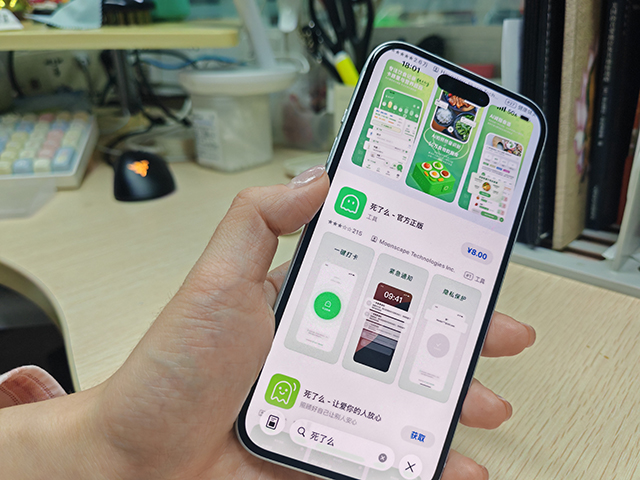
That reassurance now appeals to thousands of young professionals driving the viral rise of Sileme, literally translated as “Are You Dead?” Recently, the minimalist safety app climbed to the top of the paid charts on China’s Apple App Store. Abroad, users know it as Demumu.
Designed with simplicity in mind, the app avoids logins and collects no personal data. Each day, users tap a single “check in today” button. After several missed check-ins, an automated system emails a designated emergency contact.
“At first, I downloaded it because the name made me laugh,” Li said. Having lived alone for more than a year, she often worries her mother by replying late to messages. With the app in place, however, silence triggers an email alert. As a result, her mother can reach out quickly. Over time, communication improves.
Beyond individual stories, the app’s rapid success points to growing safety anxiety among China’s solo dwellers. According to the 2025 China Statistical Yearbook, single-person households now make up about 20 per cent of the sampled population. Meanwhile, projections from the Beike Research Institute suggest this number could rise to between 150 million and 200 million people by 2030.
Behind the surge stand three Gen Z developers. In just one month, they turned an online discussion into a functioning product. Those conversations focused on the risks of living alone. Since launch, said one developer surnamed Guo, the user base has expanded fiftyfold.
As for costs, development required only about 1,000 yuan (£106), Guo added. That investment has already paid for itself. Looking ahead, the team plans to roll out a text-messaging feature.
Still, reactions to the app’s name remain mixed. Some users describe it as “ominous” or “too blunt.” Others propose alternatives such as “Are You Alive?” or “Are You Okay?” In response, Guo remains firm. To him, the wording reflects cultural change. Younger generations, he argues, now speak more directly about death.
According to the BBC, Guo said that the team hopes to raise funds by selling 10 per cent of the company for one million yuan (£106,340). By comparison, that figure dwarfs the modest cost of building the app.
Beyond fundraising ambitions, expansion remains a key goal. The developers are currently exploring a separate product aimed at older users. That move aligns with China’s rapidly ageing population, where more than one-fifth of citizens are now over 60.
Recently, a company post underscored that focus. In it, the team urged greater attention toward elderly people living at home. “They have dreams,” the message read. “They deserve to be seen, respected, and protected.”
Written by Yi Shen, additional report by China Daily.
If you liked this article, why not read: Why a “Crying Horse” Toy Is Winning Hearts Across China