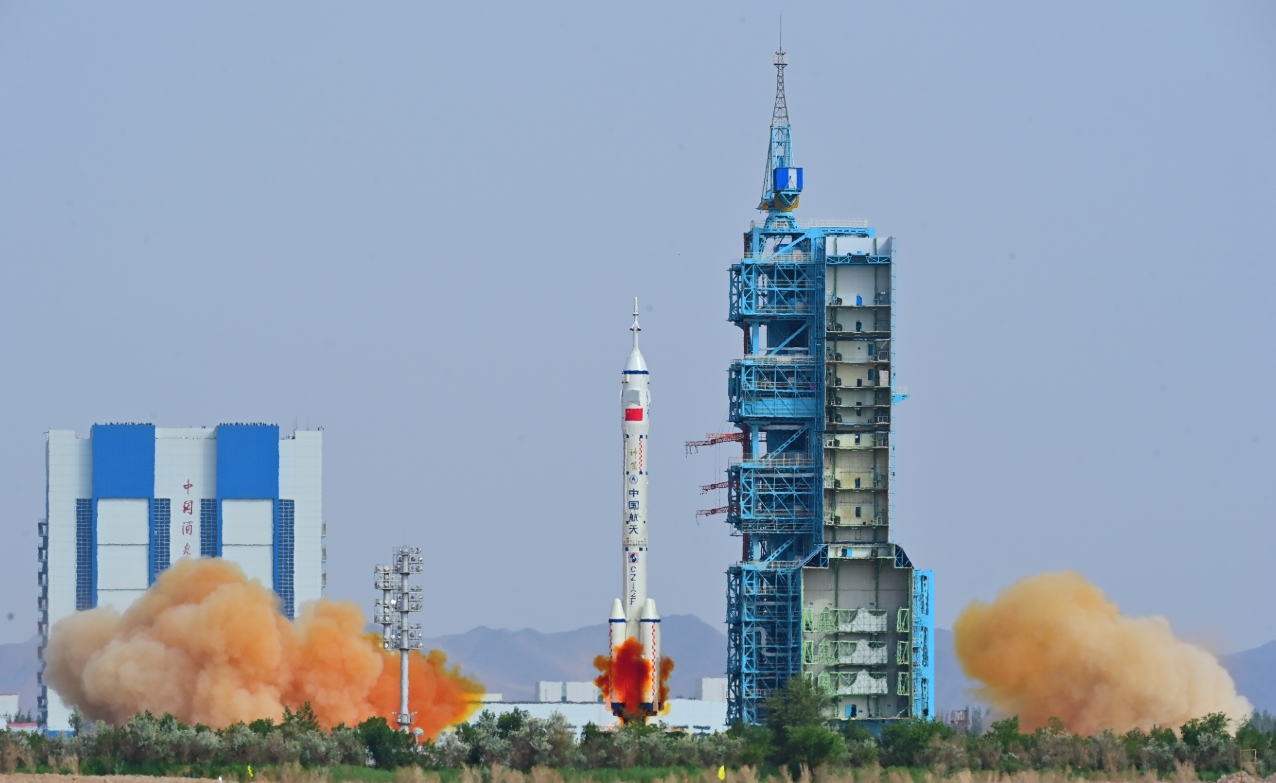

China will launch a series of scientific space missions during the next five years, including to hunt for a habitable “second Earth” where humans or alien life could live.
During the 15th Five-Year Plan period (2026-30), China will launch a series of scientific satellite missions. These missions will focus on major frontiers such as the origins of the universe and the start of life. Scientists aim to make new breakthroughs in these areas, Chinese officials said.
Key missions would include searching for Earth-like planets outside our solar system. Other missions include the Hongmeng Program, Kuafu-2 satellite, and an upgraded X-ray timing and polarisation observatory.
The Hongmeng Program consists of 10 satellites forming a low-frequency radio telescope array. The satellites will travel to the far side of the Moon, to detect the universe’s “infant cries”. The project aims to shed light on the turbulent epoch hundreds of millions of years after the Big Bang, before the first stars formed.
Kuafu-2, which “stares directly at the sun,” will become the world’s first spacecraft to orbit the Sun’s polar regions. These areas contain crucial clues to the workings of solar magnetic activity.
The third satellite is an exoplanet surveyor “searching for a new home for humanity”. It will sweep the galaxy in search of “Earth 2.0″ or “second earth” — planets similar in size to Earth and situated within the habitable zone where humans or potential alien life could live.
The fourth satellite is a “space observatory” positioned beyond Earth, designed to probe the universe’s “extreme forbidden zones” — including the event horizons of black holes and the searing surfaces of neutron stars, where gravity warps spacetime and magnetic fields can be a trillion times stronger than Earth’s.
Meanwhile, the program has also actively pursued multi-level international cooperation, according to officials.
For example, the SMILE satellite is the first full-mission, whole-cycle deep cooperation between China and Europe. China’s Tianguan satellite involves participation from ESA, Germany, and France.
By establishing international scientific teams and promoting data sharing, China continues to enhance the global influence and effectiveness of its scientific satellites, officials said.
Written by Sha Liu, additional reporting by Ecns.cn and Global Times.
If you liked this article, why not read: Tiny Astronauts: China Sends Mice To Space For First Time