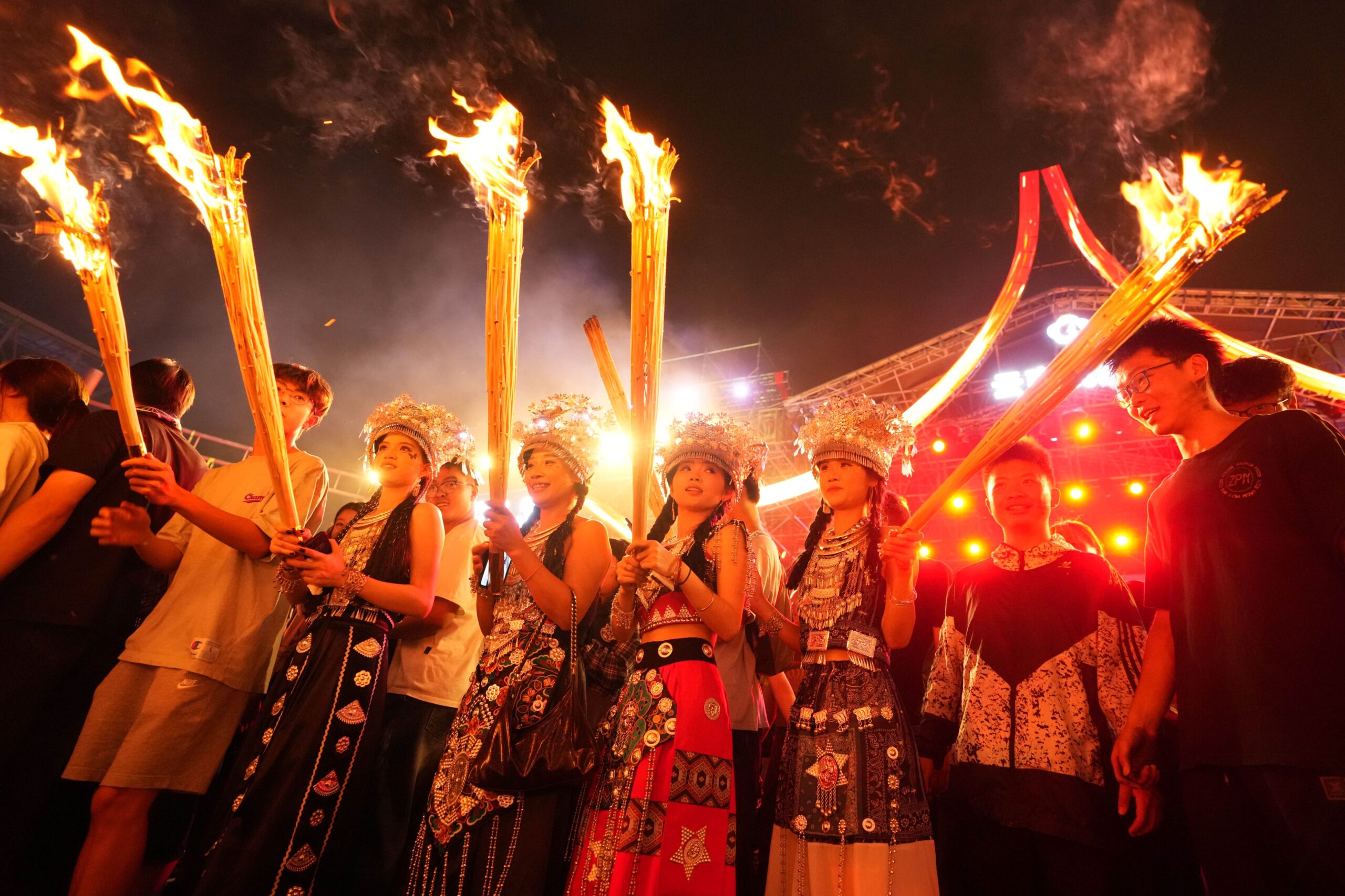

China’s Torch Festival is gaining global attention as the “Oriental Carnival” for its vibrant fire rituals and communal festivities.
The Torch Festival is a major traditional celebration for many ethnic groups in China. The Yi, Bai, Naxi, Hani, Lahu, Pumi, and Lisu people all have long histories of celebrating it. With its vibrant atmosphere and large-scale celebrations, the Torch Festival is often called the “Oriental Carnival.”

A Festival Rooted in Fire Worship
The festival traces back to ancient fire worship. In many stories, legends, and records, fire stands for light, warmth, protection, and hope. Lighting torches is a central part of the celebration. People use fire to pray for safety, good harvests, and happiness.
Across different ethnic groups, the Torch Festival carries the shared belief that fire can drive away evil and bring blessings. This deep cultural meaning gives the festival its lasting power.

A Celebration of Joy and Unity
In the view of experts from the School of Ethnology and Sociology at Southwest Minzu University, much like Western carnivals, the Torch Festival is full of joy and energy. During the celebration, people of all ages wear traditional clothing and join in various events. These include lighting torches, dancing around bonfires, and singing late into the night. Everyone joins the fun.
Western carnivals also create a break from daily life. People wear costumes, dance in the streets, and take part in parades. Both festivals allow people to release emotions and enjoy freedom for a set time.
While both are joyful, the Torch Festival focuses on fire worship. It shows respect for nature and the desire to protect communities and crops. The festival has deep roots in folk traditions, not in religion, unlike most Western carnivals.
In celebration styles, the Torch Festival highlights group activities. Outdoor events like bonfires, singing, dancing, and sports bring communities together. Western carnivals, on the other hand, often centre on individual expression, costumes, and street performances.

A Unique Cultural Experience
The Torch Festival offers a colourful, energetic experience filled with music, movement, and shared celebration. It reflects the rich culture of China’s ethnic minorities and their connection to nature and tradition.
This is more than a party—it is a window into a living culture. That’s why the Torch Festival is often called the “Oriental Carnival,” offering a unique blend of tradition, community, and joy.
Additional reporting by CNS.
If you liked this article, why not read: Fast Boats, Sticky Rice, and Good “Duck”: A Festival Like No Other