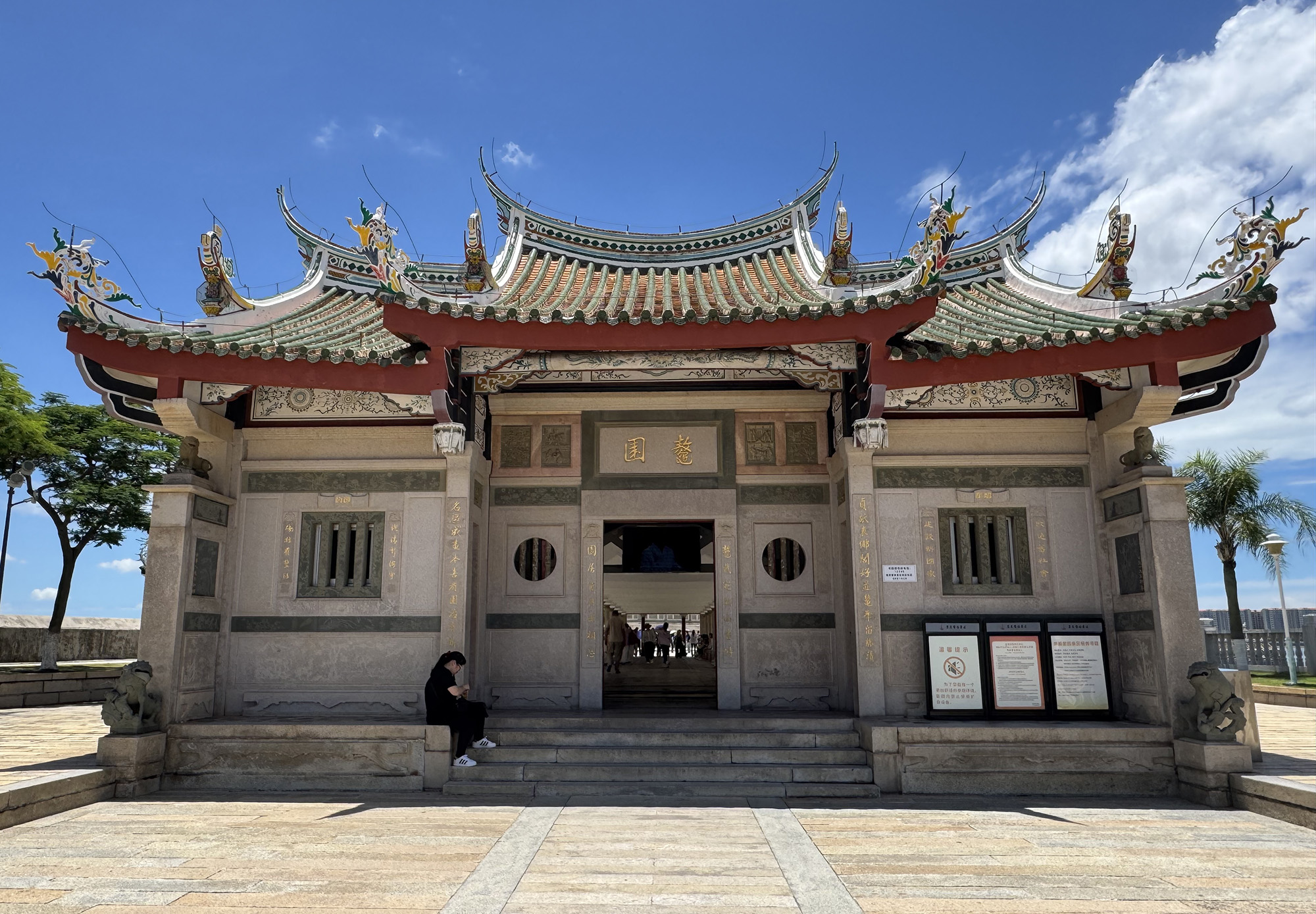

If you want to know more about Xiamen, a beautiful coastal city in Fujian Province, Tan Kah Kee (陈嘉庚) is a must-mentioned person. Jimei village of Xiamen, the hometown of this patriotic overseas Chinese business pioneer and philanthropist, is the best place to know why he has left an indelible mark on Chinese history and people’s minds.
Jimei village is now also called “Jimei School Village”. It ‘s a small town where Tan Kah Kee had set up secondary schools, a normal school, and other educational institutions.

When people go inside the village, they may come across the first school gate—the Chinese Language and Culture College of Huaqiao University. Supported by Tan Kah Kee, founded in 1953, the college was once a special place for overseas Chinese students and foreign students to study the Chinese language and culture.

Tan Kah Kee Park is a memorial area in the village. The park is with the free layout form of China’s traditional gardens. At the same time, the architectural style combined the West and the East to present a unique style called “Tan Kah Kee Style”.

Near the park is “Aoyuan”, also called “Turtle Garden.” The garden is located on a turtle-shaped island. The animal is a symbol of good fortune and longevity in Fujian. When Tan went back to his hometown in 1950, he started to build this beautiful garden.

The porch is 50 meters long, engraved with both ancient and modern Chinese history. It’s the most splendid part of the entire stone carving complex in the garden. Under the carving, photos present Tan’s life story.

At the end of the porch, visitors will see the monument. The inscription at the back of the monument was written by Tan, showing how Jimei village suffered during the wartime, and how he rebuilt his hometown after the war.

Tan’s tombstone is just behind the monument. He died in 1961 in Beijing. The tomb is also like a turtle, meaning longevity and down-to-earth. Local authorities have announced that October 21, Tan’s birthday, has been designated as “Tan Kah Kee Educational Heritage Day” to protect and inherit his educational heritage and his spirit.

If you liked this article, why not read: Full List of Japanese Army’s Bacteriological Warfare Unit Unveiled