
Ancient Dunhuang murals and texts reveal how children played, learned, and lived over a thousand years ago in China.
June 1st is International Children’s Day. In China’s Dunhuang caves—especially the Mogao and Yulin grottoes—artists and scribes left behind vivid images and texts about children’s lives over a thousand years ago.

Everyday Play
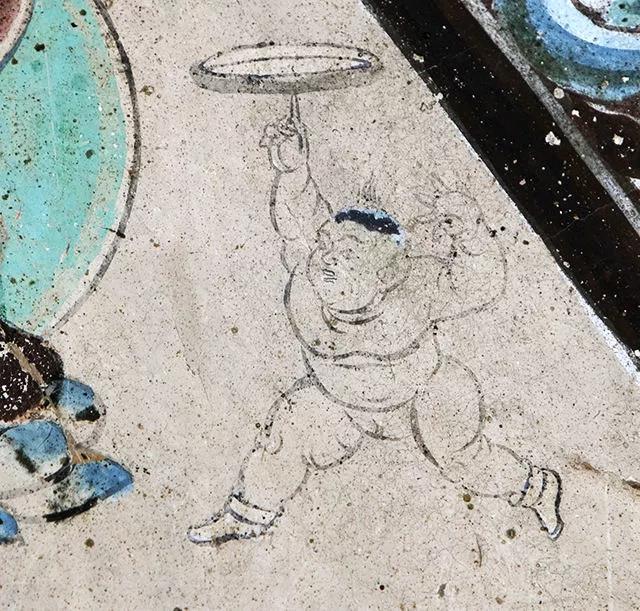
Researchers have identified 183 Mogao caves and 16 Yulin caves that feature images of children, spanning from the Northern Dynasties to the Song and Yuan periods. These artworks depict children riding bamboo horses, playing in the sand, climbing trees, picking flowers, and splashing in the water. Some scenes even depict acrobatics, such as handstands, human pyramids, and mock wrestling—activities that reflect both fun and skill.

One striking example is found in Cave 79 at Mogao, dating to the High Tang period. Among the Thousand Buddhas painted on the ceiling, artists added several line-drawing style naked children’s paintings. They are barefoot or booted, sometimes dancing or bowing, sometimes holding lotus flowers. Their short hair and lively gestures capture real moments of childhood.
These joyful images are more than decoration. Scholars believe they are early inspirations for the iconic “chubby baby” figures in Chinese folk art. The details—clothes, actions, and expressions—make them a rich source for studying childhood in ancient China.

Early Learning
Dunhuang also yielded hundreds of ancient children’s textbooks from the so-called “Library Cave.” These hand-copied books were designed to teach children literacy, math, nature, and moral values. Simple in language but rich in meaning, they reflect thoughtful efforts to awaken young minds.
From playful games to early education, the Dunhuang materials offer a rare and touching glimpse into how children lived, learned, and grew more than a thousand years ago.
Additional reporting by CNS.
If you liked this article, why not read: Longmen Grottoes: Where History and Innovation Unite