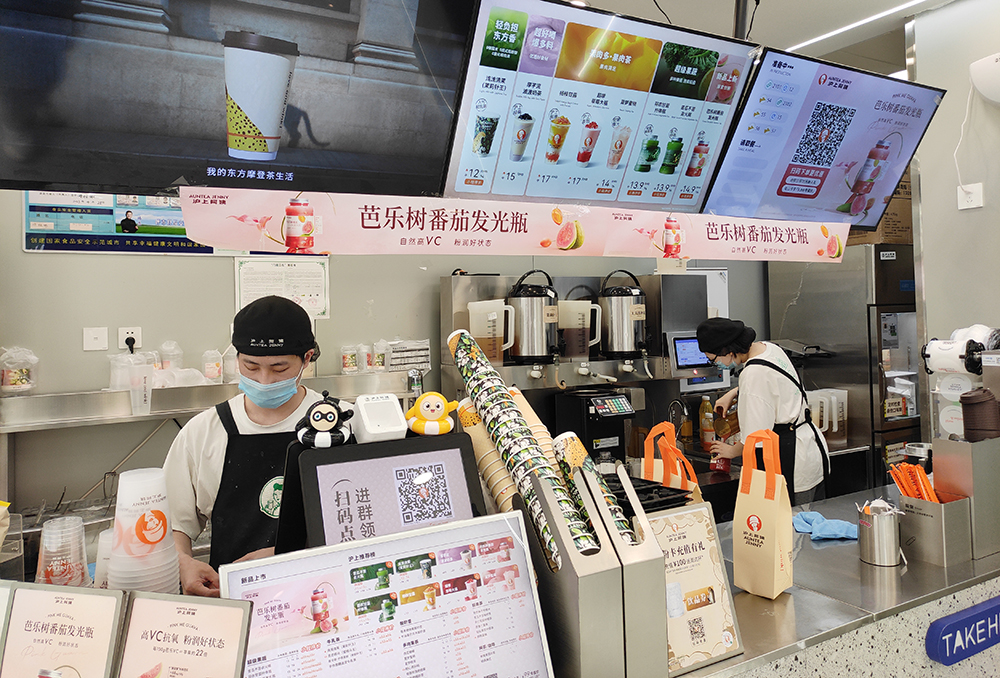

In China, low-sugar tea beverages are rapidly gaining ground as health-conscious consumers drive a structural shift in the soft drinks market.
Health-driven Transformation Reshapes Market
Since 2023, RTD tea — bolstered by reduced-sugar and sugar-free variants — has overtaken carbonated soft drinks in off-trade volume sales. It becomes the country’s second-largest soft drinks category after bottled water.
This health-driven transformation is reshaping the broader market landscape. According to data from Euromonitor’s Passport system, both off-trade volume and the prices of soft drinks in China were expected to maintain mid-single-digit growth in 2024. However, reduced-sugar products are forecast to maintain strong double-digit increases in both volume and value.
Competition between soft drink categories is intensifying. The market has become increasingly innovation-driven, with brands differentiating through healthier formulations and targeted functionality. Sugar-free and low-sugar options are now standard offerings — raising the bar for differentiation.

“To stand out among the many sugar-free tea drinks in the future, manufacturers can consider adding the concept of health into actual products — for example, by incorporating traditional Chinese herbal ingredients — to better meet specific consumer needs,” said Harry Han, analyst for the food and drinks sector at Euromonitor International.
From 2019 to 2024, global soft drink sales rose by 21 percent, driven by higher unit prices and growing demand for health-oriented products.
Harm of Sugary Drinks and Artificial Sweeteners
Across the world, the consumption of sugar-sweetened beverages is responsible for about 340,000 deaths each year from Type 2 diabetes and cardiovascular disease, according to a study published this year.
The study, in the journal Nature, found that sugary drinks were linked to 2.2 million additional cases of Type 2 diabetes and 1.2 million cases of cardiovascular disease in 2020.
At the same time, UK experts are advising that younger children should not drink any beverages containing artificial sweeteners.
The Scientific Advisory Committee on Nutrition (SACN) recommendations apply to beverages such as sugar-free ‘toothkind’ squash that has ingredients such as aspartame, stevia, saccharin and sucralose. It says preschool children should become accustomed to drinking water instead.
Artificial sweeteners is a substitute, providing a sweet taste with few or no calories. But some are concerned that they enhance preferences for sweet tastes in children which can be hard to overcome.
Prof Graham Finlayson, Chair in Psychobiology, University of Leeds, said it was reasonable to be cautious, especially in children. “With obesity and diabetes rates rising, knee-jerk policy changes could do more harm than good,” he warned.
Written by Yetao Gu, additional reporting by China Daily, Xinhua.
If you liked this article why not read: Better Diet, Healthier Life: China Unveils Guideline to Improve Nutrition Quality