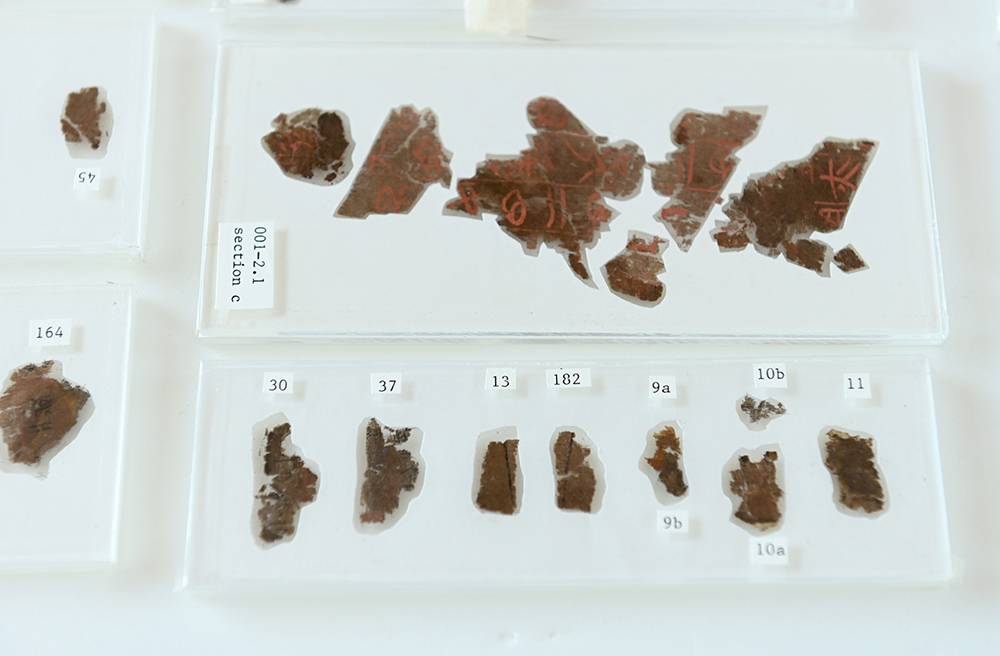

The Zidanku Silk Manuscript returns to China after 80 years, marking a key moment in cultural repatriation.
Returned by the Smithsonian’s National Museum of Asian Art on May 16, remnants of an ancient Chinese silk manuscript were back to China, ending nearly 80 years of overseas wandering.

A Long-held Wish to Repatriate Treasures
China’s National Cultural Heritage Administration on May 18 formally transfered the volumes II and III of the “Zidanku Silk Manuscript.” It has a history of more than 2,300 years.
Zidanku Silk Manuscript is the earliest Chinese silk texts discovered to date, also the only known ones from the Warring States Period (475-221 BC) unearthed in China. The manuscript was named after the Zidan-ku area of Changsha, Hunan province. It was then illegally taken to the US in 1946.
“With more than 900 characters and rich in myth and numerology, the manuscript reflects the depth and endurance of Chinese civilization, having great significance in studying ancient Chinese characters, literature and thinking,” said Xie Feng, the Chinese ambassador to the US.
The successful return of the volumes indicated that through dialogue and cooperation based on equality, mutual respect and benefit, the two countries can deliver important and tangible results that are good for both sides and beyond, Xie added.
Vice-Minister of China’s Culture and Tourism Rao Quan, said the return of the manuscript fulfilled the long-held wish of the Chinese people to repatriate the “treasures of the country” and respected their cultural rights and national feelings.
Furthermore, their heritage value can be more accurately and comprehensively understood and interpreted, and they will become shared academic and civilizational assets of China and the world, said Rao.
A Turning Point to Restore Looted Goods
The return of the Zidanku Silk Manuscript is a moment that China has wished and worked for ever, said Mark Blacklock, a journalist and lecturer in Britain.
“I wonder if anyone at the British Museum was watching or listening. For the event in the US gives the lie to every excuse the venerable UK institution has given for many years as justification for refusing to return approximately 23,000 Chinese artifacts – and also the unique antiquities from other countries – it holds within its walls,” Mark said.
Mark believes that China’s reacquisition of the silk manuscripts could mark a turning point in the desire for colonial powers to restore looted goods to their rightful owners.
Written by Yetao Gu, additional reporting by CNS, China Daily, and Global Times.
If you liked this article why not read: Museum: A Place for Cultural Identity and Cultural Exchange