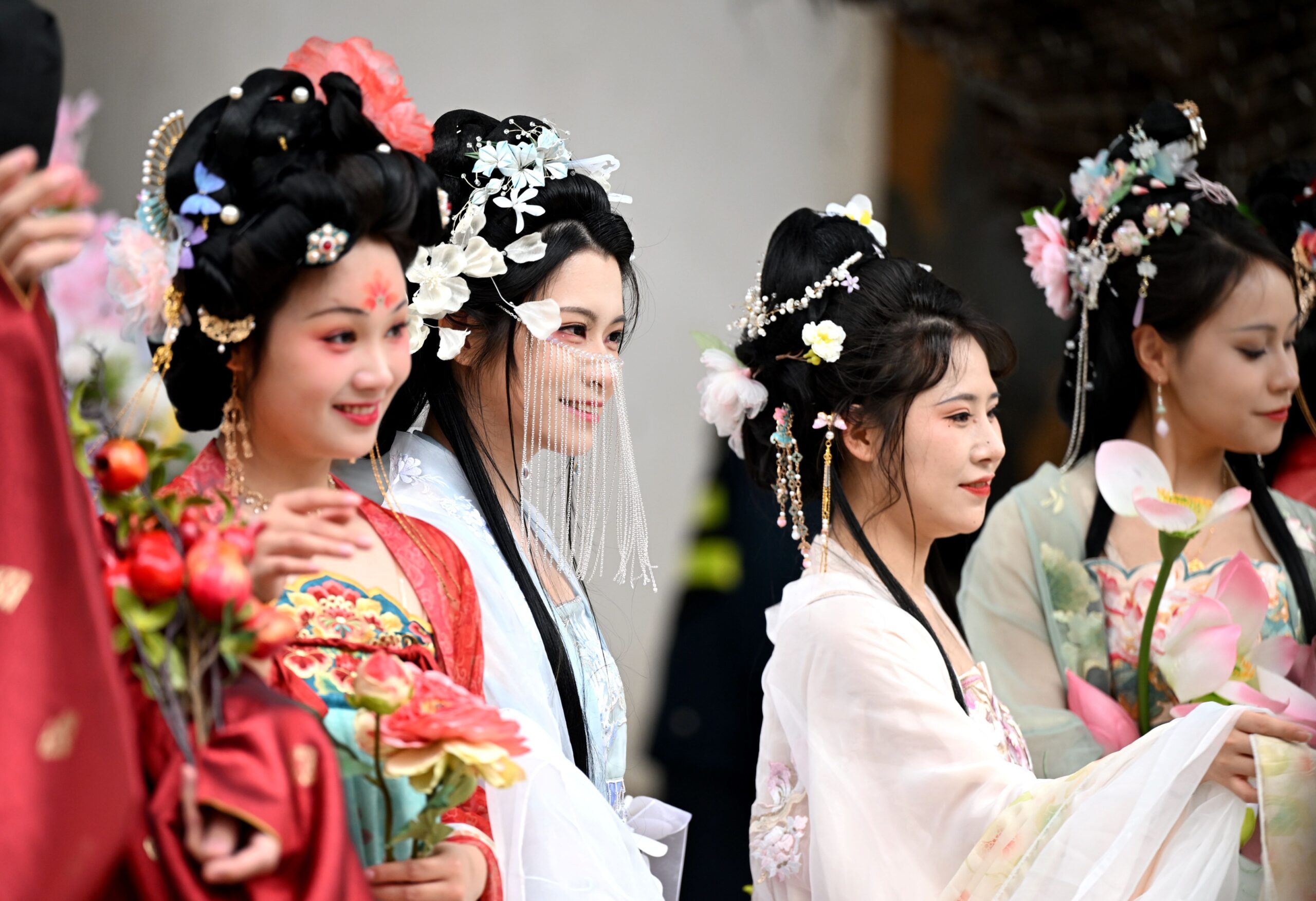

China celebrates the arrival of spring with Flower Festivals nationwide. These festivals feature the iconic Twelve Flower Gods, who blend floral beauty with rich cultural heritage.
As spring sunshine warms the land, Flower Festivals are blooming across China. This traditional celebration honors the birthday of all flowers. For centuries, it has expressed people’s love and respect for nature.
One of the festival’s highlights is the appearance of the Twelve Flower Gods. Each month has its symbolic flower and a legendary figure, blending nature with Chinese history and mythology.
The Flower Gods by Month
January – Plum Blossom & Princess Shouyang
Plum blossoms bloom in the cold, symbolizing strength and dignity.
February – Apricot Blossom & Yang Yuhuan
Beautiful yet short-lived, apricot blossoms reflect fleeting beauty and elegance.
March – Peach Blossom & Lady Xi
Peach blossoms stand for love and romance, echoing people’s hopes for affection.
April – Peony & Li Bai
The peony, rich and graceful, represents wealth and the splendor of the Tang Dynasty.
May – Pomegranate Flower & Zhong Kui
The fiery red pomegranate flower is seen as a guardian against evil spirits.
June – Lotus & Xi Shi
The lotus grows pure from the mud, symbolizing purity and inner strength.
July – Crape Myrtle & Emperor Li Longji
Known for elegance and beauty, it also conveys dignity and authority.
August – Osmanthus & Xu Hui
Sweet-scented osmanthus signals a good harvest and good fortune.
September – Chrysanthemum & Tao Yuanming
Blooming in autumn frost, chrysanthemums reflect peace and withdrawal from worldly desires.
October – Hibiscus & Diaochan
Hibiscus flowers are charming and graceful, and known for their gentle beauty.
November – Camellia & Bai Juyi
Camellias symbolize resilience and deep friendship.
December – Narcissus & the Luo River Goddess
Fresh and elegant, the narcissus stands for purity and spiritual freedom.
The Twelve Flower Gods reflect China’s deep connection between nature, poetry, and cultural heritage. During the festival, tourists often dress in traditional clothing, take photos with the flower gods, and celebrate this vibrant expression of ancient beauty.


If you liked this article, why not read: IShowSpeed ’s China Livestream Shatters Western Misconceptions